





How Can You Find the Best Pharmaceutical Stability Chamber for Your Needs?
2026/06/17
Share:

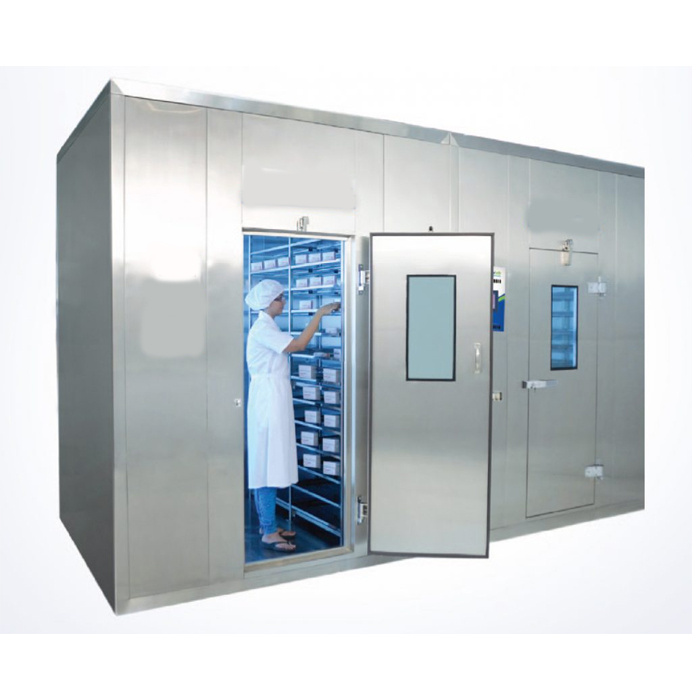
Detailed Introduction to the Walk-In Pharmaceutical Stability Chamber
A Walk-In Pharmaceutical Stability Chamber is a specialized testing facility designed to evaluate and assess the stability of pharmaceutical products. Stability testing is a critical part of pharmaceutical research, development, and manufacturing, aiming to ensure that medicines maintain their quality, safety, and efficacy throughout storage and transportation. The following is a detailed introduction to the Walk-In Pharmaceutical Stability Chamber.
I. Functions of the Stability Chamber
The primary function of a Walk-In Pharmaceutical Stability Chamber is to simulate the performance of pharmaceutical products under actual storage and transportation conditions and to evaluate their stability. Environmental parameters inside the chamber, such as temperature, humidity, and light exposure, can be precisely controlled and adjusted to reproduce a variety of storage and transportation scenarios.
Testing under these controlled conditions enables manufacturers to predict the shelf life of pharmaceutical products and determine appropriate packaging requirements to ensure product integrity throughout its intended lifecycle.
II. Chamber Design
A Walk-In Pharmaceutical Stability Chamber is generally divided into two areas: the control area and the testing area.
The control area is used for the operation, monitoring, and management of the chamber, while the testing area is designated for placing pharmaceutical samples and testing equipment. The chamber design should fully consider the requirements for environmental control and operational safety.
The chamber should possess excellent sealing and thermal insulation properties to maintain stable environmental conditions. At the same time, it should be equipped with advanced monitoring and control systems to ensure accurate testing, reliable operation, and precise data acquisition.
III. Testing Equipment
Various specialized testing devices are employed within the stability chamber to simulate the behavior of pharmaceutical products under actual storage and transportation conditions.
For example:
Temperature test chambers are used to evaluate product performance under different temperature conditions;
Humidity test chambers are used to assess the effects of varying humidity levels on pharmaceutical products;
Photostability test chambers are used to simulate different light exposure conditions and evaluate the impact of illumination on product stability.
These testing devices provide comprehensive environmental simulations for stability assessment.
IV. Testing Procedure
The stability testing process conducted in the laboratory generally includes the following steps:
1. Sample Preparation
Prepare pharmaceutical samples in accordance with established standards and procedures, and conduct preliminary quality inspections to verify their initial condition.
2. Selection of Test Conditions
Based on the characteristics of the pharmaceutical product and its storage and transportation requirements, select appropriate testing conditions, including temperature, humidity, and light exposure parameters.
3. Conducting the Test
Place the pharmaceutical samples into the designated testing equipment and perform the tests according to specified procedures while recording any changes in product performance and characteristics throughout the testing period.
4. Data Processing and Analysis
Process and analyze the collected test data to evaluate the stability of the pharmaceutical products, predict their shelf life, and determine suitable packaging requirements.
5. Report Preparation
Prepare a comprehensive test report based on the results obtained. The report should provide a detailed description of the testing procedures and outcomes, together with an overall assessment of the stability of the pharmaceutical products.
Technical Features of the Walk-In Pharmaceutical Stability Chamber
Imported Color Touchscreen LCD Controller
Equipped with an imported color touchscreen LCD control panel featuring a user-friendly interface. Chinese and English language options can be switched freely. The system allows users to set and store up to 120 programmable operating procedures, while displaying various operating parameters and real-time test data.
Balanced Temperature and Humidity Control System
Adopts an advanced balanced temperature and humidity control method to ensure stable operation, precise environmental control, and reliable performance throughout the testing process.
Uniform Air Circulation System
The unique air duct circulation design ensures uniform distribution of temperature and humidity throughout the chamber, providing highly consistent testing conditions for all samples.
Comprehensive Safety Protection Functions
Equipped with multiple safety protection devices to ensure safer and more reliable operation of the equipment and to effectively protect both personnel and test samples.
Fault Diagnosis and Data Recording Functions
The system incorporates fault recording and diagnostic display capabilities. When a malfunction occurs, the dynamic display screen automatically presents corresponding fault information to facilitate troubleshooting.
In addition, the chamber can be connected to a printer or an RS485 communication interface. Dedicated computer software enables real-time recording of temperature and humidity curves, providing reliable data storage and playback functions throughout the entire testing process.
Personnel Safety Door Release Device
Equipped with an anti-lock safety mechanism that allows personnel inside the chamber to exit safely at any time, ensuring operator safety during testing and maintenance procedures.
Who Should Purchase a Walk-In Pharmaceutical Stability Chamber
A Walk-In Pharmaceutical Stability Chamber is an ideal solution for organizations that require large-capacity, highly controlled environmental conditions for pharmaceutical stability testing. The following factors can help determine whether this equipment is suitable for your application.
1. Professional Testing Requirements
Precise Temperature and Humidity Control
Pharmaceutical products must undergo stability studies under specified temperature, humidity, and light exposure conditions during the research, development, and manufacturing stages. A Walk-In Pharmaceutical Stability Chamber is capable of achieving the required environmental parameters and maintaining long-term operational stability, making it suitable for stability testing and quality evaluation in pharmaceutical enterprises.
Compliance with Regulatory Testing Conditions
For pharmaceutical manufacturers, research institutes, and universities, the stability chamber should be capable of meeting common testing requirements, including:
Temperature range from 20°C to 50°C;
Relative humidity range from 20%RH to 90%RH;
Compliance with the technical requirements outlined in the ICH Q1A Guidelines for Stability Testing;
The ability to perform low-humidity studies required for special pharmaceutical products, such as large-volume parenterals, under conditions including 40°C/20%RH and 25°C/40%RH;
Provision of internationally recognized qualification documentation, including IQ (Installation Qualification), OQ (Operational Qualification), and PQ (Performance Qualification).
2. Space and Capacity Requirements
Customized Chamber Dimensions
Most Walk-In Pharmaceutical Stability Chambers are custom-designed according to specific customer requirements. The chamber size and internal layout can be tailored to accommodate different sample volumes and product dimensions.
Customized stability chambers are typically developed through detailed communication with the customer, followed by design modifications and optimization to ensure that the final solution fully satisfies the intended testing objectives.
Suitable Testing Environment for Various Products
In addition to differences in chamber size and appearance compared with conventional pharmaceutical stability test chambers, Walk-In Pharmaceutical Stability Chambers provide specialized testing environments designed to meet the unique requirements of pharmaceutical stability studies.
Their large capacity and flexible configurations enable them to accommodate a wide variety of pharmaceutical products and packaging formats while maintaining precise environmental control.
Important Operational Considerations
When using a Walk-In Pharmaceutical Stability Chamber, the following precautions should be observed:
During high-temperature testing, the refrigeration system should not be activated when the chamber temperature exceeds 55°C, as doing so may affect equipment performance and service life.
Before conducting low-temperature tests, the interior of the chamber should be thoroughly dried. It is recommended to wipe the workspace dry and operate the chamber at 60°C for approximately one hour to remove residual moisture and ensure accurate test results.
Typical Customers
Walk-In Pharmaceutical Stability Chambers are particularly suitable for:
Pharmaceutical manufacturers;
Biopharmaceutical companies;
Contract research organizations (CROs);
Drug quality control laboratories;
Universities and academic research institutions;
Government inspection and testing agencies;
Pharmaceutical packaging manufacturers;
Organizations conducting new drug development and registration studies.
By selecting a properly configured Walk-In Pharmaceutical Stability Chamber, users can improve testing efficiency, ensure regulatory compliance, optimize sample management, and obtain reliable stability data to support product development, quality assurance, and market approval activities.
Factors to Consider When Purchasing a Walk-In Pharmaceutical Stability Chamber
Selecting the right Walk-In Pharmaceutical Stability Chamber is crucial for ensuring the accuracy, reliability, and compliance of pharmaceutical stability studies. The following factors should be carefully evaluated before making a purchase decision.
1. Excellent Temperature and Humidity Performance
For most pharmaceutical manufacturers, the primary purpose of investing in a Walk-In Pharmaceutical Stability Chamber is to satisfy the requirements for stability testing of active pharmaceutical ingredients (APIs) and finished dosage forms.
The chamber should be capable of maintaining stable environmental conditions for the following commonly used testing programs:
Long-term stability studies:
25°C ± 2°C / 60%RH ± 5%RH
Accelerated stability studies:
40°C ± 2°C / 75%RH ± 5%RH
Less frequently, the chamber may also be required to perform:
Intermediate stability studies:
30°C ± 2°C / 65%RH ± 5%RH
Climatic Zone IV studies:
30°C ± 2°C / 75%RH ± 5%RH
Therefore, excellent temperature and humidity control performance, together with long-term operational stability, should be considered among the most important selection criteria.
2. High Space Utilization
Space utilization is an important indicator of the chamber's overall efficiency and should be evaluated from two aspects: external space utilization and internal space utilization.
External Space Utilization
An ideal Walk-In Pharmaceutical Stability Chamber design allows two or even three sides of the chamber to be positioned against walls, maximizing the use of available installation space and vertical height.
In laboratories with limited floor space but high sample capacity requirements, a design incorporating a top-mounted air supply system and ceiling return airflow configuration is often a better choice. This arrangement supports a three-side wall installation, minimizes the maintenance aisle area, and significantly improves external space utilization.
Internal Space Utilization
Within the chamber, access aisles and return air passages must be reserved to ensure proper operation and airflow circulation.
Apart from these essential areas, the remaining space should be optimized to accommodate as many storage racks and samples as possible. This usable area is commonly referred to as the effective internal volume of the chamber.
In general, the internal space utilization rate should exceed 50%, enabling users to maximize sample storage capacity without compromising environmental uniformity.
3. Reliable and Stable Operation with Low Failure Rates
A Walk-In Pharmaceutical Stability Chamber is intended for continuous operation over extended periods. Therefore, equipment reliability and stability are critical considerations.
The chamber typically adopts a vertical structural design consisting of a machine compartment and a test chamber. The machine compartment integrates the following systems:
Air circulation system;
Heating system;
Refrigeration and dehumidification system;
Humidification system;
Electrical control system.
The control instrument is generally mounted on the front panel of the chamber, while the electrical control board is located at the rear of the equipment.
Key structural features include:
High-quality polyurethane insulated panels with excellent thermal insulation performance;
Mirror-finished stainless steel interior construction for durability and ease of cleaning;
Refrigeration and dehumidification systems composed of dual refrigeration compressors and evaporators;
Electric steam humidification combined with a circulating water supply system;
A nickel-chromium heating system that heats the circulating air through thermal conduction, thereby warming both the chamber and test samples without exposing the products directly to radiant heat.
4. Superior Safety Performance
Safety is one of the most critical factors in pharmaceutical stability testing and is often a primary concern for customers.
A Walk-In Pharmaceutical Stability Chamber should be equipped with comprehensive safety protection functions, including:
Independent over-temperature protection system to ensure safe and reliable operation;
Door access control system to prevent unauthorized personnel from opening the chamber door accidentally;
Temperature and humidity deviation alarm function with SMS notification capability, allowing operators to respond promptly to abnormal conditions.
These protection mechanisms help safeguard personnel, test samples, and equipment throughout long-term testing programs.
5. Professional Functions with Low Energy Consumption
Modern pharmaceutical stability chambers should combine advanced functionality with energy efficiency.
Key advantages include:
PID control technology that automatically adjusts output power according to operating conditions, reducing energy consumption while maintaining precise environmental control;
A unique water circulation system that minimizes water usage and promotes environmental sustainability;
A concealed water tank design with closed-loop water circulation, reducing the risk of bacterial growth commonly associated with conventional water tanks;
Imported humidity sensors featuring high accuracy and minimal annual drift, ensuring highly reliable humidity measurements throughout the equipment's service life.
Conclusion
In summary, the Walk-In Pharmaceutical Stability Chamber is an indispensable tool for evaluating the stability of pharmaceutical products. By accurately simulating real-world storage and transportation environments, it helps ensure the quality, safety, and efficacy of medicines throughout their shelf life.The design, installation, and operation of the chamber should comply with applicable regulations and industry standards to guarantee the accuracy and reliability of test results.If you would like to learn more about our Walk-In Pharmaceutical Stability Chambers, we sincerely welcome your inquiries. Please feel free to leave us a message or contact us directly. Our team will be delighted to provide you with comprehensive product information, customized solutions, and professional technical support tailored to your specific requirements.
Previous: What Is a Plastic Biodegradation Testing System?
N e x t : What is wash fastness?
