





What is a thermal comfort environmental chamber?
2026/06/18
Share:

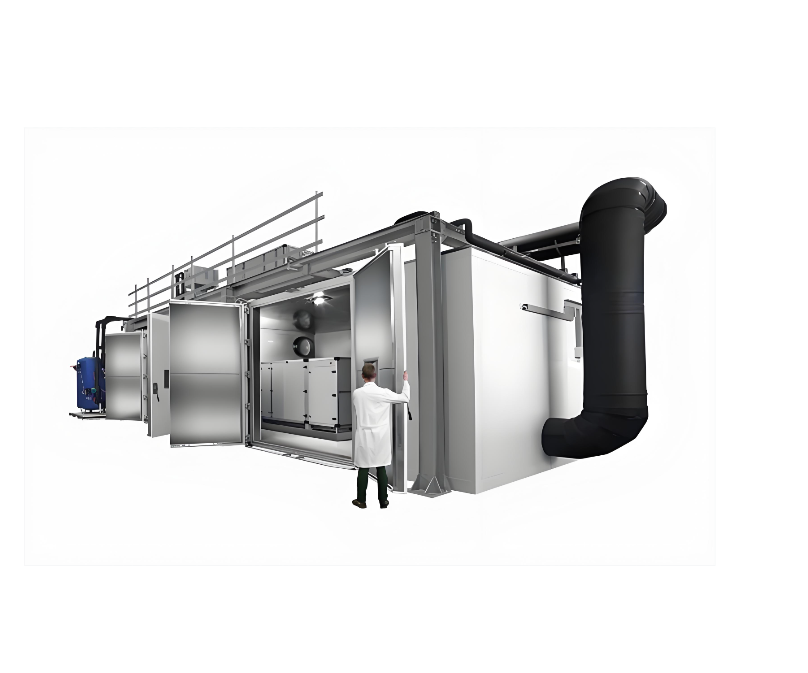
Working Principle of a Thermal Comfort Environmental Chamber
The core working principle of a Thermal Comfort Environmental Chamber is based on the coordinated control of multiple subsystems to precisely simulate and maintain specific air temperature, relative humidity, mean radiant temperature, and air velocity within an enclosed space. This enables the creation of a stable testing environment that complies with recognized human thermal comfort evaluation standards.
Core Control Mechanisms
Temperature Regulation:
The chamber employs a bidirectional heating and cooling balance technology. High-temperature conditions are typically achieved through electric heaters or heat pump heating systems, while low-temperature conditions are generated using compressor-based refrigeration systems or liquid nitrogen-assisted cooling. A PID control algorithm continuously adjusts system outputs in real time to minimize deviations, enabling rapid temperature transitions and highly accurate temperature stabilization.
Humidity Control:
Humidity regulation is achieved through a dynamic balance between humidification and dehumidification processes. Humidification is commonly accomplished by steam injection or ultrasonic humidifiers, whereas dehumidification is performed using cooling coils for condensation or desiccant wheel dehumidification systems. These methods ensure that relative humidity remains within the specified tolerance range with minimal fluctuations.
Airflow Distribution and Uniformity:
The chamber is equipped with a forced-air circulation system consisting of high-efficiency fans and specially designed air supply and return ducts. This configuration promotes rapid air circulation throughout the chamber, eliminating localized temperature and humidity gradients and ensuring a highly uniform environmental condition within the test zone.
Mean Radiant Temperature Simulation:
Some advanced chambers are fitted with infrared radiant panels or water-cooled wall panels to independently control the mean radiant temperature. This feature enables the simulation of realistic thermal radiation scenarios, such as direct solar exposure or cold wall surfaces, which are critical independent variables in thermal comfort assessment.
Intelligent Closed-Loop Feedback System
Data Acquisition:
The chamber is equipped with high-precision temperature and humidity sensors, anemometers, and globe thermometers to continuously monitor environmental conditions in real time.
Control Logic and Computation:
The central controller compares the measured values with preset setpoints and utilizes thermal balance algorithms for temperature and humidity regulation to automatically calculate the required output of each actuator.
Program Execution:
The system supports the creation of complex programmable test profiles, enabling automated cyclic testing. It also offers functions such as data logging, trend analysis, and remote monitoring for enhanced operational efficiency and experimental traceability.
Main Features of a Thermal Comfort Environmental Chamber
1. Wide Environmental Simulation Range
The chamber is capable of maintaining temperatures from -40°C to +60°C and controlling relative humidity within a range of 10% to 90% RH, enabling full-condition simulation from extremely cold to hot and humid climates. This makes it suitable for reproducing environmental conditions encountered in different regions around the world.
2. High-Precision Temperature and Humidity Control
Temperature control accuracy can reach ±0.1°C to ±1.5°C, while humidity fluctuations can be maintained within ±10% RH. Such high stability minimizes environmental disturbances during experiments and ensures the reliability and repeatability of test data.
3. Adjustable Airflow Simulation
The chamber supports air velocity adjustment from 0 to 170 km/h. Combined with programmable air supply outlet configurations, it can simulate natural ventilation, air-conditioning airflow, or airflow distribution inside moving vehicles. This capability is particularly useful for evaluating local draft sensation, thermal comfort, and indoor air quality.
4. Independent Radiant Heat Simulation
The system can be equipped with adjustable infrared lamp arrays or xenon lamp systems, providing irradiation intensities ranging from 500 to 1200 W/m² to simulate direct solar radiation. In addition, low-temperature radiant walls or floor panels can be incorporated to create heat transfer conditions dominated by radiation, closely replicating the natural heat dissipation mechanisms of the human body.
5. Non-Uniform Thermal Environment Simulation
Different zones within the chamber can be independently controlled for temperature, humidity, and radiant heat levels. This allows the creation of non-uniform thermal environments, such as warm-head/cool-feet conditions or single-sided heat exposure, which are valuable for validating the applicability of Predicted Mean Vote (PMV) models under realistic scenarios.
6. Integrated Physiological Monitoring and Data Analysis
The chamber incorporates a built-in sensor network capable of simultaneously collecting physiological parameters, including skin temperature, microclimate temperature and humidity, and heart rate variability (HRV). It is compatible with both thermal manikin and human subject testing, enabling comprehensive analysis by correlating objective physiological measurements with subjective thermal sensation responses.
Applications of Thermal Comfort Environmental Chambers
1. Building Energy Efficiency and Green Building Research
Thermal comfort environmental chambers are widely used to evaluate the heat exchange efficiency of radiant terminal systems in passive buildings and five-constant systems (constant temperature, constant humidity, constant oxygen concentration, etc.). They enable researchers to assess the effectiveness of energy-saving strategies, such as solar shading, thermal insulation materials, and night-time ventilation, thereby supporting green building certification and sustainable building design.
2. Human Thermal Comfort Studies
The chamber facilitates human exposure experiments to investigate the physiological responses and behavioral adaptation mechanisms of different population groups, including the elderly, children, and individuals with chronic diseases, under various thermal environments. These studies help refine conventional thermal comfort models and improve their predictive accuracy under dynamic environmental conditions.
3. Evaluation of Wearable Products and Protective Clothing
Under standardized environmental conditions, the chamber can be used to assess the thermal resistance, moisture resistance, and evaporative heat dissipation performance of smart garments, firefighter protective clothing, and military load-carrying systems. Combined with infrared thermography and subjective comfort assessments, the results contribute to optimizing material selection and structural design.
4. Automotive Thermal Management Research
The chamber can simulate the temperature rise inside a vehicle after prolonged solar exposure, as well as the cooling performance of automotive air-conditioning systems. By studying thermal response differences among occupants of various body types, researchers can optimize heat pump systems and intelligent seat climate control strategies for new energy vehicles.
5. Indoor Environmental Quality Assessment
In accordance with relevant standards, thermal comfort environmental chambers are employed to evaluate thermal comfort indices in office buildings, cleanrooms, data centers, and other occupied spaces. The findings assist in improving ventilation layouts and HVAC operational strategies, achieving a balance between occupant productivity and energy efficiency.
6. HVAC Performance Validation and Standards Development
The chamber can be integrated with a sweating thermal manikin to perform fully automated measurements of heat and moisture exchange. This configuration supports long-duration unattended testing and is extensively used for HVAC system performance verification, thermal comfort studies, and the development of international testing standards.
Selection Guide for Thermal Comfort Environmental Chambers
Thermal Comfort Environmental Chambers are primarily used for thermal comfort testing of textiles, vehicle cabins, and ergonomic studies. The key considerations when selecting a chamber are its multi-parameter coupled control capability and its compatibility with relevant testing standards.
1. Define the Primary Testing Application and Applicable Standards
Different applications have significantly different requirements; therefore, the first step is to determine the intended testing scenario and the standards to be followed.
Textile and Material Testing:
Small-scale environmental chambers are generally preferred, with particular emphasis on the stability of temperature, humidity, and surface air velocity.
Automotive and Vehicle Thermal Comfort Evaluation:
The chamber should be capable of simulating solar radiation, frontal airflow, and maintaining a highly uniform thermal field within a large test space. In many cases, integration with a chassis dynamometer is required.
Human Subject and Thermal Manikin Experiments:
The chamber should offer high operational safety, low noise levels, and rapid environmental response capabilities while supporting multi-point physiological and environmental data acquisition.
2. Evaluate Key Performance Indicators
Temperature and Humidity Control Accuracy:
A temperature fluctuation of ≤ ±0.3°C and a humidity deviation of ≤ ±2% RH are generally recommended. For high-end research applications, control accuracies of ±0.1°C and ±0.5% RH may be required.
Multi-Physics Coupling Capability:
Radiant Heat Simulation:
If solar simulation is necessary, verify the available irradiance range and its uniformity across the test area.
Airflow Control:
The airflow velocity range should preferably cover 0–10 m/s, with adjustable airflow direction to minimize dead zones that may affect thermal sensation evaluations.
Temperature Uniformity:
For large-volume chambers, temperature uniformity should generally be maintained within ±1.5°C to ±2.0°C, while small-scale chambers should achieve ±1.0°C or better.
Heating and Cooling Rates:
Conventional chambers typically provide ramp rates of 3–5°C/min. If the application involves simulating sudden climate changes or extreme environmental transitions, a rapid temperature change chamber should be selected, although this will substantially increase equipment costs.
3. Structural Design and Safety Considerations
Inner Chamber Material:
Mirror-finished stainless steel is recommended because it offers excellent corrosion resistance, does not adsorb contaminants, is easy to clean, and minimizes interference with background values during volatile organic compound (VOC) testing.
Sealing and Thermal Insulation:
The chamber should be equipped with double-layer tempered glass observation windows and insulation thicknesses of at least 100 mm to ensure energy efficiency and stable operation under extreme environmental conditions.
Safety Features:
Essential safety protections should include independent over-temperature protection, compressor overload protection, and leakage current protection. Compliance with CE and UL safety standards is highly recommended, particularly for long-duration tests conducted under high-temperature and high-humidity conditions.
Recommendations for Avoiding Common Pitfalls
Avoid Over-Specification:
Do not pursue extreme environmental capabilities unnecessarily. If testing requirements are limited to conditions near ambient temperature, excessive specifications may lead to increased failure rates, higher energy consumption, and greater maintenance costs.
Verify Performance Claims:
Be cautious of exaggerated specifications related to airflow velocity and radiation uniformity. Request suppliers to provide measured performance reports under both unloaded and loaded operating conditions, rather than relying solely on nameplate data or promotional materials.
Importance of Thermal Comfort Environmental Chambers
The fundamental importance of a Thermal Comfort Environmental Chamber lies in its ability to accurately reproduce complex thermal environments under controlled conditions, transforming subjective human thermal sensations into quantifiable, repeatable, and scientifically reliable data. By doing so, it addresses the challenges associated with uncontrollable variables, high testing costs, and potential safety risks encountered in real-world environments.
Cornerstone for Scientific Research and Standards Development
Thermal comfort environmental chambers provide precisely controlled steady-state or dynamic environmental parameters, including temperature, humidity, thermal radiation, and air velocity. These capabilities are essential for validating thermal comfort models and establishing the experimental basis for international standards.
Furthermore, they support population-specific thermal comfort studies, such as investigations involving elderly individuals or workers in specialized occupations. These studies help reveal the physiological mechanisms underlying human responses to thermal environments and prevent the shortcomings associated with “one-size-fits-all” design approaches.
Essential Tool for Product Development and Performance Optimization
Automotive Industry:
During vehicle development, thermal comfort chambers can simulate environmental conditions ranging from extreme cold to intense heat, including strong solar radiation. This enables engineers to optimize air-conditioning airflow distribution and thermal management systems, addressing issues such as uneven cabin temperatures and slow defrosting performance, thereby enhancing product competitiveness.
Textile and Apparel Industry:
Thermal comfort chambers offer a safer alternative to full-body human exposure tests under high-temperature and high-humidity conditions. Through localized limb testing or thermal manikin evaluations, manufacturers can rapidly assess fabric breathability, moisture management, and thermal insulation properties. This approach shortens development cycles while significantly reducing the risk of heat stress to human subjects.
Building and HVAC Applications:
The chambers are widely used to evaluate the actual energy efficiency and occupant comfort performance of innovative building materials, envelope systems, and HVAC equipment. They help engineers achieve an optimal balance between energy conservation objectives and human health and comfort requirements.
Safety Assessment and Risk Mitigation
Thermal comfort environmental chambers can expose potential failure modes of products or protective equipment under extreme conditions, such as high-temperature industrial workplaces or polar expedition scenarios. This proactive evaluation helps prevent thermal stress-induced reductions in cognitive performance, operational errors, and health hazards.
In addition, these chambers provide a risk-free platform for conducting extreme-condition tests on specialized equipment, including protective clothing and enclosed habitats, ensuring personnel safety and survivability under severe environmental conditions.
Conclusion
In summary, the Thermal Comfort Environmental Chamber is a critical technological tool whose application value and significance extend across numerous industries and research disciplines. Its ability to deliver highly controlled and repeatable thermal environments makes it indispensable for scientific investigation, product innovation, energy optimization, and safety assurance.We sincerely welcome inquiries, comments, and direct communication at any time. By understanding your specific requirements in greater detail, we can provide comprehensive product information, technical guidance, and tailored professional support to meet your testing and research needs.
Previous: What is an AATCC Viewing Board?
N e x t : What is a salt spray test chamber?
