





What is a salt spray test chamber?
2026/06/22
Share:

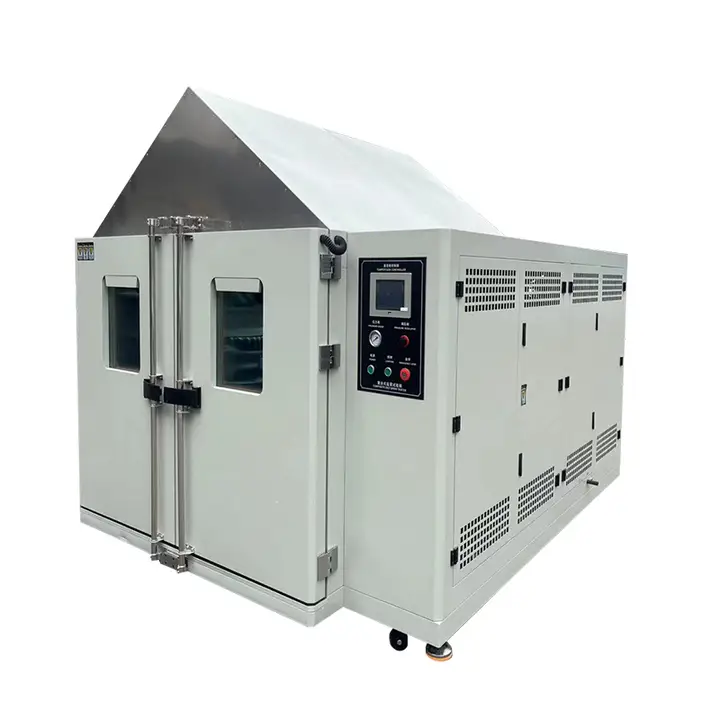
System Structure of the Large-Scale Composite Salt Spray Test Chamber
1. Chamber Body System
The chamber body is typically fabricated from corrosion-resistant and high-strength materials, such as polypropylene (PP) sheets, which are integrally welded to ensure excellent corrosion resistance and thermal insulation performance within the test space. The chamber cover is usually made of transparent material, allowing operators to conveniently observe the condition of the test specimens during operation.
2. Spray System
The spray system is considered the “heart” of the equipment. A compressor supplies the compressed air, which first passes through an oil-water separator and then enters an air saturator (pressure vessel) for humidification and preheating. The saturator heats the compressed air to the same temperature as that inside the chamber, preventing low-temperature air from entering the chamber and causing unstable spray deposition rates. Finally, the saturated hot and humid air mixes with the saline solution at the nozzle and is atomized into a fine salt spray.
3. Heating and Control System
This system consists of titanium alloy or quartz tube heaters, a high-precision PID temperature controller, and platinum resistance temperature sensors (RTDs). Together, these components enable precise temperature regulation within the chamber, with temperature fluctuations controlled within a range of approximately ±0.1°C to ±1.0°C.
4. Saline Solution Supply System
The saline solution supply system comprises a brine tank, liquid level controller, and supply pipelines. It continuously delivers the salt solution to the spray tower, ensuring uninterrupted spraying throughout the entire testing process.
Working Principle of the Large-Scale Composite Salt Spray Test Chamber
The core working principle of the Large-Scale Composite Salt Spray Test Chamber is to simulate and accelerate the corrosion process of materials exposed to harsh environments by precisely controlling high-temperature, high-humidity, and high salt spray concentration conditions, combined with dynamic cyclic testing programs. This enables the corrosion resistance of materials to be evaluated within a relatively short period. In addition to conducting standard neutral salt spray tests, the chamber can also reproduce more complex industrial corrosive environments through composite corrosion technologies, such as the introduction of mixed acidic gases.
1. Preparation and Supply of Salt Solution
A sodium chloride (NaCl) solution is prepared according to the required standard concentration, typically 5% by mass, and is continuously supplied through a precision saline solution replenishment system to ensure stable operation throughout the test.
2. Salt Spray Generation Process
Clean compressed air passes through an air saturator, where it is humidified and preheated, before being mixed with the saline solution at the nozzle. The high-velocity airflow atomizes the solution into extremely fine and uniformly distributed salt spray droplets, which are then evenly deposited onto the surface of the test specimens. The air saturator plays a critical role in preventing condensation-induced fluctuations in salt spray concentration, thereby maintaining a stable and consistent test environment.
3. Environmental Control and Corrosion Acceleration
The chamber utilizes a high-precision temperature control system, typically incorporating a PID control algorithm and platinum resistance temperature sensors (RTDs), to maintain the internal temperature at the specified setpoint, such as 35°C ± 1°C for neutral salt spray testing. At the same time, the humidity control system keeps the relative humidity above 95%, creating a severe high-humidity and high-salinity environment. Such stringent conditions significantly accelerate the electrochemical corrosion process of metallic materials, allowing long-term environmental effects to be evaluated within a much shorter testing period.
4. Exhaust Gas Treatment System
Corrosive exhaust gases generated during testing are treated through a water-sealing system or a neutralization tower before being discharged. This purification process ensures that emissions comply with environmental protection and laboratory safety requirements, providing a safe and eco-friendly testing operation.
Application Scenarios and Solutions: Addressing Specific Industrial Testing Challenges
The true value of the Large-Scale Composite Salt Spray Test Chamber lies in its ability to overcome the limitations of conventional single-factor tests and accurately replicate complex service environments. The following typical applications demonstrate how the chamber effectively meets the testing requirements of procurement engineers and product developers.
1. Testing of High-End Automotive Electronics and Connectors
Electronic modules and connectors used in vehicles are exposed not only to road salt contamination but also to elevated temperatures and vibrations within the engine compartment. A composite salt spray chamber can be programmed to perform cyclic sequences such as “high-temperature operation → salt spray exposure → low-temperature condensation.” This allows engineers to evaluate the sealing integrity and electrical reliability of components under the combined effects of thermal stress and corrosive attack.
2. Evaluation of Aerospace Fasteners and Surface Coatings
Aircraft components are subjected to extreme environmental variations, ranging from cold and dry high-altitude conditions to high-salinity and high-humidity coastal environments during ground operations. The test chamber can simulate rapid transitions between these high-altitude and ground-level conditions by varying temperature, humidity, and salt spray concentration. This enables the assessment of the corrosion-fatigue resistance of plated or coated surfaces and provides critical data for material selection and process optimization.
3. Corrosion Protection Verification for New Energy Battery Pack Enclosures
As a critical component of electric vehicles, the corrosion resistance of battery pack enclosures is essential for ensuring long-term safety and durability. Composite corrosion testing can reproduce real-world conditions in which a vehicle travels on roads treated with de-icing salts during winter and is subsequently parked in a garage with warm, humid conditions that promote condensation. Such testing helps evaluate the long-term protective performance of enclosure welds, coating edges, and sealing structures.
4. Accelerated Aging of Marine Engineering Equipment and Hardware Components
For equipment continuously exposed to marine atmospheres, conventional salt spray testing is often insufficiently severe to accurately predict service life. Composite testing chambers can incorporate ultraviolet (UV) radiation, damp heat exposure, and drying cycles to significantly accelerate the natural aging process. This approach allows manufacturers to simulate several years of outdoor exposure within a relatively short testing period and assess the long-term durability of materials and protective coatings.
5. Outdoor Durability Testing of Consumer Electronics
Consumer electronic products such as smartwatches, portable speakers, and outdoor communication devices must withstand repeated exposure to perspiration, rainwater, and alternating wet-dry conditions. By utilizing programmable temperature, humidity, salt spray, and drying cycles, a composite salt spray chamber provides a systematic method for verifying whether the corrosion-resistant design of housings, buttons, connectors, and other exposed components meets product reliability requirements.
Through these application scenarios, the Large-Scale Composite Salt Spray Test Chamber serves as an indispensable tool for accelerating product validation, improving material selection, optimizing protective coatings, and ultimately enhancing product quality and market competitiveness.
Functions and Advantages of the Large-Scale Composite Salt Spray Corrosion Test Chamber
Main Functions
1. Material Evaluation
First and foremost, the composite salt spray corrosion test chamber serves as an effective tool for material evaluation. By exposing different materials to a controlled salt spray environment, researchers can observe and measure corrosion rates, surface morphology changes, and performance degradation, thereby accurately assessing the corrosion resistance, durability, and expected service life of materials. This capability is particularly important for metallic materials used in industries such as automotive, aerospace, and marine engineering, helping to ensure product safety and reliability under various environmental conditions.
2. Surface Treatment Evaluation
Secondly, the composite salt spray corrosion test chamber plays a crucial role in evaluating surface treatment technologies. Surface treatment processes, including galvanizing, electroplating, painting, and anodizing, are widely employed to enhance the corrosion resistance of materials and components. The test chamber provides an effective means of verifying the performance of these treatments, enabling researchers and engineers to compare different technologies, understand their advantages and limitations, and make informed decisions during product design and manufacturing.
3. Coating Performance Assessment
In addition, the composite salt spray corrosion test chamber is widely used for coating evaluation. Since protective coatings are one of the most effective methods of preventing material degradation, their performance has a direct impact on product service life. The chamber can simulate highly corrosive salt spray environments to quantitatively assess the protective capabilities of coating systems, including anti-rust paints, anti-corrosion coatings, and other surface protection materials. By comparing the performance of various coatings under identical testing conditions, researchers can identify high-performance coating solutions and provide reliable protection strategies for products.
4. Reliability Testing
Beyond the functions mentioned above, the composite salt spray corrosion test chamber also offers comprehensive product reliability testing capabilities. By subjecting products to prolonged exposure under simulated corrosive environments, manufacturers can evaluate their reliability and durability under harsh service conditions. This contributes significantly to improving product quality, increasing customer satisfaction, and reducing maintenance and warranty costs.
Advantages and Benefits
It is worth noting that the composite salt spray corrosion test chamber offers numerous advantages during testing.
1. Multi-Factor Composite Testing Capability
The chamber can perform multi-environment composite tests by combining factors such as salt spray, damp heat, drying cycles, and temperature variations. This approach more accurately reproduces real-world service conditions and enables a comprehensive evaluation of product performance.
2. Precise Environmental Control
Equipped with advanced temperature, humidity, and salt spray concentration control systems, the chamber ensures excellent stability and accuracy of testing conditions, thereby enhancing the repeatability and reliability of test results.
3. Flexible and Programmable Test Procedures
The chamber supports user-defined testing programs, allowing customized test sequences to meet a wide range of special testing requirements. This flexibility significantly improves testing efficiency and broadens the scope of possible applications.
4. Intelligent Operation and Data Acquisition
A user-friendly visual interface makes parameter setting, operation, and real-time monitoring simple and intuitive. In addition, an integrated data acquisition system continuously records critical testing parameters, facilitating subsequent data analysis, traceability, and reporting.
5. Comprehensive Safety Protection
To ensure safe operation, the chamber is equipped with multiple protection mechanisms, including overload protection, leakage protection, over-temperature alarms, and other safety features, minimizing risks during long-term testing.
6. Energy Efficiency and Environmental Sustainability
The composite salt spray corrosion test chamber incorporates energy-efficient technologies designed to reduce power consumption and minimize environmental impact. These features align with modern sustainability objectives and support environmentally responsible laboratory operations.
In summary, the Large-Scale Composite Salt Spray Test Chamber is an advanced testing solution that offers numerous advantages for corrosion evaluation and product reliability verification. By understanding and effectively utilizing this equipment, manufacturers can better address increasingly demanding market challenges while ensuring the long-term reliability, durability, and performance of their products under actual service conditions.We sincerely welcome friends, business partners, and prospective customers to contact us by leaving a message or reaching out directly. Every inquiry is important to us, as it helps us gain a deeper understanding of your specific testing requirements and expectations. Through direct communication, we can provide more detailed product information, tailored technical recommendations, and professional support to assist you in making well-informed decisions.We look forward to hearing from you and remain ready to provide prompt assistance and customized solutions to meet your corrosion testing needs.
Previous: What is a thermal comfort environmental chamber?
N e x t : What is a Textile Light and Heat Performance Tester?
