





What is a Textile Light and Heat Performance Tester?
2026/06/22
Share:

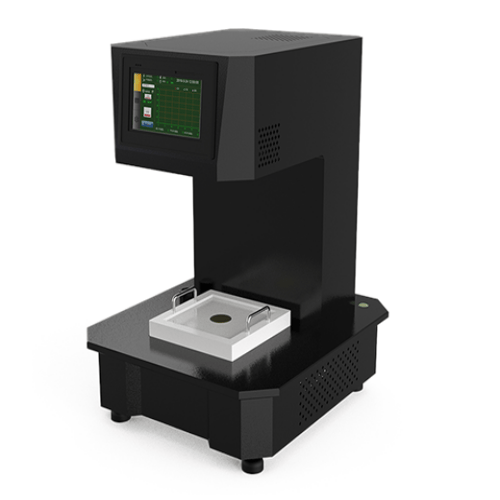
Overview of the Testing Principles of the Textile Light and Heat Performance Tester
The Textile Light and Heat Performance Tester mainly features two testing modes: light-to-heat conversion (heat storage) testing and thermal shielding testing. These testing modes are designed in accordance with relevant national standard methods, offering clear principles and closely simulating practical application scenarios.
1. Light-to-Heat Conversion (Heat Storage) Testing
The light-to-heat conversion test utilizes a simulated solar spectrum light source to irradiate the specimen. Upon exposure to light, the fabric absorbs radiant energy and undergoes a corresponding temperature increase. A high-precision temperature sensing system continuously monitors and records the temperature variations throughout the entire testing process, including both the irradiation heating stage and the post-irradiation cooling stage under shaded conditions. By analyzing the temperature rise, heat retention behavior, and cooling characteristics, the thermal storage and warming performance of the fabric can be comprehensively evaluated.
2. Thermal Shielding Performance Testing
The thermal shielding test also employs a simulated solar radiation source to reproduce natural sunlight conditions. After passing through the test specimen, the transmitted radiation is absorbed by a specially designed sensing plate. The temperature change of this plate is continuously monitored by a temperature sensing system, allowing for the indirect assessment of the fabric's ability to block solar thermal radiation. This method provides a straightforward and effective means of comparing the thermal shielding performance of fabrics with different materials, structures, and finishing treatments, thereby evaluating their effectiveness in heat protection and solar radiation reduction applications.
Roles and Applications of the Textile Light and Heat Performance Tester in the Textile Industry
Importance of Thermal Shielding Performance Testing for Textiles
1. Evaluation of Textile Thermal Shielding Performance
The Textile Light and Heat Performance Tester evaluates the thermal shielding capability of textiles by simulating heat transfer under different temperature conditions. During testing, the textile specimen is positioned between two test plates maintained at different temperatures, with one plate heated while the other remains at a constant temperature. By measuring the heat flux passing through the specimen and the resulting temperature gradient, the thermal shielding performance of the textile under specified conditions can be accurately determined.
This testing method is of great significance for assessing the heat insulation effectiveness of textiles. In sectors such as apparel, home furnishings, and industrial fabrics, thermal shielding performance has become an increasingly important consideration for both manufacturers and consumers.
2. Improvement of Product Quality
The tester serves as a valuable tool for product development and quality control within textile manufacturing enterprises. By comparing the thermal shielding performance of textiles made from different materials, structures, and finishing treatments, manufacturers can optimize product design, enhance functional properties, and improve overall product quality.
In addition, the instrument plays an important role in green building and energy-saving renovation projects. It can be used to evaluate the thermal shielding performance of architectural textile materials, such as curtains, shading fabrics, and insulating textiles, helping manufacturers meet increasingly stringent energy efficiency and environmental protection requirements.
3. Market Promotion and Consumer Guidance
Thermal shielding test results can also serve as objective evidence for product marketing and promotion. Providing consumers with scientifically validated performance data enables them to make more informed purchasing decisions. For example, consumers may select sun-protective garments with superior heat-blocking properties for summer use or choose textiles with enhanced thermal insulation capabilities for colder seasons.
Importance of Light-to-Heat Conversion and Heat Storage Performance Testing for Textiles
1. Evaluation of Light-to-Heat Conversion Performance
The Textile Light and Heat Performance Tester utilizes an artificial light source, such as a xenon lamp, to simulate solar radiation and assess the ability of textiles to absorb light energy, convert it into thermal energy, and retain the generated heat. By monitoring temperature changes during and after irradiation, the instrument provides a quantitative evaluation of the light-to-heat conversion and heat storage properties of textile materials.
This type of testing is particularly important for the development of functional textiles with heat-retaining capabilities, including materials used in solar thermal collection systems, thermally insulating garments, and other energy-efficient textile applications.
2. Promotion of Advanced Material Development
The tester offers valuable technical support for research institutions and manufacturers engaged in the development of innovative photothermal materials. By characterizing the energy conversion efficiency and thermal storage behavior of novel textile structures and additives, researchers can accelerate the development of high-performance materials and contribute to the sustainable advancement of the textile industry.
3. Meeting Emerging Market Demands
As consumer awareness of energy conservation, environmental sustainability, and personal comfort continues to grow, market demand for textiles with light-to-heat conversion and thermal storage functions is steadily increasing. The application of the Textile Light and Heat Performance Tester helps manufacturers validate product performance, satisfy evolving market expectations, and facilitate the commercialization of next-generation functional textile products.
Overall, the Textile Light and Heat Performance Tester has become an indispensable instrument for functional textile research, product innovation, quality assurance, and market competitiveness, supporting the industry's transition toward more sustainable, energy-efficient, and value-added textile solutions.
Operating Procedure for the Textile Light and Heat Performance Tester
1. Specimen Preparation and Preliminary Setup
Representative specimens should be selected to ensure they are flat, wrinkle-free, undamaged, and free from stains, while avoiding fabric edges and defective areas. Fibers and yarns should be uniformly prepared into sheet-like specimens with a smooth and consistent testing surface. Prior to testing, the specimen stage, holding frame, and sensor surfaces should be cleaned to remove dust, lint, or other contaminants that may affect the results. The instrument should be placed on a stable, vibration-free platform and powered on in advance to allow sufficient warm-up time, ensuring stable operating conditions before testing begins.
2. Parameter Calibration and Test Mode Selection
Depending on the testing objective, either the light-to-heat conversion mode or the thermal shielding mode should be selected. The irradiance level should be calibrated in accordance with the applicable national standard requirements to establish standard testing conditions. Test parameters, including irradiation distance, light intensity, and test duration, can be preset through the touchscreen interface. Before testing, the operator should verify that the sensors and light source system are functioning properly and complete the instrument's self-check and calibration procedures.
3. Specimen Mounting and Fixation
For light-to-heat conversion testing, the specimen should be placed flat and centrally on the polytetrafluoroethylene (PTFE) specimen holder and secured firmly with a dedicated clamping frame. Proper mounting ensures full contact between the specimen and the temperature sensor, eliminating gaps, wrinkles, or movement during testing.
For thermal shielding performance testing, a specialized heat-insulating fixture should be installed to secure the specimen according to the specified requirements. The specimen should be mounted smoothly and without distortion, ensuring that the effective irradiation area complies with the relevant testing standards.
4. Test Initiation and Data Acquisition
After confirming that the specimen has been correctly mounted, the test can be initiated. The xenon arc lamp provides a stable simulated solar radiation source, and the instrument automatically enters the programmed testing sequence.
For light-to-heat conversion testing, the system automatically performs a complete testing cycle consisting of 10 minutes of irradiation heating followed by 10 minutes of cooling after the light source is switched off. Temperature variations are continuously recorded at one-second intervals throughout the entire process.
For thermal shielding testing, the instrument continuously monitors and records the temperature of the dedicated black-panel sensor, automatically generating a temperature-versus-time curve. The entire testing process is fully automated and requires no manual intervention, while all raw data are stored by the system for subsequent analysis.
5. Data Processing and Performance Evaluation
Upon completion of the test, the system automatically compiles and processes the collected data, calculating temperature-rise parameters and thermal shielding performance indices. Operators can export the test data, review temperature curves, and evaluate whether the fabric meets the specified requirements for light-to-heat conversion and thermal shielding performance in accordance with the applicable national standards. The final results can then be used for batch quality assessment, product verification, and data archiving.
By following this standardized operating procedure, users can ensure accurate, repeatable, and reliable testing results, thereby providing a solid technical basis for functional textile development, quality control, and performance certification.
Selection Guidelines for the Textile Light and Heat Performance Tester
When selecting a Textile Light and Heat Performance Tester, the key considerations should focus on light source stability, temperature measurement accuracy, and after-sales calibration services. This instrument is primarily used to quantitatively evaluate the light-to-heat conversion and thermal shielding performance of textiles, making it an essential tool for the research, development, and quality control of functional textile products.
Key Selection Criteria
1. Light Source System Performance
The instrument should ideally be equipped with a 750 W short-arc xenon lamp with a spectral range covering 200–1100 nm and a correlated color temperature of 5.500–6.000 K, closely simulating natural sunlight conditions. One of the most critical requirements is that the irradiance at the specimen surface remains stable at (400 ± 10) W/m². It is highly recommended to select a system featuring an automatic closed-loop irradiance control function, which ensures consistent light intensity during prolonged testing and improves the repeatability and reliability of test results.
2. Sensor Accuracy and Response Capability
The temperature sensing system should have a resolution of at least 0.01°C, with a measurement range extending from 0°C to 220°C. In addition, a data acquisition frequency of 10 samples per second or higher is recommended to accurately capture subtle temperature variations during both the irradiation heating phase and the post-irradiation cooling phase. High sensor sensitivity and rapid response are essential for generating precise temperature-time curves.
3. Compliance with Relevant Testing Standards
A qualified instrument should support both light-to-heat conversion testing and thermal shielding performance testing within a single integrated system. Buyers are advised to verify whether the instrument is supplied with standard accessories, including a polytetrafluoroethylene (PTFE) specimen holder and a metal black-panel fixture with an emissivity of at least 0.94. The quality and specifications of these accessories can directly influence testing accuracy and compliance with applicable standards.
4. Environmental Control Capability
Testing is generally conducted under controlled environmental conditions of (20 ± 2)°C temperature and (65 ± 4)% relative humidity. High-quality instruments should incorporate a thermally insulated chamber, environmental monitoring functions, or auxiliary climate control modules to minimize the effects of ambient airflow and room temperature fluctuations on temperature-rise measurements. Such features contribute significantly to the consistency and reproducibility of test data.
Conclusion
In summary, the Textile Light and Heat Performance Tester not only enhances product quality and market competitiveness but also promotes the development and application of innovative materials and advanced textile technologies. As scientific research progresses and market demand for high-performance functional textiles continues to grow, these testing instruments are expected to play an increasingly important role in the future.We sincerely welcome you to leave a message or contact us directly for further communication. Our technical team will be pleased to provide detailed product information, professional consultation, and customized testing solutions to help you identify the most suitable instrument for your specific application requirements.
Previous: What is a salt spray test chamber?
N e x t : How to test for slip resistance?
