





How to test for slip resistance?
2026/06/22
Share:

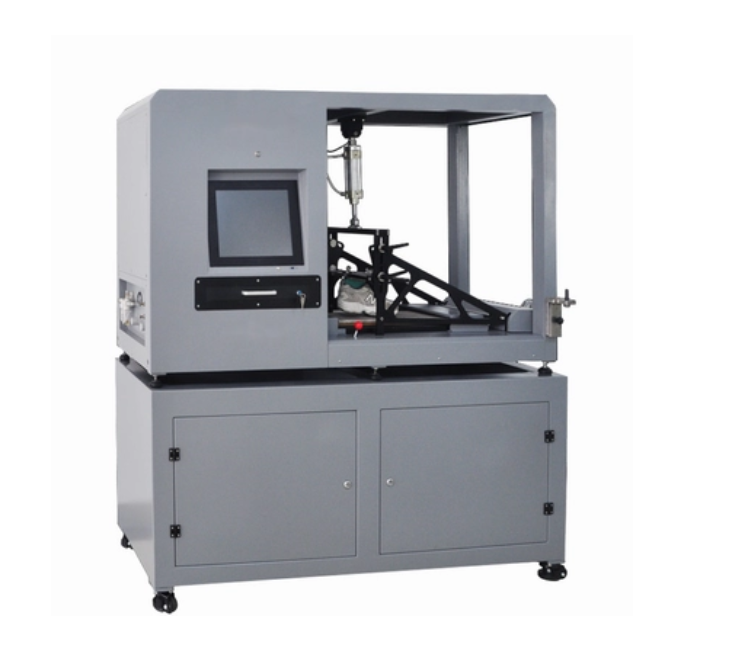
Working Principle of the Slip Resistance Tester
The Slip Resistance Tester operates by securely mounting the footwear specimen onto a dedicated fixture and applying a specified standard load to simulate actual wearing conditions. During the test, the testing platform moves horizontally in a reciprocating motion at a predetermined speed, creating relative movement between the footwear specimen and a standard friction surface.
The frictional resistance generated between the outsole and the selected test surface is continuously monitored throughout the testing process. A computerized data acquisition system collects friction force data over a specified time interval and within a designated measurement zone. The system then automatically processes the recorded data and calculates the coefficient of friction (COF), which serves as a quantitative indicator for evaluating the slip resistance and anti-slip performance of the footwear. This testing method provides an objective and repeatable assessment of footwear safety under various walking surface conditions.
How to Operate a Slip Resistance Tester
I. Pre-Test Preparation
1. Verification of Equipment Condition
Before testing, a comprehensive inspection of the Slip Resistance Tester should be conducted to ensure that all components are functioning properly. The test platform should be checked to confirm that it is flat, clean, free from deformation, and free of residual debris or contaminants. The drive mechanism, high-precision force sensors, data acquisition modules, and control system should operate smoothly without abnormal noise, sticking, or signal drift.
In addition, the power supply, electrical connections, and grounding system should be carefully inspected. For pneumatic models, the compressed air supply, hoses, sealing joints, and pressure regulators should also be examined to ensure secure connections and leak-free operation. These inspections help eliminate potential safety hazards and provide a stable foundation for reliable testing.
2. Specimen Preparation
Representative outsole specimens should be selected from qualified production batches, ensuring that they are free from manufacturing defects and surface damage. The friction contact surface of the outsole should be thoroughly cleaned to remove oil, dust, release agents, and other contaminants that could influence the test results, while preserving the original surface texture.
Depending on the testing requirements and applicable standards, outsole specimens made from different rubber or polymer materials may be prepared for comparative evaluation. Standard flooring materials commonly encountered in practical applications should also be prepared, including ceramic tiles, wooden flooring, polished stone, anti-slip flooring, and other representative walking surfaces.
3. Parameter Configuration
Test parameters should be configured in accordance with relevant international standards, industry specifications, or customer requirements. Using the touchscreen control panel, operators can set key testing parameters, including:
Test speed;
Applied vertical load;
Contact angle between the outsole and test surface;
Number of test cycles;
Test duration.
To simulate normal walking conditions, a commonly used testing speed is 0.4 m/s, while the vertical load can be adjusted according to the desired body weight simulation. Once verified, the parameters can be stored in the system to ensure consistency between repeated tests.
4. Mounting of Specimens and Test Surfaces
Footwear Specimen Installation
The prepared outsole specimen should be securely mounted into the dedicated fixture of the Slip Resistance Tester. Proper tightening and positioning should be verified to prevent movement, displacement, or detachment during testing.
The mounting angle, contact position, and orientation of the outsole should be adjusted to closely reproduce the force distribution experienced during actual walking, ensuring uniform contact between the outsole and the flooring material.
Installation of Flooring Materials
The selected flooring sample should be fixed firmly onto the test platform. A leveling device should be used to verify that the surface is completely flat, without gaps, warping, or uneven joints. Proper alignment between the outsole specimen and the flooring sample is essential for obtaining accurate and repeatable measurements.
II. Standardized Test Operation
After confirming that the specimen installation, parameter settings, and safety protection systems are all correct, the automatic test program can be initiated.
The instrument operates according to the preset conditions, moving the outsole specimen relative to the flooring material at a constant speed to simulate human walking movements. Depending on the testing program, the system can reproduce repeated stepping motions and various friction conditions encountered in indoor and outdoor environments.
Throughout the testing process, operators should monitor the equipment status to ensure stable operation. The integrated high-precision sensor system continuously records key test parameters in real time, including:
Friction force;
Slip displacement;
Contact duration;
Dynamic deformation characteristics;
Cyclic loading behavior.
All measured data are automatically transmitted to the computer control system for storage, classification, and traceability, enabling efficient test management and quality assurance.
III. Post-Test Procedures and Data Analysis
1. Test Completion and Equipment Shutdown
Once the preset number of cycles has been completed and all testing requirements have been satisfied, the instrument will automatically stop and return to its initial position. For special testing conditions, manual shutdown can also be performed by authorized personnel.
After testing, sufficient time should be allowed for all moving components to come to a complete stop and for the equipment to cool down before removing specimens, cleaning the platform, and performing routine maintenance inspections.
2. Evaluation and Interpretation of Test Results
Using the dedicated software platform, operators can retrieve and review all recorded data, focusing on critical performance indicators such as:
Average coefficient of friction (COF);
Peak friction force;
Effective slip resistance range;
Friction degradation during cyclic loading.
These results can then be evaluated according to applicable footwear slip-resistance classification standards.
Generally, a higher coefficient of friction indicates better anti-slip performance and a lower risk of slipping and falling during normal walking conditions. By comparing test results obtained from different outsole materials and flooring combinations, manufacturers can identify the most suitable sole designs for various applications, optimize product development, and establish comprehensive quality records for future reference.
By following this standardized operating procedure, the Slip Resistance Tester provides reliable, repeatable, and objective assessments of footwear slip resistance, helping manufacturers improve product safety, enhance performance, and meet increasingly stringent market requirements.
Why Slip Resistance Testing Is Important
1. Preventing Accidents and Injuries
One of the primary reasons for conducting slip resistance testing is its critical role in preventing accidents and injuries. Slip-and-fall incidents are among the most common causes of injuries in workplaces, public facilities, sports venues, and daily living environments. Slip resistance testing evaluates a shoe's ability to maintain adequate traction on different walking surfaces, thereby reducing the likelihood of slipping accidents.
Accurate slip resistance assessments, such as those performed using a Slip Resistance Tester, provide valuable insights into footwear performance under realistic service conditions. By identifying potential slip hazards at an early stage, manufacturers can optimize outsole materials, tread patterns, and production processes to improve footwear safety, ultimately contributing to a significant reduction in slip-related incidents and injuries.
2. Compliance with Regulations and International Standards
The importance of slip resistance testing extends beyond personal safety to regulatory compliance and adherence to internationally recognized standards. Footwear manufacturers are responsible for ensuring that their products meet applicable safety requirements to safeguard consumer well-being.
Slip resistance testing, particularly when conducted using professional footwear slip resistance testing equipment, can help manufacturers comply with standards such as ISO, GB/T, and ASTM specifications. Demonstrating conformity with these standards not only facilitates market access but also provides objective evidence of product quality and safety performance.
3. Enhancing Brand Reputation and Consumer Confidence
In today's market, where consumers increasingly prioritize product safety, slip resistance testing has a substantial impact on brand reputation and customer trust. Manufacturers that invest in comprehensive testing programs and advanced testing equipment demonstrate a strong commitment to producing safe, reliable, and high-quality footwear.
Positive slip resistance test results can serve as a powerful marketing advantage, reinforcing consumer confidence in the brand. Customers are more likely to trust and remain loyal to companies that place a high value on safety and product performance. Conversely, neglecting slip resistance performance may expose manufacturers to reputational risks, product liability concerns, and a loss of consumer confidence.
4. Customization for Different Application Environments
Footwear is designed for a wide range of applications, and slip resistance requirements vary considerably depending on the intended environment. One of the major benefits of slip resistance testing is its ability to support product customization for specific use conditions.
A Slip Resistance Tester can evaluate footwear performance on multiple types of walking surfaces, enabling manufacturers to optimize outsole designs for targeted applications. Whether intended for construction sites, healthcare facilities, commercial kitchens, industrial workplaces, or wet outdoor environments, slip resistance testing allows manufacturers to develop footwear that effectively addresses the unique challenges associated with each setting.
This customized approach ensures that users can rely on their footwear to provide optimal traction, safety, and performance regardless of the environment in which it is worn.
Conclusion
In summary, the Slip Resistance Tester is an indispensable instrument for evaluating and improving footwear safety. By accurately assessing the anti-slip performance of shoes, manufacturers, testing laboratories, and consumers can make informed decisions when selecting or developing footwear products, thereby minimizing the risk of slip-and-fall accidents.Whether for occupational safety, athletic performance, or everyday use, slip resistance remains a critical factor that should never be overlooked when choosing footwear. By paying greater attention to footwear safety and selecting products with proven slip-resistant properties, individuals can better protect themselves and enjoy greater confidence and security with every step.We sincerely welcome you to leave a message or contact us directly for further communication. Our team will be pleased to provide detailed product information, technical consultation, and customized testing solutions to help you find the most suitable equipment for your specific application requirements.
Previous: What is a Textile Light and Heat Performance Tester?
N e x t : What is a high-temperature aging chamber?
