





What is a textile fiber composition analyzer?
2026/06/23
Share:

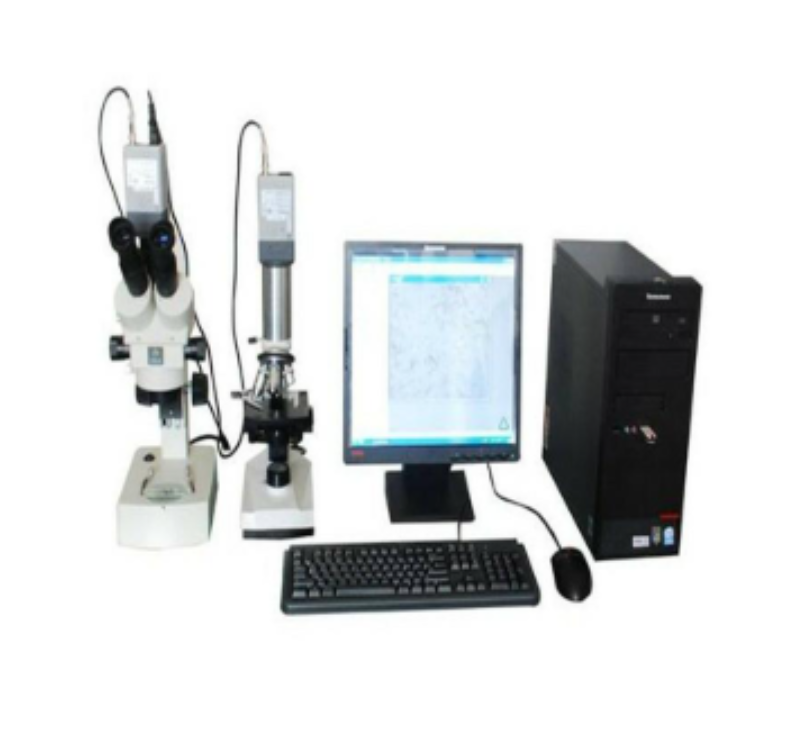
Features of the Textile Fiber Composition Analyzer
1. Fully Modularized and Automated Testing Process
The Textile Fiber Composition Analyzer is based on the dissolution method as its core testing principle. It modularizes all ten experimental procedures, including reagent storage, reagent dispensing, dissolution, filtration, waste liquid treatment, ventilation, sample transfer, drying, cooling, weighing, and sampling. These modules are integrated into a single system and controlled through dedicated analytical software, enabling fully automated operation throughout the entire testing process.
2. Unattended Operation from Sample Loading to Report Generation
From sample placement to the final test report output, the entire process requires no manual intervention. The instrument independently performs a series of operations, including precise reagent addition, fiber dissolution, residue filtration and drying, as well as data calculation and analysis, significantly improving laboratory efficiency.
3. Improved Accuracy and Repeatability
In conventional manual testing, factors such as reagent dosage, dissolution time, and filtration or drying conditions may vary depending on the operator's experience and working condition, leading to inconsistent results. The analyzer's standardized operating procedures ensure identical testing conditions for every measurement, greatly enhancing the accuracy, repeatability, and reliability of test data.
4. Flexible Modular Configuration
Each experimental function is designed as an independent modular unit, allowing users to freely configure the system according to their specific testing requirements. Typically, one dispensing module, one dissolution module, and one filtration module constitute an independent testing station, capable of performing a complete analysis for a single sample. Multiple testing stations can be combined to increase throughput and laboratory productivity.
5. Enhanced Safety Protection
The analyzer adopts a fully enclosed design, effectively preventing volatile solvents generated during the dissolution process from contaminating the laboratory environment or posing health risks to operators. Harmful gases produced during testing are confined within the system and treated through a dedicated ventilation module before being safely discharged, ensuring a clean and safe laboratory atmosphere.
6. Corrosion-resistant Reagent Storage and Intelligent Monitoring
The reagent storage unit utilizes PTFE (Polytetrafluoroethylene) reagent containers, which offer excellent resistance to acids, alkalis, and organic solvents. Each reagent is stored in an individual container to eliminate the risk of cross-contamination. In addition, a weighing sensor is installed beneath each reagent bottle to continuously monitor the remaining reagent volume in real time. When the reagent level becomes insufficient, the instrument automatically issues an alarm notification, preventing interruptions in testing caused by reagent shortages.
Practical Application Scenarios of the Textile Fiber Composition Analyzer
The Textile Fiber Composition Analyzer is primarily used for the qualitative identification of fiber types and the quantitative analysis of blend ratios. Its practical applications extend throughout the entire textile industry chain, mainly covering the following five areas:
1. Raw Material Control and Process Optimization
Incoming Material Inspection
The analyzer can rapidly screen the composition of loose raw materials such as cotton bales, wool tops, and synthetic staple fibers, effectively preventing adulteration, material substitution, or batch inconsistencies.
Process Monitoring
During manufacturing processes such as opening, blending, and drawing, the instrument can be utilized to monitor yarn composition in real time, providing immediate feedback on blend ratio deviations and assisting manufacturers in optimizing processing parameters.
Research and Development Support
In the product development stage, the analyzer enables precise determination of the composition of novel fibers and complex blended materials, providing reliable data to support formulation design and product innovation.
2. Finished Product Compliance and Label Verification
Label Verification
The instrument is widely used to verify whether the fiber content stated on labels and hangtags of garments, home textiles, and other finished products accurately reflects their actual composition, ensuring compliance with relevant national and international standards.
Market Surveillance
It helps manufacturers and regulatory agencies respond to market inspections by generating authoritative composition analysis reports, thereby reducing the risk of misleading labeling, product misrepresentation, or quality disputes.
Trade Settlement
In international textile trade, fiber composition analysis can serve as an arbitration basis for price determination, contract settlement, and compensation claims based on the verified fiber content.
3. Third-party Testing and Arbitration Analysis
Dispute Resolution
When disagreements arise between suppliers and buyers regarding material composition, the analyzer can provide objective and traceable quantitative results through technologies such as Fourier Transform Infrared Spectroscopy (FTIR) or chemical dissolution methods.
Complex Sample Analysis
For difficult-to-test materials, including dark-colored fabrics, coated textiles, or specially finished products, advanced analytical techniques such as Pyrolysis Gas Chromatography-Mass Spectrometry (Py-GC/MS) can be employed to achieve accurate qualitative identification.
4. Textile Recycling and Circular Economy
Sorting and Material Identification
In textile recycling facilities, the analyzer can automatically identify the composition of shredded textile waste, distinguishing among cotton, polyester, wool, and other fibers to enable efficient sorting and separation.
High-value Recycling Applications
By accurately determining the proportion of impurity fibers within recycled materials, manufacturers can optimize regeneration processes and improve the economic value and quality of recycled fibers.
5. Specialized Testing for Technical Textiles
Functional Performance Verification
The analyzer can determine the content of high-performance fibers, such as aramid fibers and carbon fibers, used in filtration materials, tarpaulins, medical textiles, and other industrial products, ensuring compliance with industry-specific requirements for strength, heat resistance, and chemical resistance.
Safety and Regulatory Compliance
For sensitive products such as infant and children's apparel, the instrument can rigorously verify fiber composition to detect undeclared allergenic or potentially hazardous fiber materials, thereby enhancing consumer safety and regulatory compliance.
Functions of the Textile Fiber Composition Analyzer
1. Ensuring Raw Material Quality Control Throughout Production
Throughout the textile manufacturing process, from raw material procurement to finished product delivery, strict control of fiber composition is essential. During incoming material inspection, the Textile Fiber Composition Analyzer can accurately identify and quantify fiber components in raw materials, ensuring they meet production specifications. This helps manufacturers avoid defects and quality issues caused by non-conforming or adulterated materials, thereby improving overall production consistency and efficiency.
2. Supporting Textile Product Research and Development
The Textile Fiber Composition Analyzer plays an important role in textile research and development. Researchers can utilize the instrument to precisely analyze innovative fiber materials and newly developed blend formulations, allowing them to evaluate the performance characteristics of different fiber combinations. The resulting data provide a reliable scientific basis for product design, material optimization, and the development of high-value textile products.
3. Improving Product Quality Assurance and Consistency
By providing highly accurate and repeatable testing results, the analyzer enables manufacturers to establish comprehensive quality control procedures throughout the production cycle. Consistent monitoring of fiber composition helps ensure that finished products comply with design specifications, customer requirements, and applicable industry standards, ultimately enhancing product reliability and customer satisfaction.
4. Promoting Standardization and Regulatory Compliance in the Textile Industry
The widespread adoption of Textile Fiber Composition Analyzers contributes significantly to the standardized development of the textile industry. Uniform testing methods and reliable analytical results provide a solid foundation for industry supervision and quality management. Regulatory agencies and quality inspection organizations can use the instrument to conduct market surveillance, identify counterfeit or substandard products, and maintain fair competition and market order.
5. Enhancing Enterprise Quality Management and Industry Competitiveness
For textile manufacturers, implementing standardized testing procedures with advanced analytical instruments helps strengthen quality management systems and improve production control capabilities. The increasing utilization of fiber composition analyzers also encourages companies to place greater emphasis on precise fiber content management, promoting the industry's transition toward refined manufacturing, premium-quality products, and sustainable development. Ultimately, this contributes to enhancing the overall reputation and global competitiveness of the textile industry.
Selection Recommendations for the Textile Fiber Composition Analyzer
When selecting a Textile Fiber Composition Analyzer, the key considerations should focus on the suitability of the analytical principle, quantitative accuracy requirements, and the intended application scenario. Users should avoid blindly pursuing either high-end configurations or low-cost solutions and instead choose equipment that best matches their operational needs.
1. Determine the Appropriate Analytical Technique and Application Scenario
Different analytical technologies vary significantly in terms of cost, testing speed, and accuracy. The most suitable solution should be selected based on specific business requirements.
Near-Infrared Spectroscopy (NIR)
NIR technology is ideal for rapid screening and online quality control applications. Its major advantages include non-destructive testing, results generated within seconds, and no need for chemical reagents. However, its quantitative accuracy largely depends on the quality of the calibration database and may be slightly lower than chemical methods when analyzing newly developed fibers or complex ternary blends. It is particularly suitable for factory quality control laboratories, customs inspections, and high-throughput screening applications.
Fourier Transform Infrared Spectroscopy (FTIR)
FTIR is highly suitable for qualitative fiber identification and research and development activities. It enables precise identification of molecular structures and can effectively distinguish between similar synthetic fibers. Nevertheless, quantitative analysis of blended materials can be more challenging, and sample preparation procedures may be relatively time-consuming.
Microscopic Projection and Image Analysis Methods
These techniques are particularly advantageous for the quantitative analysis of natural fibers. They comply with established testing standards and are commonly employed in arbitration inspections and regulatory investigations. However, testing efficiency is relatively low, and the results often depend heavily on operator expertise, making them less suitable for high-volume industrial testing.
Chemical Dissolution Method
For applications requiring legally recognized arbitration reports, standardized chemical dissolution methods remain the preferred approach. In such cases, automated analyzers generally serve as auxiliary tools, since purely instrumental techniques may not always be accepted in highly regulated or legally sensitive situations.
2. Key Selection Criteria
Database Coverage
Verify that the analyzer's built-in database includes more than 200 commonly used fibers, specialty fibers, and modified materials frequently encountered in your applications. It is also advisable to confirm whether lifetime database updates are provided free of charge.
Quantitative Accuracy and Repeatability
Pay close attention to the instrument's error range for blend ratio determination, as well as performance indicators such as signal-to-noise ratio, wavelength accuracy, and measurement repeatability. High-precision systems generally offer superior consistency and reliability.
Sample Compatibility
Determine whether the instrument supports direct testing of whole fabric samples or requires samples to be ground into powder. Direct fabric analysis provides higher operational efficiency but may be influenced by fabric structure, whereas powdered samples generally yield higher analytical accuracy at the expense of sample destruction.
Compliance with Industry Standards
Ensure that the analyzer complies with relevant FZ/T, ISO, and GB/T standards, allowing generated test reports to be readily accepted by customers, certification bodies, and regulatory authorities.
3. Tips to Avoid Common Purchasing Pitfalls
Be Cautious of "Universal Solution" Claims
No single analytical technology can perfectly identify and quantify all fiber types under every circumstance. Prospective buyers should carefully evaluate how manufacturers address potential interferences, special fiber treatments, and complex blended materials.
Assess After-sales Service and Training Support
Fiber composition analysis relies heavily on model maintenance and calibration. Therefore, it is important to confirm that the supplier offers on-site application training, periodic model optimization and calibration services, and a responsive technical support system, preferably with 24-hour troubleshooting assistance.
Conduct Practical Verification Before Purchase
Before making a final investment decision, customers are strongly encouraged to bring representative samples from their own production processes for on-site blind testing. Comparing analyzer results with those obtained through standardized laboratory chemical methods provides the most reliable assessment of actual analytical performance.
Conclusion
Overall, the Textile Fiber Composition Analyzer is an advanced and valuable tool that deserves continued attention and in-depth evaluation within the textile industry. We sincerely welcome you to leave a message or contact us directly so that we can provide you with more comprehensive product information, technical documentation, and professional consultation services tailored to your specific testing requirements.
Previous: What is a rain test?
N e x t : What is a chemical protective robotic manikin?
