





What is degradation and failure of PV module?
2026/06/26
Share:

Why Do Solar Cells Need Light-Induced Degradation (LID) Testing
Light-induced degradation (LID) testing of solar cells is an important quality control procedure aimed at identifying potential declines or deterioration in photoelectric performance that may occur during operation.
1. Quality Control
The photoelectric performance of a solar cell is one of the most critical indicators of its overall efficiency and quality. By periodically monitoring performance degradation, manufacturers can quickly identify production defects, reduce the rate of non-conforming products, and ensure that their products consistently meet design specifications and quality standards.
2. Reliability Assessment
During actual operation, solar cells are exposed to environmental factors such as temperature fluctuations, humidity, and prolonged sunlight exposure, all of which can contribute to performance degradation over time. LID testing enables manufacturers to detect and assess these issues at an early stage, allowing them to implement appropriate corrective measures, optimize product design, and extend the service life of solar cells.
3. Safety Assurance
For certain battery-related applications, including photovoltaic cells and lithium-ion batteries, a decline in photoelectric performance may potentially lead to safety concerns. By detecting and addressing degradation issues in a timely manner, manufacturers can minimize potential risks and enhance the overall operational safety of their products.
4. Product Warranty Compliance
Solar cell manufacturers typically provide performance warranties to their customers. Through systematic LID testing, they can more effectively monitor product performance over time and ensure that their products continue to meet the guaranteed performance standards throughout the warranty period.
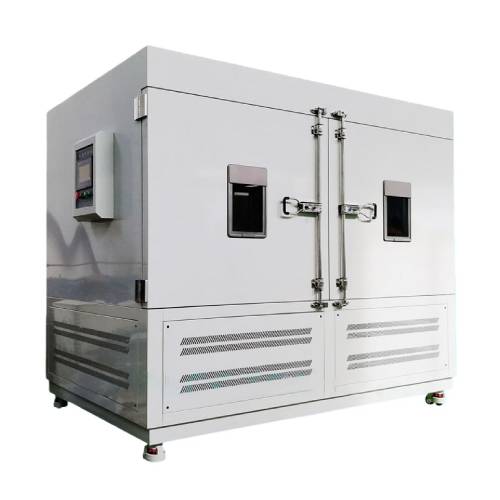
Working Principle of a Light-Induced Degradation (LID) Test Chamber
1. Light Source System
The light source system is the core component of a Light-Induced Degradation (LID) test chamber, responsible for providing stable illumination with spectral characteristics closely matching those of natural sunlight. Full-spectrum DC xenon arc lamps or fluorescent ultraviolet (UV) lamps are commonly used as light sources.
Xenon arc lamps can simulate the full solar spectrum, including ultraviolet, visible, and infrared radiation, making them widely used in tests requiring an accurate reproduction of natural sunlight conditions. Fluorescent UV lamps, on the other hand, are primarily used to simulate the ultraviolet portion of the spectrum and are suitable for testing materials that are particularly sensitive to UV exposure. The choice of light source depends on the specific testing requirements and should ensure that its spectral characteristics closely correspond to those of the target environment.
2. Illumination Control
The illumination control module ensures the stability and reliability of light intensity, which is essential for obtaining accurate and repeatable test results. Equipped with high-precision irradiance sensors and a closed-loop feedback control system, the LID test chamber continuously monitors and adjusts the light intensity in real time to maintain it within the preset range.
The irradiance can typically be adjusted steplessly within a range of 400–1200 W/m² to accommodate various testing scenarios. In addition to intensity regulation, the illumination control system also provides precise control over exposure duration, ensuring consistency throughout the testing process.
3. Temperature Control
Temperature is one of the key factors affecting the degradation behavior and long-term performance of materials and devices. Therefore, LID test chambers are equipped with advanced temperature control systems capable of maintaining a stable chamber environment within a specified temperature range.
Through the coordinated operation of heating and cooling units, the chamber temperature can be precisely regulated at the desired setpoint, minimizing testing errors caused by temperature fluctuations. In many cases, the temperature control module works in conjunction with the illumination control system to simulate temperature variations encountered under actual operating conditions.
4. Exhaust and Cooling System
During prolonged illumination testing, solar cells, modules, or other test specimens may generate heat, resulting in an increase in chamber temperature. The exhaust and cooling system dissipates excess heat, typically through forced-air cooling, to reduce the temperature of silicon wafers or other samples and prevent overheating.
The speed and airflow direction of the exhaust fans can be adjusted as needed to ensure effective air circulation within the chamber, thereby maintaining a stable and uniform testing environment throughout the entire test period.
Main Features of the Light-Induced Degradation (LID) Test Chamber
1. Comprehensive Safety Protection
The chamber is equipped with multiple safety features, including leakage protection, power circuit interruption, and short-circuit protection, ensuring safe and reliable operation throughout the testing process.
2. Adjustable Irradiance
The irradiance level can be continuously adjusted within a range of 700–1200 W/m², enabling the chamber to accommodate various testing requirements and standards.
3. Long-Term Continuous Operation
The equipment is designed for prolonged, uninterrupted operation. Test duration can be freely programmed and set according to specific testing protocols.
4. Light Source
The chamber utilizes a full-spectrum DC xenon arc lamp as the light source, providing illumination characteristics that closely replicate natural sunlight.
5. Stable Light Source Driving System
A proprietary power supply developed by our company is employed to drive the xenon lamp, ensuring excellent irradiance stability, high reliability, and consistent testing performance.
6. Integrated Cooling and Ventilation System
An internal air duct equipped with exhaust fans is incorporated into the chamber to cool silicon wafers or other test specimens, preventing overheating during extended exposure tests.
7. Precise Temperature Monitoring
The chamber is fitted with a temperature controller that provides accurate temperature regulation, with a control accuracy of ±1°C, ensuring a stable testing environment.
8. Intelligent Control System
The equipment is controlled by a PLC (Programmable Logic Controller) integrated with a touchscreen industrial control interface, offering user-friendly operation, programmable test sequences, and convenient parameter monitoring and adjustment.
Operating Procedure of a Light-Induced Degradation (LID) Test Chamber
The operation of a Light-Induced Degradation (LID) test chamber generally involves the following steps:
1. Equipment Preparation
Place the test chamber in a well-ventilated, dust-free environment. Verify that the power supply is properly connected, as a 380 V power source is typically required.
Set the test parameters, such as temperature and irradiance, according to the testing requirements. For example, the temperature uniformity of an LID aging test chamber can typically be maintained within ≤2°C, while the illumination temperature may be set at 50 ± 10°C.
2. Sample Placement
Position the solar cells or photovoltaic modules to be tested at the designated location inside the chamber. Ensure that the distance between the specimens and the light source complies with the applicable testing standard, for example, 50 mm.
3. Parameter Configuration
Use the touchscreen interface or PLC controller to configure testing parameters, including illumination duration, temperature range, and irradiance level.
For instance, a programmable steady-state LID test chamber may provide a timer range of 0–9.999 hours and an irradiance adjustment range of 600–1300 W/m². When simulating different operating conditions, the wavelength distribution and intensity of the light source can also be adjusted as required.
4. Test Initiation
After confirming that all parameters have been correctly configured, start the test chamber to begin the illumination aging test.
During the test, periodically monitor the operating status of the equipment to ensure that parameters such as temperature and irradiance remain stable and within the specified limits.
5. Data Recording and Analysis
Upon completion of the test, record the electrical performance data of the specimens, including parameters such as current, voltage, and power output.
Analyze the collected data to evaluate the degree of light-induced degradation and assess the durability, long-term reliability, and performance retention characteristics of the tested samples.
6. Equipment Maintenance
After testing, switch off the power supply and clean the interior of the chamber to maintain a clean testing environment.
Regular calibration and preventive maintenance should be carried out to ensure long-term accuracy, reliability, and stable operation of the equipment.
7. Precautions
Avoid direct exposure to the light source during operation to prevent burns or eye injuries caused by intense radiation.
For elevated-temperature testing, verify that the test specimens are capable of withstanding the specified temperature conditions.
If any abnormal conditions occur during testing, immediately stop the test and inspect the equipment to identify and rectify the issue before resuming operation.
Importance of the Light-Induced Degradation (LID) Test Chamber
The fundamental significance of a Light-Induced Degradation (LID) test chamber lies in its ability to accelerate aging simulations, compressing the natural degradation process that occurs over years or even decades of outdoor exposure into a short and controllable laboratory testing period. This enables manufacturers and researchers to accurately evaluate the weather resistance, service life, and long-term reliability of materials and devices. Its value is mainly reflected in the following four key aspects:
1. Shortening R&D Cycles and Accelerating Product Development
Time Compression
By utilizing high-intensity light sources and precise temperature control systems, the LID test chamber can reproduce the effects of months or even years of outdoor light aging within days or weeks, overcoming the limitations associated with lengthy natural exposure tests.
Rapid Validation
During the stages of new material selection, process optimization, or formulation adjustment, the chamber provides fast feedback on performance changes under different conditions. This significantly reduces trial-and-error costs, streamlines product development, and shortens time-to-market.
2. Ensuring Product Quality and Long-Term Reliability
Defect Screening
The chamber enables precise evaluation of critical degradation mechanisms such as Light-Induced Degradation (LID) and Potential-Induced Degradation (PID). It helps manufacturers identify solar cells or materials exhibiting excessive degradation or latent defects at an early stage, preventing substandard products from reaching the market.
Performance Prediction
By monitoring parameters such as luminous flux retention, power conversion efficiency, and electrical performance variations, degradation models can be established to scientifically predict product lifespan and long-term energy yield under actual operating conditions, ensuring stable field performance.
Failure Analysis
The chamber can simulate combined environmental stresses, including ultraviolet radiation, elevated temperatures, and humidity, thereby accelerating the appearance of potential failure modes such as yellowing, chalking, cracking, delamination, and embrittlement. The resulting data provide valuable guidance for structural design improvements and encapsulation process optimization.
3. Meeting International Standards and Certification Requirements
Compliance with Industry Standards
Testing procedures can be designed to comply with internationally recognized standards such as IEC, GB/T, and other industry-specific specifications, facilitating certification for photovoltaic modules, automotive components, architectural coatings, and weather-resistant materials.
Authoritative Test Data
The chamber generates reliable data on spectral matching, irradiance uniformity, and irradiance stability in accordance with established testing requirements. These data provide a solid foundation for accredited third-party laboratories to issue authoritative test reports, thereby enhancing product credibility and market competitiveness.
4. Reducing Life-Cycle Operation and Maintenance Costs
Early Risk Identification
Potential early-life failures can be detected before mass production or large-scale field deployment, helping manufacturers avoid costly recalls, warranty claims, and maintenance expenses caused by widespread degradation issues.
Economic Benefits
By improving product resistance to light-induced aging and extending actual service life, manufacturers can significantly reduce maintenance costs for end users, increase system reliability, and ultimately improve return on investment.
In summary, the Light-Induced Degradation (LID) test chamber serves as a critical bridge between laboratory research and development and real-world outdoor applications. It is an indispensable quality assurance tool for ensuring that photovoltaic devices and weather-resistant materials can maintain stable performance, durability, and reliability under complex environmental conditions.We sincerely welcome your inquiries and invite you to contact us directly for more detailed product information, technical specifications, and customized testing solutions.
Previous: What is a pendulum impact testing machine for plastic film?
N e x t : What is the Hexapod Tumbler test machine?
