





What is a Laser Compression Deformation Tester?
2026/06/29
Share:

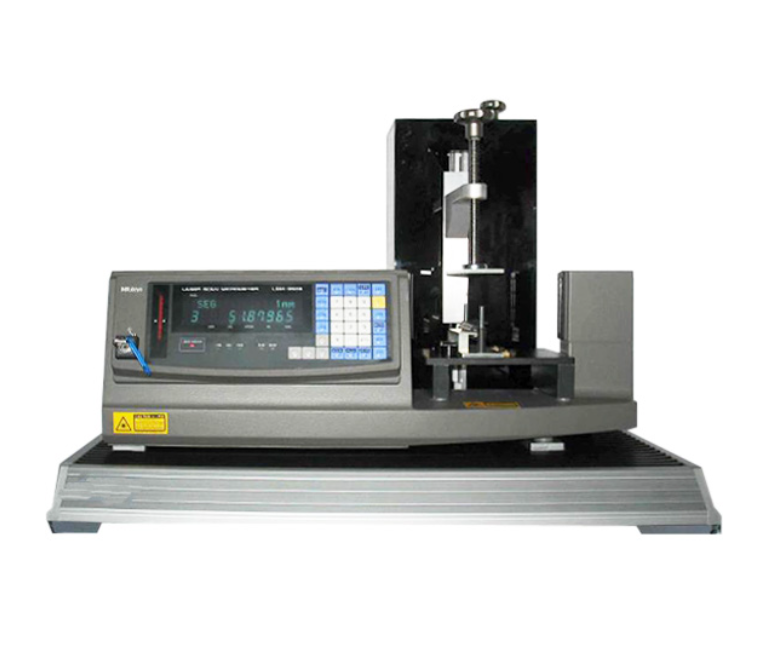
Working Principle of the Sealing Strip Laser Compression Deformation Tester
1. Core Principle of Compression Deformation Measurement
The core function of the laser compression deformation tester is to simulate the actual compression conditions experienced by materials in real applications, and to accurately measure their deformation and recovery capability, thereby evaluating material durability and elasticity performance.
When a material is subjected to external compressive force, its internal microstructure undergoes deformation. If the material has excellent elasticity, it can largely return to its original shape after the external force is removed; if the elasticity is insufficient or the load exceeds its limit, permanent (residual) deformation will occur. The equipment quantifies material performance by capturing and analyzing the data changes throughout this process.
2. Loading System and Force Application Mechanism
As the power core of the equipment, the system applies constant or cyclic compressive force to the specimen through a servo motor or hydraulic system. For soft materials such as automotive sealing strips, the system can precisely control the pressure range from a few newtons to several thousand newtons, simulating real-world working conditions such as door closing and window operation.
Some high-end models are capable of dynamic loading, reproducing repeated compression caused by vehicle vibration during driving, thereby providing a more realistic simulation of service conditions.
3. Laser Non-Contact Measurement System
The system uses a non-contact laser sensor to monitor specimen height changes in real time with micrometer-level accuracy. The laser beam captures surface profile data through reflection principles, completely eliminating errors caused by mechanical contact, friction, or additional pressure found in traditional contact-based measurement methods.
This is especially suitable for testing soft materials such as rubber and silicone. With high-frequency scanning capability, the sensor can continuously record the full compression–recovery process, generating a complete deformation curve that provides detailed and reliable data for material performance analysis.
Application Range of the Sealing Strip Laser Compression Deformation Tester
1. Automotive Manufacturing Applications
In the automotive industry, sealing strips play a crucial role in sound insulation, waterproofing, dust prevention, and vibration damping. Their performance directly affects vehicle NVH (Noise, Vibration, and Harshness) levels and overall user experience. The laser compression deformation tester has become a key quality control instrument for sealing strip evaluation.
2. Long-Term Door and Window Compression Simulation
The tester simulates repeated compression conditions during long-term opening and closing of doors and windows. It evaluates the permanent deformation rate of sealing strips after thousands or even tens of thousands of compression cycles. Industry standards typically require that after 100.000 cycles, the height retention rate of sealing strips should be ≥85%, ensuring long-term sealing performance and preventing issues such as water leakage and abnormal noise.
3. Static Compression and Creep Performance Testing
For sealing strips used in windshields, rear windows, sunroofs, and trunks, the instrument evaluates creep behavior under long-term constant compression. Through a 24-hour constant pressure test, the creep rate is required to be ≤5%, preventing sealing failure caused by material deformation and ensuring reliable dustproof and waterproof performance.
4. New Energy Vehicle Battery Pack Seals
With the rapid development of electric vehicles, battery pack sealing strips have become critical components. The tester simulates complex working conditions such as vibration and temperature variation during vehicle operation to evaluate compression deformation and recovery capability. This ensures that the battery pack maintains excellent sealing performance and prevents water or dust ingress that could lead to safety hazards.
5. High-Speed Railway Door Sealing Systems
High-speed train door sealing strips must withstand strong wind pressure and vibration during operation. The tester simulates dynamic compression cycles to evaluate elasticity recovery and durability. Testing standards require that after simulated 10 years of service life, the permanent deformation rate should be ≤10%, ensuring airtight door closure and stable cabin pressure.
6. Railway Carriage Sealing Applications
For rubber sealing strips between train carriages, the tester simulates long-term compression and vibration conditions and evaluates sealing performance under different temperatures. At low temperatures of -40°C, the permanent deformation rate must remain within acceptable limits to prevent sealing failure caused by material hardening, ensuring thermal insulation and soundproofing performance inside the carriage.
7. Aircraft Door Sealing Systems
Aircraft door seals must withstand significant cabin pressure differences and extreme temperature variations ranging from -50°C to 60°C. The tester simulates long-term compression under these environmental conditions to evaluate permanent deformation and elastic recovery, ensuring reliable cabin sealing and preventing safety risks caused by pressure leakage.
8. Aircraft Window Seals
For aircraft window rubber seals, the tester simulates pressure changes and thermal cycling during flight to evaluate compression deformation performance. After thousands of pressure cycles, the sealing strips must maintain sufficient elasticity to prevent air or water leakage and ensure flight safety.
9. Building Door and Window Sealing Strips
For aluminum alloy and PVC door/window sealing strips, the tester simulates long-term compression caused by frequent opening and closing. High-quality sealing strips should exhibit a permanent deformation rate of ≤8% after 10.000 cycles, ensuring tight sealing performance over long-term use and effectively reducing noise and heat transfer.
10. Curtain Wall Sealing Systems
Building curtain wall sealing strips are exposed to wind pressure and temperature fluctuations. The tester simulates compression under strong wind loads to evaluate durability and elastic recovery. The requirement is that under simulated wind pressure conditions, the permanent deformation rate should be ≤10%, preventing water leakage and air infiltration, and ensuring building safety and comfort.
Core Functions and Applications of the Sealing Strip Laser Compression Deformation Tester
The laser compression permanent deformation tester for sealing strips is mainly used to accurately measure the permanent deformation of automotive sealing strips under long-term compression conditions and to evaluate their durability and sealing performance. Its core functions and applications are as follows:
1. Core Testing Functions
1.1 Compression Deformation Curve Analysis
Using linear laser measurement technology, the system records real-time deformation changes of the sealing strip during compression. It generates a dynamic deformation curve, which intuitively reflects the elastic and plastic deformation characteristics of the material under load.
1.2 Permanent Deformation Calculation
Following a standard test procedure, the permanent deformation (compression set) is quantified through the following steps:
Initial thickness measurement:
Laser sensors record the original thickness of the sealing strip before compression.
Compression stage:
A specified load (typically around 70% of actual working load) is applied and maintained for 22–24 hours.
Recovery and measurement:
After unloading, the sample is allowed to recover for 30 minutes, then the residual thickness is measured.
Deformation rate calculation:
[\text{Compression Set} = \frac{\text{Initial Thickness} - \text{Residual Thickness}}{\text{Initial Thickness}} \times 100%]
This result directly reflects the sealing strip’s resistance to permanent deformation.
2. Application Scenarios and Material Compatibility
2.1 Automotive Sealing Strip Quality Control
The tester is suitable for common sealing materials such as EPDM rubber and silicone, verifying long-term sealing performance in applications such as doors, sunroofs, and engine compartments.
Door sealing strips: Evaluate compression recovery after door closure to prevent air and water leakage.
Dynamic engine seals: Simulate high temperature and pressure environments to test aging resistance.
2.2 Material Development and Optimization
By comparing deformation data of different formulations or manufacturing processes, engineers can optimize key material properties such as elasticity and hardness, thereby improving product lifespan and performance.
3. Technical Advantages and Standard Compatibility
3.1 High-Precision Measurement System
Force control range: 0.005%–5% FS/s, supports both constant force and constant deformation modes
Displacement resolution: Stroke ≥ 100 mm, speed range 0.001–600 mm/min (customizable high-speed systems available)
Force accuracy: Resolution up to 1/±500.000 FS, with indication error ≤ ±0.2%
3.2 Environmental Simulation Capability
Some models integrate temperature and humidity control systems, enabling reproduction of standard test environments and simulation of extreme climatic conditions for sealing performance evaluation.
4. Automation and Efficiency Improvement
4.1 Automated Testing Process
The system integrates a servo motor and high-precision ball screw drive mechanism, combined with real-time height sensors. This reduces manual intervention and significantly improves testing efficiency and repeatability.
4.2 Intelligent Report Generation
The instrument can automatically generate test reports and deformation curves, supports bilingual (Chinese/English) output, and allows WiFi connectivity for convenient data sharing and traceability.
5. Fixture Adaptability and Ease of Operation
5.1 Customized Fixture Design
Special fixtures can be designed according to the cross-sectional shape of sealing strips to ensure that the compression direction matches real-world application conditions.
5.2 User-Friendly Interface
Equipped with a 12-inch industrial-grade embedded touchscreen computer, the system features a simple and intuitive interface, supporting integrated PLC + Windows control for stable and efficient operation.
Importance of the Sealing Strip Laser Compression Deformation Tester
The core value of the Sealing Strip Laser Compression Deformation Tester lies in transforming the “qualitative perception” of whether a sealing component has good elasticity into quantifiable, traceable, and highly precise data. It serves as a critical safeguard for ensuring the long-term reliability of sealing systems in fields such as automotive engineering, construction, and rail transportation.
1. Precise Quantification of Durability and Elastic Recovery
Through non-contact laser scanning technology, the instrument accurately measures the compression set (permanent deformation rate) of sealing strips after long-term compression. This directly reflects whether irreversible microstructural damage has occurred in the material, providing a solid scientific basis for formulation optimization and material development.
2. Prevention of Functional Failure Risks
Loss of elasticity in sealing strips can lead to serious issues such as water leakage, air leakage, abnormal noise, and insulation failure. The tester can simulate extreme working conditions to identify potential failure points in advance, effectively preventing major quality incidents after vehicle or building delivery.
3. Improved Measurement Accuracy and Consistency
Compared with traditional contact-based measurement methods, laser technology eliminates interference caused by mechanical friction. The test repeatability error is typically less than ±1%, ensuring highly consistent quality control in mass production and meeting strict international and domestic testing standards.
4. Accelerated R&D and Shortened Development Cycles
With support for dynamic loading and environmental simulation testing, the equipment can quickly evaluate material performance under complex working conditions. This significantly shortens product development cycles and reduces after-sales costs caused by sealing failures.
Conclusion
In summary, the Sealing Strip Laser Compression Deformation Tester stands out as an advanced piece of equipment in the field of sealing material R&D and quality control due to its high precision, efficient data output, and powerful simulation capabilities. It not only accurately evaluates compression recovery performance but also effectively reproduces real-world application conditions, providing strong data support for product design optimization and quality assurance.We sincerely welcome inquiries regarding technical specifications, application cases, or customized solutions. Please feel free to leave a message or contact us directly. Our professional team will provide detailed product documentation, technical proposals, and dedicated pre-sales support to help you better integrate this advanced testing technology into your R&D and production processes.
Previous: Why is fiber fineness important?
N e x t : Which device measures both temperature and humidity?
