





What is a hydrostatic pressure test?
2026/07/01
Share:

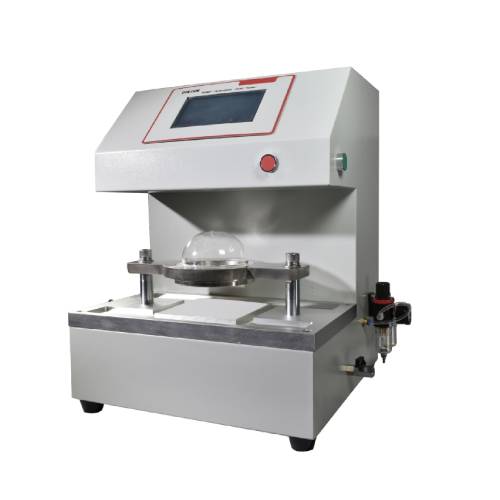
Main Components and Features of the Hydrostatic Pressure Tester
1. Main Components
Test platform
The test platform provides a horizontal surface for placing specimens. It includes a test tank, and the outer rim of the tank is typically equipped with a rubber O-ring seal to prevent leakage. A built-in level bubble is also provided to help adjust and ensure the platform is properly leveled.
Clamping device
This includes components such as a fabric-pressing triangular clamp. It can be moved up and down by rotating a handle or similar mechanism, and is used to place and securely clamp the specimen during testing.
Pressure supply system
This system consists of a water storage tank, an electromagnetic pump, and connecting tubes. The tank stores distilled water, while the pump delivers water to the test area. The tubes connect all components to ensure stable water transmission throughout the system.
Pressure sensor
Installed inside the test port, the pressure sensor measures the hydrostatic pressure applied to the specimen in real time and transmits the data to the control system or display unit.
Control system
The control system includes a control panel, display screen, and related electronic circuits. Operators can set test parameters through the panel, while the display shows real-time pressure data and test status information.
2. Key Features
High-precision pressure control
The device can precisely regulate water pressure to ensure accurate and reliable test results.
Multi-function testing capability
It supports various test modes, such as static hydrostatic pressure testing and dynamic pressure testing.
Automated operation
Equipped with an automated control system, it reduces human error and improves testing efficiency.
Data recording and analysis
Test data is recorded in real time and can be further analyzed through dedicated software.
Durable design
Manufactured with high-quality materials to ensure long-term stable operation of the equipment.
Application Scope of the Hydrostatic Pressure Tester
Textile industry
The Hydrostatic Pressure Tester is widely used to evaluate the hydrostatic resistance of textiles such as waterproof clothing, raincoats, tents, outdoor gear, mountaineering jackets, and medical protective garments. It ensures that these products maintain effective water resistance under different pressure conditions. It is also suitable for testing coated fabrics, including PVC, PU, PE, and PA coated textiles.
Coating materials industry
It is used to evaluate the waterproof performance of coatings and waterproof membranes under water pressure conditions. This helps manufacturers optimize formulations and improve production processes.
Construction materials industry
The equipment is used to test waterproof boards, waterproof membranes, roofing waterproof layers, and other building materials under long-term water immersion or high hydrostatic pressure, ensuring reliable waterproof performance in construction applications.
Automotive industry
It is applied to test the waterproof sealing performance of automotive interior and exterior components, such as door seals, window seals, and sunroof seals, ensuring vehicles maintain waterproof integrity under various weather conditions.
Electronics industry
The tester is used to evaluate the waterproof performance of electronic products such as smartphones, smartwatches, waterproof cameras, and other electronic devices.
Other industries
It is also suitable for testing diving equipment, underwater devices, waterproof watches, waterproof earphones, and other products requiring pressure resistance and sealing performance. In addition, it can be used for evaluating the impermeability of geotextiles and similar materials.
Test Principle and Procedure of the Hydrostatic Pressure Tester
In modern civil engineering, hydraulic engineering and hydropower station construction are particularly important. Some water-containing structures such as storage tanks and water towers must be able to withstand a certain level of pressure; otherwise, serious leakage accidents may occur, leading to significant and incalculable economic losses. To prevent such issues, a Hydrostatic Pressure Tester is used to conduct pressure tests on these water containers.
1. Test principle:
The Hydrostatic Pressure Tester works by filling the tested container with water and gradually applying increasing pressure, while observing whether leakage or deformation occurs. Although different types of hydrostatic pressure testers may have different structures, the fundamental testing principle is essentially the same.
2. Test procedure:
The testing process generally includes the following steps:
(1) Preparation of the test sample
Clean the interior of the water container thoroughly and prepare it for proper sealing.
(2) Connection of the testing equipment
Connect the inlet pipe of the testing device to the water inlet of the container. Fix the clamp of the testing device at the upper part of the container. At the same time, connect the outlet pipe of the testing device to the outlet of the container to ensure smooth water flow.
(3) Start of testing
First open the water inlet to fill the container with water. Once the container is fully filled, close the inlet and begin increasing the air pressure of the testing system to raise the internal pressure of the container.
(4) Observation of results
During pressurization, observe whether the container shows any signs of leakage or deformation. If water sprays out from the outside or the container visibly deforms, it indicates that the container does not meet the required pressure resistance standard and the test has failed. If the container remains stable within the specified pressure range, the test is considered passed.
(5) End of testing
After the test is completed, slowly release the internal pressure of the testing device until it returns to zero. Then remove the clamps and inlet/outlet pipes, and drain the water from the container.
Safety and management precautions:
When conducting hydrostatic pressure testing, the following points should be noted:
The testing equipment must comply with relevant national standards and be regularly inspected and calibrated.
Operators must be fully trained and familiar with the testing procedure and equipment operation.
Test data must be properly recorded, including pressure values, test time, and results, for engineering acceptance and documentation purposes.
Conclusion:
The Hydrostatic Pressure Tester is a device used to determine whether a water container can withstand internal pressure. It works by gradually increasing pressure and observing leakage or deformation. During testing, attention must be paid to equipment selection, operational procedures, and data recording to ensure reliable and accurate results.
Importance of the Hydrostatic Pressure Tester
The Hydrostatic Pressure Tester is a key piece of equipment used to evaluate a material’s resistance to liquid water penetration. Its importance is mainly reflected in three aspects: ensuring human safety and health, meeting regulatory and market access requirements, and optimizing process research and development.
1. Ensuring user safety and health
In the medical protective field, the instrument is used to test the liquid penetration resistance of protective clothing and surgical gowns, preventing blood or bodily fluids from penetrating and causing cross-infection. In outdoor and industrial protection applications, it ensures that products such as mountaineering jackets and firefighting suits maintain dryness and thermal insulation under heavy rain or high-pressure liquid spray, preventing hypothermia or chemical exposure hazards.
2. Meeting mandatory standards and market access requirements
The Hydrostatic Pressure Tester is an essential tool for compliance with international and national standards such as GB/T 4744. AATCC 127. and EN 20811. Products without qualified hydrostatic pressure test data cannot pass quality inspection, which directly leads to failure in export or market entry. It effectively serves as a “technical passport” for international trade.
Quantifying waterproof performance
The device converts the subjective concept of “water resistance” into objective numerical values such as kilopascals (kPa) or centimeters of water column (cmH₂O). By simulating continuously increasing water pressure, it accurately determines the critical pressure at which the third water leakage point appears, providing a reliable basis for product classification (e.g., above 10.000 mmH₂O as professional-grade waterproof performance).
3. Driving R&D and process optimization
During raw material selection and coating/lamination process development, test data helps engineers quickly identify weak points such as seam sealing or membrane bonding strength. This significantly shortens development cycles and reduces trial-and-error costs.
4. Key differences in application scenarios
Textiles and outdoor products
Focus on dynamic testing to simulate wind and rain conditions, which directly affects user experience and brand reputation.
Geotechnical and construction engineering materials
Focus on static pressure resistance testing to evaluate the long-term anti-seepage stability of geomembranes and waterproof membranes. This is directly related to the ecological safety of projects such as dams and landfills.
Medical devices and industrial components
Focus on sealing performance and pressure limits to ensure that devices such as catheters and airbags do not rupture or leak under high pressure, making it a high-risk quality control process.
In summary, the Hydrostatic Pressure Tester is not only a “measuring tool” for quality inspection, but also a critical bridge connecting material science, engineering safety, and market compliance. Without this testing process, the credibility and safety assurance of waterproof products would be significantly compromised.We sincerely welcome you to leave a message or contact us directly via phone or email, so we can provide you with more detailed product information, technical specifications, application cases, and customized solutions tailored to your specific needs.
Previous: What is the high and low temperature test box?
N e x t : What is the wit test for filter integrity?
