





What is a pilling test?
2026/07/06
Share:

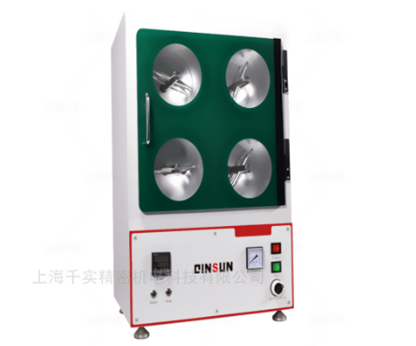
Working Principle and Components of the Random Tumble Pilling Tester
1. Working Principle
The working principle of the Random Tumble Pilling Tester is based on simulating the complex frictional actions that fabrics are subjected to during actual wearing or use.
During the test, the fabric specimen is placed inside a tumble chamber where it freely rotates and continuously, randomly rubs against a cork liner. This process creates a realistic wear environment, allowing the evaluation of the fabric’s resistance to fuzzing and pilling.
2. Main Components
Tumbling Chamber:
The tumbling chamber contains multiple specimen test compartments, stainless steel impellers driven by a motor, and cork lining materials. The test compartments hold the fabric specimens, while the rotating impellers cause the samples to tumble. The cork liner provides continuous and random friction against the fabric surface.
Control Panel:
The control panel is equipped with a timer display, control switches, a pressure gauge, a power switch, a light switch, and an air injection switch. It is used to set the testing duration, control the operation of the tester, and monitor key parameters during the testing process.
Air Compression System:
The air compression system supplies compressed air to enhance the friction effect inside the chamber. The air pressure can be adjusted according to testing requirements, typically within a range of 0.014–0.021 MPa.
Technical Features of the Random Tumble Pilling Tester
1. Durable and corrosion-resistant housing
The outer casing of the equipment is finished with high-quality spray coating (powder-coated paint process), which ensures a smooth and aesthetically pleasing surface. It also provides excellent resistance to corrosion and wear, effectively protecting the instrument from scratches and chemical erosion during daily use, thereby extending its service life.
2. User-friendly Chinese LCD display interface
The instrument is equipped with a full Chinese-language LCD screen featuring an intuitive and clear interface. All parameters and operating status are displayed at a glance, significantly reducing the learning curve for operators. Combined with solid-feeling metal buttons with clear tactile feedback, parameter setting and function switching become more convenient and reliable, improving overall human–machine interaction efficiency and comfort.
3. Intelligent safety door detection system
The equipment is designed with an intelligent door-opening detection function. When the test chamber door is accidentally opened, the system will immediately cut off power to the drive motor and stop its rotation. This safety mechanism effectively prevents potential mechanical injuries during operation and ensures the safety of operators.
4. Simplified operation with one-key start function
The operating process is highly simplified and supports one-key startup. Once the start button is pressed, the compressed air system and drive motor begin working simultaneously, eliminating the need for step-by-step operation. When the preset test cycle is completed, the equipment automatically stops all running components and triggers a built-in buzzer to emit a continuous alert sound, notifying the operator that the test has finished.
5. High-precision transmission system for stable operation
The core rotating components adopt a high-precision circular belt and matching pulley transmission system. This design ensures smooth and synchronized power transmission, significantly reduces vibration and noise during high-speed operation, and creates a quieter and more stable testing environment. It also helps improve the repeatability and accuracy of test results.
Operating Procedure of the Random Tumble Pilling Tester
1. Specimen Preparation
Cut the fabric specimen into the specified size (typically 105 mm × 105 mm) and place it into the sample test chamber of the pilling box. The specimen may be pre-washed or dry-cleaned before cutting. It should be cut at an angle of approximately 45° to the warp or weft direction to ensure consistency in testing.
2. Test Setup
After confirming that both the power supply and air source are properly connected, set the test duration (typically 30 minutes) and reset the timer to zero.
3. Start the Test
Turn on the power switch, activate the compressed air supply, close the chamber door, and press the “Start” button to begin the test. During operation, the specimen should be checked regularly to ensure it does not stick to the chamber wall or bottom. If this occurs, the test should be paused and the specimen repositioned before continuing.
4. Result Observation
After the test is completed, remove the fabric specimen and observe the degree of fuzzing and pilling on its surface. The pilling grade is then evaluated according to relevant standard methods.
Precautions
Ensure the chamber is properly sealed before testing, and clean the chamber to avoid contamination affecting results.
The cork liner should only be used for one hour per side, and must be replaced after both sides have been used for a total of two hours.
Regular cleaning and maintenance of the tester are required to ensure stable operation and accurate results.
Check the stainless steel impellers and cork liner for wear, and replace them promptly if severely worn.
The Importance of the Random Tumble Pilling Tester
With the continuous advancement of textile technology and the increasing demand for fabric quality from consumers, the Random Tumble Pilling Tester has become an increasingly important instrument in the field of textile testing.
1. Accurate Simulation and High-Efficiency Testing
The Random Tumble Pilling Tester can accurately simulate the complex friction conditions that fabrics experience during actual use. Its unique design allows fabric specimens to tumble freely inside the testing chamber and undergo omnidirectional, random friction against a cork lining. Compared with traditional testing methods, this simulation is much closer to real-life wearing conditions, enabling a more accurate evaluation of the fabric’s resistance to fuzzing and pilling.
At the same time, the tester offers high testing efficiency. Multiple fabric samples can be tested simultaneously, significantly improving laboratory productivity. In addition, the testing duration is precisely controlled by a timer, eliminating human error and ensuring the accuracy and reliability of test results.
2. Convenient Operation and High Safety Reliability
In terms of operation, the Random Tumble Pilling Tester is simple and user-friendly. It features a Chinese-language LCD interface with metal buttons, allowing operators to complete test settings through straightforward instructions. Furthermore, the one-key start function enables the air supply and motor to operate simultaneously. Once the test is completed, the system automatically stops and triggers a buzzer alarm, further simplifying the workflow.
Regarding safety performance, the equipment is also highly reliable. It is equipped with a door-opening detection function that automatically stops the motor when the door is opened, effectively preventing accidents caused by improper operation. In addition, the rotating components use a circular belt and pulley system, ensuring smooth operation, reduced vibration, and low noise, providing a more comfortable working environment for operators.
Conclusion
In summary, the Random Tumble Pilling Tester evaluates fabric pilling resistance by simulating the complex friction experienced during actual wearing or use. Through the rotation of stainless steel impellers and the enhancement of compressed air, fabrics are subjected to tumbling and frictional motion inside the chamber.This testing method provides an accurate assessment of textile anti-pilling performance, offering strong support for quality control and product development in the textile industry.We sincerely welcome your comments or direct inquiries so that we can provide you with more detailed product information.
Previous: What is a walk-in high-temperature aging chamber?
N e x t : the last page
