





How to measure the pore size of a filter?
2026/07/06
Share:

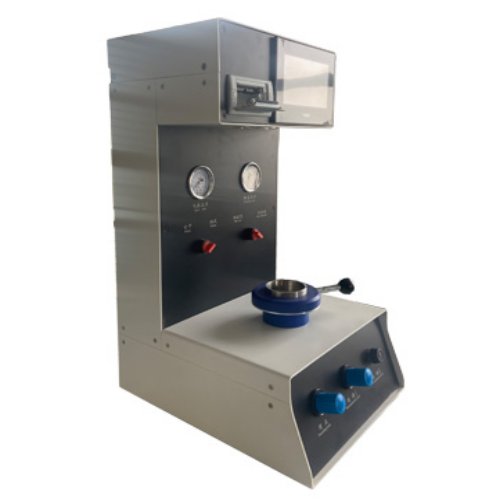
Filter Cartridge Pore Size Tester: Working Principle and Test Modes
The Filter Cartridge Pore Size Tester is based on the fundamental principles of capillary action and pressure equilibrium. It determines the maximum pore size and pore size distribution by measuring the critical pressure or gas diffusion flow required for gas to penetrate the pores of a wetted filter medium.
1. Core Working Principle
Wetting Process:
The hydrophilic filter cartridge or membrane is fully immersed in a low surface tension wetting liquid (such as pure water or ethanol). Under capillary action, the liquid fills all the pores of the filter material.
Pressurization and Gas Displacement:
Gas pressure is gradually applied upstream of the sample. Gas can only pass through when it overcomes the capillary resistance of the liquid inside the pores.
Bubble Point Detection:
When the pressure reaches the capillary pressure corresponding to the largest pore, the gas breaks through the liquid film and forms the first continuous bubble. The corresponding pressure is recorded as the bubble point pressure (PP).
Pore Size Distribution Analysis:
As pressure continues to increase, gas flow (diffusion flow and forward flow) is recorded at different pressure levels. A pressure–flow curve is generated, which is used to calculate the full pore size distribution.
2. Main Test Modes
Bubble Point Test:
Used to determine the maximum pore size and verify filter integrity. It helps identify whether large defects or broken pores exist in the filter material.
Diffusion Flow Test:
Conducted below the bubble point pressure, this test measures the amount of gas diffusing through the wetted membrane. It evaluates the overall structural integrity and uniformity of the pore network.
Pressure Decay Test:
Performed under constant volume conditions, this mode monitors pressure drop over time. It indirectly reflects leakage or the presence of large structural defects in the filter.
Features of the Filter Cartridge Pore Size Tester
1. Integrated high-performance testing system
The filter cartridge pore size tester is a professional testing instrument that integrates fluid control, precision sensing, and intelligent data analysis. Compared with conventional testing equipment, it offers significant advantages in measurement accuracy, application range, operational convenience, maintenance, and compliance with industry standards, fully meeting the testing requirements of various filtration materials.
2. Mature testing principle with high-precision and reliable data
The instrument adopts the widely accepted bubble point method (gas–liquid displacement method) based on the Laplace equation for pore size calculation. Equipped with high-precision pressure sensors and flow sensors, it can accurately capture bubble point pressure and gas flow variations. The measurement accuracy reaches the micron or even sub-micron level, allowing clear differentiation of subtle pore size differences among filter elements.
3. Non-destructive testing with excellent repeatability
The testing process does not damage the sample, enabling true non-destructive evaluation. Multiple parallel tests show high repeatability with minimal deviation, fully meeting the stringent accuracy requirements of scientific research and industrial applications. It provides reliable and authentic data support for pore size determination.
4. Wide applicability and strong versatility
The instrument is compatible with a wide range of filtration products made from different materials and structures. It can test water treatment filter cartridges, air filtration membranes, pharmaceutical sterilizing filters, nonwoven fabrics, sintered filter media, sealing membranes, and more.
It also supports different wetting liquids, making it suitable for both hydrophilic and hydrophobic materials. Without the need for dedicated equipment changes, it can meet testing requirements across industries such as water treatment, pharmaceuticals, food, and chemical engineering, significantly improving equipment utilization and reducing procurement costs.
5. Intelligent and efficient operation
The system features a touch-screen intelligent interface with a simple and clear layout. Users can complete the entire workflow—including parameter setup, test execution, data acquisition, result analysis, and report printing—with one-click operation, requiring minimal professional training.
It includes automatic calibration, self-diagnosis, and data storage functions, enabling batch storage and comparison of multiple test datasets. The system automatically performs pressurization, pressure monitoring, and flow acquisition, eliminating the need for manual supervision. This reduces human error while significantly improving testing efficiency, making it suitable for batch sample testing.
6. Rational structural design with high safety and low maintenance cost
The instrument adopts a sealed structural design to effectively prevent gas leakage and wetting liquid evaporation, ensuring a safe testing environment. It is equipped with overload protection and overpressure alarm systems to prevent equipment or sample damage caused by excessive pressure.
The compact structure saves laboratory space, and the sample loading process is simple and fast. Key components are highly durable, requiring only basic cleaning and maintenance for long-term stable operation. With low maintenance cost, the equipment is suitable for both laboratory use and on-site production testing environments.
Filter Cartridge Pore Size Tester: Application Scenarios
The Filter Cartridge Pore Size Tester is primarily used to verify the maximum pore size, pore size distribution, and structural integrity of filtration media, ensuring reliable retention accuracy and performance in sterilization and impurity removal processes. It is widely applied in industries with strict filtration requirements such as pharmaceuticals, food and beverage, electronics, and materials research.
1. Pharmaceutical and Bioprocessing Industry
In sterile drug production and bioprocessing, the tester is used for integrity testing of sterilizing-grade filters before and after use. Bubble point, diffusion flow, or water intrusion tests are performed to ensure that no microorganisms can penetrate the filter, preventing contamination of sterile products.
2. Food and Beverage Industry
It is widely used in filtration systems for beer, juice, bottled water, and aseptic filling lines. The tester verifies whether filter cartridges are damaged or exceed pore size limits, ensuring product clarity and microbiological safety.
3. Microelectronics and Semiconductor Industry
In ultra-pure water systems and high-purity gas filtration, the tester is used for integrity checks to prevent microscopic particles or ionic contaminants from reaching wafer surfaces, thereby improving chip yield and product reliability.
4. Filter Manufacturing and Quality Inspection
It is essential for pore size calibration, bubble point verification, and batch consistency control of filter membranes, pleated cartridges, ceramic filters, and sintered metal filters before they leave the factory.
5. Research Institutions and Material Development
Universities and research institutes use the instrument to characterize pore structures of new filtration materials such as nanofiber membranes, PTFE membranes, and battery separators. It helps analyze pore volume, specific surface area, and permeability properties for advanced material development.
The Role of the Filter Cartridge Pore Size Tester
1. Driving R&D and technological innovation in filtration products
In product development and technological upgrading, the filter cartridge pore size tester serves as a key scientific research tool for innovation in the filtration industry. Universities, research institutes, and filter material manufacturers use the instrument to develop new filtration media and high-performance filter cartridges.
By analyzing how different materials and manufacturing processes affect pore size and distribution, companies can optimize material formulations and production techniques, and develop filtration products with higher precision, longer service life, and better compatibility. It also helps solve common issues such as uneven pore distribution, insufficient filtration accuracy, and clogging, thereby accelerating technological upgrades and meeting high-end filtration demands across industries.
2. Ensuring product quality control in manufacturing
The instrument acts as a critical safeguard for product quality in manufacturing enterprises. Filter cartridge producers use it to establish a full-process quality inspection system, including incoming material inspection, in-process monitoring, and final product testing.
Raw materials such as filter membranes and filter media are tested for pore size to ensure only qualified materials enter production, controlling quality from the source. During production, real-time monitoring of pore size allows timely adjustment of process parameters to prevent batch quality issues. Before shipment, final inspection ensures that no substandard products reach the market, guaranteeing product consistency and maintaining brand reputation.
3. Supporting industry certification and market access
The instrument plays an essential role in product compliance and certification. Third-party testing agencies and certification bodies rely on standardized pore size testers to conduct product certification, type testing, and export inspections, issuing authoritative reports.
These reports are often required for domestic sales, e-commerce platform entry, and international trade, helping companies overcome technical trade barriers and expand market access. At the same time, standardized testing raises industry entry thresholds, eliminates low-quality products, and promotes fair and orderly market competition.
4. Ensuring application safety across industries
In practical applications, the tester ensures stable and safe filtration processes.
In the food and pharmaceutical industry, it guarantees sterilization filtration and liquid purification processes meet safety standards, reducing product contamination risks.
In the water treatment industry, it ensures accurate pore control in water purifiers and industrial filtration systems, safeguarding drinking and process water quality.
In the chemical and environmental protection industry, it helps select appropriate high-precision filters for efficient gas and liquid treatment, supporting environmental compliance and pollution control.
5. Supporting market supervision and consumer protection
Regulatory authorities use the instrument as an enforcement tool for market supervision. Market regulators and quality inspection agencies conduct random sampling of filters, water purifiers, and filtration devices to verify whether actual filtration performance matches claimed specifications.
This helps crack down on false labeling, counterfeit products, and substandard goods, effectively protecting consumer rights and promoting standardization and regulation in the filtration industry.With the continuous increase in requirements for filtration accuracy across industries, the filter cartridge pore size tester will continue to play a vital role in improving product quality, supporting technological advancement, and ensuring reliable filtration performance in diverse applications.
Previous: What is a pilling test?
N e x t : the last page
