





What is a hydraulic multi-pass test bench?
2026/07/07
Share:

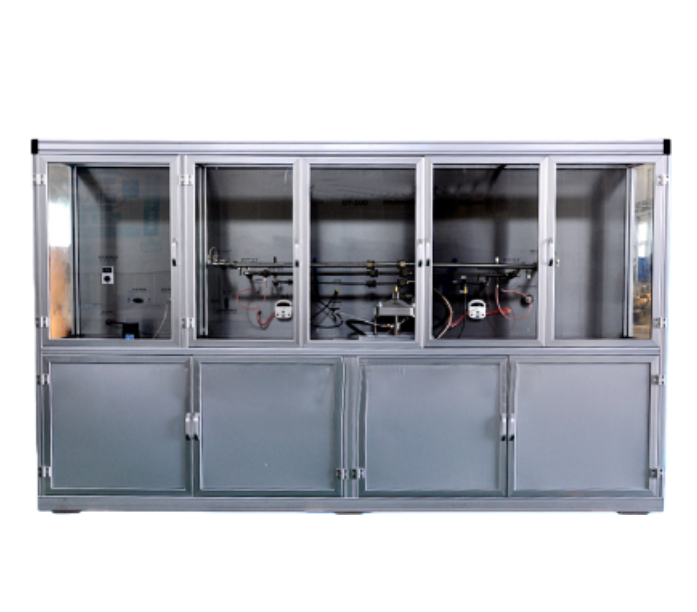
Main Types and Functions of Multi-Pass Test Benches (by Industry)
I. Main Types
1. Hydraulic / Filtration Multi-Pass Test Bench (Most Common)
Application:
Used for testing hydraulic filter elements, filtration systems, oil filters, and air filters.
Test Items:
Multi-pass filtration efficiency
Dirt holding capacity
Pressure drop characteristics
Burst resistance performance
Pulse fatigue life
2. Valve Multi-Pass Test Bench
Tested Components:
Two-way valves, three-way valves, four-way valves, solenoid valves, water valves, gas valves, etc.
Testing Items:
Sealing performance
Pressure resistance
Flow characteristics
Switching cycle life
Cyclic durability performance
Main Parameters:
Pressure range: 0–30 MPa
Temperature range: -40℃ to 127℃
Multi-station parallel testing capability
3. Automotive Components Multi-Channel Test Bench
Test Objects:
Chassis components, ball joints, bushings, control arms, engine components, etc.
Testing Items:
Tensile and compression fatigue testing
Torsional fatigue testing
Dynamic and static stiffness testing
Multi-directional combined loading tests
Road load spectrum simulation
II. Main Functions
1. Filtration Efficiency Evaluation
Through the online particle counting method, the system can accurately measure the filtration efficiency of a filter, namely the percentage of particles removed by the filter during the filtration process.
2. Contaminant Holding Capacity Evaluation
By continuously injecting contaminants and monitoring the clogging condition of the filter, the test bench can evaluate the filter’s dirt holding capacity and service life.
3. Flow Rate and Pressure Drop Characteristic Testing
During the test process, the system can monitor and record the pressure drop of the filter under different flow rates, allowing accurate evaluation of its flow-pressure drop characteristics.
Application Industries of Multi-Pass Test Benches
A Multi-Pass Test Bench is a precision testing device specially designed for evaluating liquid filtration performance. Its core function is to simulate the long-term operating conditions of filters in real-world applications. By repeatedly circulating fluids containing specific contaminants through the filter, the system can determine key performance parameters of the filter, including filtration efficiency, dirt holding capacity, pressure drop characteristics, and other critical indicators.
The following article introduces the major industries where Multi-Pass Test Benches are widely applied.
Automotive Industry
Automotive systems such as engines and transmissions contain various types of filters, including oil filters, fuel filters, and other filtration components.
The Multi-Pass Test Bench can be used to evaluate the performance of these filters, ensuring that they can effectively remove contaminants, protect critical components such as engines, and extend the service life of vehicles.
Aerospace Industry
Aerospace equipment has extremely high requirements for reliability and safety. Filters used in hydraulic systems, fuel systems, and other critical systems must provide excellent filtration performance.
The Multi-Pass Test Bench helps evaluate the performance of aerospace filters, ensuring that aircraft and aerospace equipment can operate reliably under complex and demanding working conditions.
Construction Machinery Industry
Construction machinery such as excavators and loaders often operates in harsh environments, where hydraulic systems and engine air intake systems have strict filtration requirements.
The Multi-Pass Test Bench can be used to test the performance of filters applied in construction machinery, ensuring the proper operation of hydraulic systems and protecting engines from contamination and damage caused by impurities.
Petrochemical Industry
During petrochemical production processes, fluid media often contain various contaminants and require filtration and purification.
The Multi-Pass Test Bench can be used to evaluate the performance of filters used in the petrochemical industry, ensuring smooth production processes and preventing pipeline blockages or equipment damage caused by contaminants.
Water Treatment Industry
In water treatment systems, including drinking water production, wastewater treatment, and industrial water treatment, filters are widely used to remove suspended solids, colloids, and other impurities from water.
The Multi-Pass Test Bench can evaluate the filtration efficiency and contaminant holding capacity of water treatment filters, ensuring that the treated water meets required quality standards.
Nuclear Industry
The nuclear industry has extremely strict requirements for equipment safety and reliability, and filters used in related systems require rigorous testing and verification.
The Multi-Pass Test Bench can be applied to evaluate the performance of nuclear industry filters, helping ensure the safe and stable operation of nuclear facilities.
Research and Development Field
Universities and research institutions often require Multi-Pass Test Benches when conducting research on filtration materials, filter design, and filtration performance evaluation.
The equipment provides accurate experimental data to support the development of new filtration materials, advanced filter products, and innovative technologies.
The Multi-Pass Test Bench is regarded as the “gold standard” equipment for filter performance testing and is widely used in filter research and development, production quality control, and industry certification.Its core value lies in using a scientific cyclic testing process to objectively evaluate the filtration capability, durability, and reliability of filters. It provides essential support for the safe and stable operation of various fluid systems, including hydraulic systems, lubrication systems, water treatment systems, and other industrial fluid applications.
Importance of Multi-Pass Test Benches
As specialized testing equipment designed to evaluate the performance of products or components under repeated cyclic operating conditions, Multi-Pass Test Benches play an irreplaceable role in many fields, especially in reliability engineering, quality control, and product optimization. Their importance can be explained from the following aspects:
I. Simulating Real Operating Conditions and Verifying Long-Term Reliability
The core value of a Multi-Pass Test Bench lies in its ability to highly reproduce the actual working environment of products during long-term operation.
Reproducing Cumulative Damage
The failure of many products is not caused by a single extreme load, but rather by fatigue accumulation under repeated stress over a long period.
A Multi-Pass Test Bench can simulate years or even decades of real-world usage scenarios through thousands or even millions of cyclic operations, such as mechanical opening and closing, fluid filtration cycles, vibration, and impact tests. This helps identify potential problems including material fatigue, structural wear, and component degradation.
Evaluating Service Life and Durability
Taking the automotive “four-door and two-cover” durability test as an example, the equipment can perform tens of thousands of opening and closing cycles on vehicle doors and engine hoods at specified speeds. It accurately verifies hinge strength, latch durability, and sealing component aging resistance.
This ensures that vehicles maintain excellent operating performance and sealing reliability throughout their entire service life, preventing problems such as abnormal noises and water leakage.
II. Improving R&D Efficiency and Accelerating Product Development
Compared with traditional road tests or long-term field monitoring, Multi-Pass Test Benches significantly shorten verification cycles and improve research and development efficiency.
Time Compression Effect
Traditional field testing may take several months or even longer, while dedicated test benches can complete equivalent simulations of hundreds of thousands of operating cycles within only a few weeks.
This efficient testing method helps automobile manufacturers and industrial companies greatly shorten development cycles and accelerate the launch of new products.
Data-Driven Optimization
Modern Multi-Pass Test Benches are equipped with high-precision data acquisition systems capable of recording multi-channel signals in real time, including:
Pressure
Flow rate
Temperature
Displacement
Other key performance parameters
By analyzing these quantitative data, engineers can accurately identify design weaknesses, such as insufficient motor torque in electric tailgates or abnormal pressure drops in filter elements. This enables optimization of design parameters and promotes the transformation of product development from experience-driven engineering to data-driven engineering.
III. Strengthening Quality Control and Ensuring Compliance with Standards
A Multi-Pass Test Bench serves as a critical link between product design requirements and mass production quality, providing technical support for industrial standardization.
Compliance with International Standards
In fields such as hydraulics, lubrication, and filtration, Multi-Pass Test Benches strictly comply with international standards including ISO standards and SAE J standards.
Through online particle counting methods, the equipment can evaluate key filter performance parameters such as:
Filtration efficiency
Dirt holding capacity
Flow-pressure drop characteristics
This ensures that products meet global market access requirements.
Verification of Consistency and Stability
Through standardized testing procedures, Multi-Pass Test Benches can verify the consistency of key performance parameters among different production batches.
For example, in aerospace engine oil filter testing, strict multi-pass testing ensures that every filter maintains stable performance under extreme operating conditions, eliminating potential safety risks caused by product variation.
IV. Safety Assurance Under Extreme Environmental Conditions
Modern Multi-Pass Test Benches focus not only on mechanical cycling but also integrate environmental simulation technologies to provide comprehensive safety verification.
Multi-Physics Coupled Testing
Advanced test benches integrate temperature control systems, enabling continuous operation under extreme temperature conditions, such as -40℃ to 80℃.
These tests evaluate the impact of thermal expansion and contraction on product structures. Such rigorous verification can identify risks in advance, including component freezing in cold environments or deformation under high temperatures, preventing safety hazards at the source.
Failure Mode Analysis
By intentionally inducing failures and recording the failure process, Multi-Pass Test Benches support engineers in conducting Failure Mode and Effects Analysis (FMEA).
This helps identify major failure mechanisms and allows preventive measures to be implemented during the design stage, improving the intrinsic safety and reliability of products.
In summary, a Multi-Pass Test Bench is not merely a tool for product performance testing. It is a key infrastructure for ensuring industrial product quality, promoting the advancement of technical standards, and reducing total lifecycle costs.Its critical role in improving product reliability, optimizing R&D processes, and ensuring regulatory compliance makes it essential for the high-quality development of advanced manufacturing industries, automotive engineering, aerospace technology, and other high-end equipment sectors.
Key Considerations for Selecting a Multi-Pass Test Bench
When selecting a qualified Multi-Pass Test Bench, the first consideration is to ensure that the equipment complies with relevant international and national standards, such as ISO and SAE standards. Compliance with these standards is essential for guaranteeing the accuracy and reliability of test results.
1. Test Performance Parameters
Key performance parameters include:
System pressure range
Flow rate range
Temperature control accuracy
Other critical testing conditions
These parameters directly determine the applicable testing range and the stability of the test system.
2. Data Acquisition System
The performance of the online particle counting system, including the number of measurement channels and detection accuracy, is extremely important.
It directly affects the efficiency, accuracy, and reliability of data acquisition during the testing process. A high-precision data acquisition system ensures that filtration performance data can be collected and analyzed effectively.
3. Structure and Material Selection
The equipment should adopt a robust structure made from corrosion-resistant and easy-to-clean materials, such as a full steel structure, to ensure long-term reliability during continuous cyclic testing.
A well-designed structure helps prevent deformation, leakage, and performance degradation caused by prolonged operation.
4. Decision on the Number of Test Channels
Not every application requires a multi-channel testing system.
A multi-channel solution should be considered when the testing time of a single-channel device exceeds 80% of the production or R&D cycle, causing it to become an efficiency bottleneck.
Before selecting a multi-channel system, a Return on Investment (ROI) analysis should be conducted. Generally, the investment cost of a multi-channel test bench is approximately 2–4 times higher than that of a single-channel system. When the expected ROI exceeds 30%, the investment is usually considered more economically reasonable.
Overall, the Multi-Pass Test Bench is a testing solution worthy of continuous attention and in-depth exploration. By flexibly configuring the number of testing channels, this system can effectively meet diverse testing requirements while improving overall testing efficiency and resource utilization.If you or your team have further requirements in R&D, production, or quality control, such as improving testing efficiency, enhancing parallel processing capability, or expanding test coverage, we sincerely welcome you to contact us or share your specific application scenarios and technical challenges.Based on your actual needs, we can provide more detailed product technical information, customized solution recommendations, and professional pre-sales support to help you make a more accurate evaluation and decision.
Previous: What is the Qmax warm cool touch test?
N e x t : the last page
