





What is the wet leakage test for PV modules?
2026/07/07
Share:

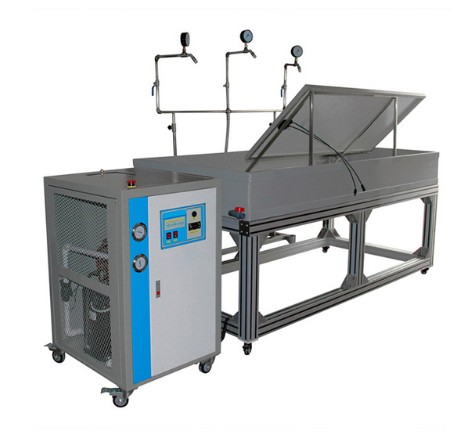
Components of the Wet Leakage Current Test System
The Wet Leakage Current Test System of Photovoltaic Module is mainly composed of the following key components: an experimental water tank, heating system, spray system, and control cabinet. Each part works together to simulate humid environmental conditions and accurately evaluate the insulation performance and safety reliability of photovoltaic modules.
1. Experimental Water Tank
The water tank is made of 1.5 cm thick imported PVC plates. A circulating water tank and PVC piping system are installed at the bottom of the tank.
The pipe body is equipped with 5 mm diameter holes on both sides to ensure uniform water circulation. A stainless steel filter screen is installed at the circulating water inlet, and the system is equipped with one drainage outlet with a 1-inch water valve.
The temperature-controlled water tank maintains the water temperature at 22 ± 3℃ and uses a 1/4 HP pump with an outlet flow rate of 100 L/min.
A ball valve is installed at the outlet to control the water inlet pipe along the edge of the tank. Through the multi-hole diversion design, water can flow evenly into the tank to ensure consistent testing conditions.
2. Heating System
The heating system adopts an immersed stainless steel U-shaped dual-tube heater.
Each heating tube can be independently adjusted, providing:
Fast heating speed
Accurate temperature control
Stable operation
The water level inside the tank is automatically maintained through an automatic water replenishment system, ensuring continuous and reliable testing.
3. Spray System
The spray system consists of a spray device containing the same solution as the test water. It includes three spray nozzles, and each nozzle is equipped with:
A water pressure gauge
A water flow control valve
The pressure of each spray nozzle is controlled at 34.5 kPa. The distance between the spray nozzle and the photovoltaic module is approximately 0.9 m.
The spray angle is set at 45 degrees relative to the module surface, complying with the requirements of UL 1703 standard.
4. Control Cabinet
The control cabinet adopts an integrated design concept that combines the testing equipment and control system into one unit.
The control system is installed at the front of the water tank support frame, allowing operators to conveniently:
Set testing parameters
Monitor operating conditions
Observe test progress
This design improves operational convenience and ensures efficient and accurate testing procedures.
Working Principle of the Wet Leakage Current Test System
The working principle of the Wet Leakage Current Test System for Photovoltaic Modules is based on the wet leakage current characteristics of solar modules. The system determines potential faults by comparing whether there is any difference between the mixed current generated under simulated lighting conditions and the DC output current of the photovoltaic module.
If a current difference is detected, the system can effectively eliminate fault causes related to factors such as:
Module overheating
Nighttime conditions
Parking rooftop shading
Continuous cloud cover
Dust accumulation
By eliminating failures caused by changes in illumination conditions during simulated lighting tests, the system can accurately identify potential defects existing inside photovoltaic modules and improve fault detection accuracy.
Operating Procedure of the Wet Leakage Current Test System
The wet leakage current test of photovoltaic modules is an essential step to ensure the safe and reliable operation of photovoltaic systems.
1. Preparation Before Testing
Prepare the required testing equipment, such as an insulation resistance tester, and ensure that the equipment has been properly calibrated and meets the required accuracy standards.
The testing environment should simulate the humid conditions that photovoltaic modules may encounter during actual operation.
Usually, a spray system is used to evenly spray water onto the surface of the photovoltaic module, allowing the module surface to reach the specified humidity condition required for testing.
2. Testing Procedure
First, short-circuit the output terminals of the photovoltaic module to prevent the current generated by the module during testing from affecting the measurement results.
Second, connect the insulation resistance tester to the positive and negative terminals of the photovoltaic module.
Then, perform the measurement according to the operating instructions of the tester and record the measured insulation resistance value.
Finally, calculate the wet leakage current according to Ohm’s Law using the corresponding calculation formula.
3. Precautions During Testing
The following points should be carefully considered during the testing process:
Strictly follow safety operating procedures to prevent electric shock and other safety accidents.
Ensure that the humidity of the testing environment is uniform and meets standard requirements, avoiding inaccurate results caused by locally dry or excessively wet areas.
Perform multiple measurements and calculate the average value to improve the accuracy and reliability of test results.
After completing the test, dry the photovoltaic module promptly to prevent damage caused by prolonged exposure to moisture.
By accurately measuring the wet leakage current of photovoltaic modules, potential problems such as internal insulation defects can be identified in a timely manner. Appropriate repair or replacement measures can then be taken to ensure the stable and efficient operation of photovoltaic systems while reducing potential safety risks.
Importance of the Wet Leakage Current Test System
The Wet Leakage Current Test System simulates moisture conditions found in natural environments, such as rain, fog, dew, and melting snow, to comprehensively evaluate the insulation performance of photovoltaic modules.
By effectively preventing issues caused by moisture intrusion, including corrosion, current leakage, and potential safety accidents, the system provides significant value in improving the overall safety and reliability of photovoltaic systems.
1. Ensuring Quality and Electrical Safety of Photovoltaic Modules
During the quality inspection process of photovoltaic modules, the wet leakage current test is used to evaluate the insulation performance and electrical safety of modules under humid environmental conditions.
This helps identify potential leakage risks in advance, ensuring that photovoltaic modules maintain stable and reliable performance during actual operation.
2. Supporting Photovoltaic Product Development and Improvement
For the research, development, and optimization of photovoltaic products, the Wet Leakage Current Test System provides valuable performance data regarding materials and manufacturing processes under humid conditions.
These test results offer a scientific basis for improving product design, selecting suitable materials, and enhancing module durability.
3. Promoting Industry Standards and Technological Advancement
Through the long-term accumulation and analysis of wet leakage current test data, the system provides strong support for the development of stricter and more scientific quality standards and testing specifications in the photovoltaic industry.
This contributes to technological advancement across the industry, improves product quality, and promotes the continuous development of safer and more reliable photovoltaic solutions.
In summary, the Wet Leakage Current Test System is not only an essential tool for photovoltaic module safety evaluation but also plays a crucial role in improving product reliability, optimizing manufacturing processes, and driving the overall progress of the photovoltaic industry.
Purchasing Recommendations for a Photovoltaic Module Wet Leakage Current Test System
When purchasing a Photovoltaic Module Wet Leakage Current Test System, the key considerations should focus on high-voltage source stability, insulation measurement accuracy, and safety compliance. A reliable system should not only provide precise leakage current detection but also ensure safe and stable operation under humid testing conditions.
1. Core Performance Indicators
High-Voltage Output Capability
The system should support the maximum test voltage specified by relevant standards, typically covering 1000V to 1500V DC.
It should also be equipped with a soft-start function to suppress surge current and ensure stable voltage waveform application when testing large-size photovoltaic modules.
Microamp-Level Measurement Accuracy
The leakage current measurement range should cover the microampere level, with a resolution of at least 0.1 μA.
The system should maintain good linearity across a wide measurement range to prevent signal drift and ensure accurate detection of weak leakage currents under high-impedance conditions.
Insulation Impedance Matching
The system input impedance should be significantly higher than the insulation impedance of the tested photovoltaic module.
This prevents measurement errors caused by voltage division effects and ensures that weak leakage paths can still be accurately detected under humid environmental conditions.
2. Safety and Compliance Configuration
Multiple Protection Mechanisms
The system must be equipped with comprehensive safety protection functions, including:
Overvoltage protection
Overcurrent protection
Short-circuit protection
Ground fault automatic shutdown protection
The response time of these protection functions should comply with safety standards to prevent damage to photovoltaic modules and ensure operator safety during testing.
Compliance with International Standards
The hardware design should strictly comply with major safety certification requirements, such as IEC and UL standards.
The software system should include built-in standard evaluation logic to support automatic Pass/Fail judgment, improving testing efficiency and reducing manual errors.
Environmental Adaptability
Testing fixtures and high-voltage cables should have excellent:
Moisture resistance
High-voltage insulation performance
Environmental durability
When used together with a temperature and humidity chamber, it is recommended to verify the system’s sealing performance and condensation resistance to ensure reliable operation in humid environments.
3. Operation and Expandability
Automatic Integration Interfaces
Priority should be given to models supporting communication protocols such as:
Modbus TCP
GPIB
These interfaces allow easy integration with automated production lines or laboratory LIMS systems, enabling automatic data transmission, storage, and traceability.
Fixture Compatibility
The testing electrode fixtures should be compatible with mainstream photovoltaic module frame structures.
The contact pressure should be adjustable and evenly distributed to avoid additional contact resistance errors caused by poor electrical contact.
Calibration and Maintenance
Before purchasing, confirm whether the manufacturer provides regular traceable calibration services.
The system should include:
Built-in self-check functions
Easily replaceable key sensors
Convenient maintenance design
These features help reduce long-term operation and maintenance costs.
In summary, introducing a Wet Leakage Current Test System not only improves the quality control level of photovoltaic modules but also provides strong support for the safe and sustainable development of the photovoltaic industry.Through regular or periodic wet leakage current testing, enterprises can quickly identify and solve potential problems existing in photovoltaic module design and manufacturing processes, ensuring that products maintain excellent performance even under harsh environmental conditions.We sincerely welcome you to leave a message or contact us directly for more detailed product information. Our professional team will provide suitable technical solutions and support based on your specific testing requirements.
Previous: What is a hydraulic multi-pass test bench?
N e x t : the last page
