





What is the Urinary Catheter Strength Tester?
2026/07/10
Share:

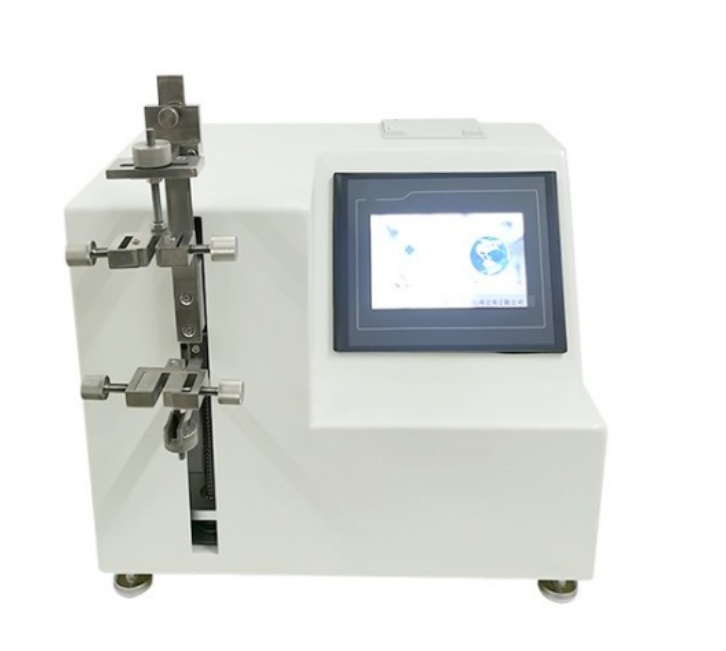
Working Principle of the Catheter Tester
The Catheter Tester is primarily designed to simulate various mechanical forces that urinary catheters may encounter during actual clinical applications, including tensile force, bending force, and pressure. Through these simulated conditions, the device can comprehensively evaluate the strength performance of catheters.
The tester applies mechanical forces through a mechanical transmission system, while a high-precision force sensor accurately measures the applied force. With the support of an integrated control system, the device achieves precise force control and efficient data acquisition.
Taking the tensile strength test as an example, during the testing process, specialized fixtures securely clamp both ends of the catheter. The motor then starts and drives the tensile mechanism to stretch the catheter at a constant and uniform speed. Throughout the test, the force sensor acts as a sensitive monitoring component, continuously detecting and recording changes in tensile force in real time. Once the catheter breaks, the system immediately records the maximum tensile force achieved at the moment of failure.
By comparing this maximum tensile force value with the specified standard requirements, the tester can accurately determine whether the tensile strength of the catheter meets the relevant quality and performance criteria.
Functions of the Catheter Tester
The device is thoughtfully equipped with both Chinese and English operation interfaces. Whether users are from domestic or international markets, they can easily operate the system and efficiently meet the usage requirements of different language backgrounds. This design eliminates language barriers and ensures a smoother and more efficient testing process.
In terms of testing accuracy, the device delivers outstanding performance. The measurement accuracy can reach the ten-thousandth level, ensuring that even the smallest data variations can be accurately detected. The standard testing range of the device can reach 10N, fully meeting conventional testing requirements. For applications requiring a larger testing range, customized solutions can also be provided to develop the most suitable testing configuration according to specific requirements.
The device adopts an advanced PLC/ARM programmable controller, which acts as an intelligent control center for the testing system. It can display test data in real time with high precision, allowing operators to monitor data changes throughout the testing process without complicated data conversion or analysis. The intuitive and clear data presentation significantly improves testing efficiency and accuracy.
As a core component of the testing system, the performance of the sensor directly affects the accuracy of test results. The device is equipped with a high-precision force sensor featuring excellent sensitivity and stability. It can accurately detect even minor force variations, ensuring reliable and precise measurement data and providing solid technical support for testing results.
During the generation of test reports, the device supports Chinese input for the manufacturer’s name and adopts machine-printed input methods. This eliminates issues caused by unclear handwriting or incorrect information, making test reports more standardized and professional while effectively improving their authority and credibility.
Main Test Items of the Catheter Tester
1. Tensile Strength Test
This test is used to evaluate the maximum tensile force that a urinary catheter can withstand. During medical use, catheters may be subjected to certain levels of tension, such as accidental pulling caused by patient movement. If the tensile strength is insufficient, the catheter may break and remain inside the body, potentially causing serious medical complications.
Different types and specifications of catheters have different tensile strength requirements. For example, conventional latex catheters generally have relatively lower tensile strength, while silicone catheters typically exhibit higher tensile strength.
2. Balloon Strength Test
Many urinary catheters are equipped with balloons, which are used to secure the catheter in the correct position inside the bladder. The balloon strength test is mainly performed to evaluate the pressure resistance capability of the balloon when it is inflated.
Excessive pressure inside the balloon may cause it to rupture, resulting in potential damage to the bladder or other parts of the urinary system. During the test, the instrument simulates the balloon inflation process by gradually increasing the internal pressure until the balloon bursts or reaches the specified maximum pressure value. The strength and reliability of the balloon can then be evaluated based on the test results.
3. Bending Strength Test
Urinary catheters are subjected to bending forces during both insertion and placement inside or outside the body. This test is designed to evaluate the performance and structural integrity of catheters under bending conditions.
For example, the catheter is wrapped around a cylindrical mandrel with a specified diameter, and then inspected for cracks, damage, or deformation. The test also evaluates whether bending affects the smooth flow and drainage performance of fluids through the catheter. Based on these results, the bending strength and flexibility of the catheter can be determined to ensure compliance with relevant requirements.
Application Fields and Importance of the Catheter Tester
1. Medical Device Manufacturers
For urinary catheter manufacturers, the Catheter Strength Tester is a critical piece of quality control equipment. It ensures that produced catheters comply with relevant national and international standards, such as ISO standards and medical device industry standards in different countries.
Only through strict strength testing can the safety and reliability of urinary catheters during clinical use be guaranteed. This helps prevent medical disputes and patient injuries caused by product quality issues, while improving overall product quality and market competitiveness.
2. Medical Device Testing Institutions
These institutions are responsible for conducting sampling inspections and quality supervision tests on urinary catheter products available in the market. The Catheter Strength Tester provides objective and accurate testing data, helping inspectors determine whether products meet quality requirements and ensuring the proper regulation and healthy development of the medical device market.
Purchasing Guide for Catheter Strength Tester
When selecting a Catheter Strength Tester, users should focus on compliance with industry standards, functional suitability, testing accuracy, and the level of intelligent operation. The following recommendations should be considered:
1. Strict Compliance with Industry Standards
The primary requirement when purchasing a catheter strength tester is that the equipment must comply with current industry standards, such as YY/T 0325-2022 “Sterile Single-use Urethral Catheters”. This standard specifies clear testing requirements for key performance indicators of urinary catheters, including tensile strength, connector separation force, and balloon reliability.
For applications involving export markets or advanced research and development, it is recommended to select equipment compatible with international standards such as the ISO 10555 series or ISO 20696:2018. ensuring international recognition and authority of test results.
2. Define Core Testing Function Requirements
The equipment should be selected according to the characteristics of the catheter products and equipped with corresponding testing modules:
● Tensile and Connection Strength Testing
The tester should provide high-precision tensile testing capabilities to evaluate the resistance against breakage of catheter tips, catheter bodies, and side drainage holes after simulated urine immersion. It should also be capable of testing the connection strength between tapered connectors and drainage bags.
● Balloon Reliability Testing
For balloon-type urinary catheters, the equipment should support balloon inflation pressure monitoring, leakage testing, and deflation performance evaluation. This ensures that the balloon remains intact after inflation, with no rupture, leakage, or blockage of side holes.
● Environmental Simulation Capability
High-quality testing equipment should be equipped with a constant-temperature water bath or environmental simulation system. It should be capable of performing the standard-required preconditioning procedure, such as immersion in simulated urine at 37 ± 2°C for 14 days, to accurately evaluate material performance changes during long-term clinical use.
3. Pay Attention to Key Technical Parameters
● Force Measurement Accuracy and Range
It is recommended to select equipment with a force measurement range covering 0.01N to 120N, with a resolution of at least ±0.001N or higher, ensuring accurate detection of minor deformation and failure points. The loading speed should be continuously adjustable within the range of 0–500 mm/min and comply with the strain rate requirements specified in relevant standards.
● Specialized Fixtures
The tester should be equipped with dedicated fixtures designed for different catheter sections, such as the catheter tip, tube body, and connector. The fixtures should provide secure clamping without causing pre-damage to the sample due to excessive clamping force, ensuring test repeatability and reliability.
● Displacement Measurement System
A high-precision displacement sensor is essential for evaluating catheter flexibility and deformation characteristics. It helps provide a comprehensive analysis of the mechanical behavior of catheter materials.
4. Emphasize Intelligent Operation and Data Management
● Automated Control
Equipment using PLC or high-performance ARM control systems is preferred. The system should support touchscreen human-machine interaction and provide functions such as automatic zero adjustment, automatic timing, automatic data recording, and abnormal alarm notification, thereby reducing human operation errors.
● Data Processing and Reporting
The tester should have powerful data processing capabilities, enabling real-time generation of force-time curves and stress-strain graphs, while automatically calculating key parameters such as peak tensile force and elongation at break.
It is recommended that the equipment support one-click generation of PDF test reports in standard formats, data export, statistical analysis, and three-level password access management to meet quality management system audit requirements.
5. Comprehensive Evaluation and Service Support
When selecting equipment, users should consider production scale and testing frequency. Large-scale manufacturers are recommended to choose multi-channel, high-efficiency automated models, while research institutions may prioritize multifunctionality and flexibility.
In addition, the supplier’s technical support capabilities should be evaluated, including whether they provide standard interpretation training, regular calibration services, and responsive after-sales maintenance support. These factors are essential to ensure long-term stable operation of the equipment.
Conclusion
In summary, the Catheter Strength Tester is an essential instrument for evaluating the mechanical strength and performance of urinary catheters. By testing key mechanical properties, it helps medical device manufacturers and healthcare organizations improve catheter quality and reliability while ensuring patient safety and comfort.With continuous development in the future, catheter strength testing technology is expected to become more advanced and comprehensive, providing stronger support for the medical device industry and better protection for patient health.We sincerely welcome your inquiries or direct contact with us for more detailed product information and professional technical support.
Previous: What is the Automotive Wash and Friction Testing Bench?
N e x t : the last page
