





What is an automotive seat dynamic comfort tester?
2026/07/17
Share:

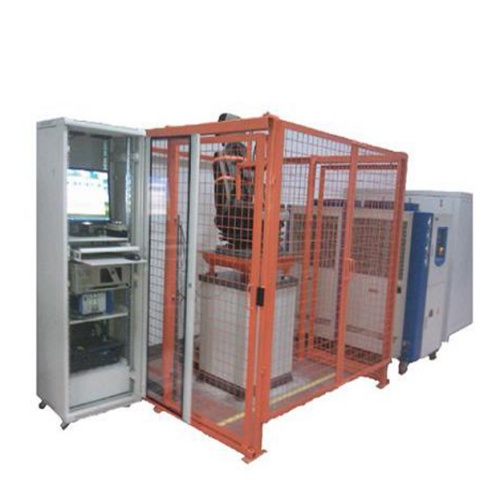
Testing Methods of the Automotive Seat Dynamic Comfort Testing Machine
The evaluation of automotive seat comfort adopts a testing method that combines standardized testing procedures with personalized assessment methods.
In physical property testing, according to international and domestic standards such as ISO, SAE, and GB/T, dedicated fixtures and measuring equipment are used to accurately measure seat dimensions, adjustment characteristics, and other physical parameters.
The ergonomic evaluation adopts the body pressure distribution testing method. A pressure-sensitive mat is used to collect pressure data at the seat–human interface, while a motion capture system records the occupant’s sitting posture and movement characteristics. By analyzing the pressure distribution and posture data, the ergonomic performance of the seat can be objectively evaluated.
The dynamic comfort test adopts the vibration platform simulation method. The complete seat assembly is installed on a six-degree-of-freedom vibration platform, where standard road surface spectra or actual collected road vibration signals are applied as excitation inputs. The acceleration response at key points of the seat is measured, and the vibration transfer function is calculated to evaluate the seat’s vibration isolation and damping performance.
The environmental comfort test is conducted inside a climate chamber. By controlling environmental temperature and humidity conditions, thermal flow sensors and temperature sensors are used to monitor changes in the seat micro-environment, evaluating the seat’s thermal comfort performance under different conditions.
The subjective evaluation combines standardized questionnaires with professional evaluators. Trained evaluators score various seat comfort indicators according to unified evaluation criteria. The subjective evaluation results are then correlated with objective test data through modeling analysis, ensuring that the evaluation results are scientific, reliable, and repeatable.
Operating Procedure of the Automotive Seat Dynamic Comfort Testing Machine
1. Pre-Test Preparation
Before testing, connect the equipment to a 380V industrial power supply and perform a no-load trial run for several minutes. Confirm that the servo drive system, sensor acquisition system, and software control system operate normally without any error alarms.
According to the actual vehicle seat installation angle, securely fix the seat onto the test bench using dedicated fixtures. Lock all fastening structures to prevent seat displacement or shaking during vibration testing, which could affect test accuracy.
Install the standard counterweight loading fixture according to the test requirements to simulate human sitting pressure. At the same time, install acceleration sensor probes at the center loading point of the seat cushion and the seat base mounting position, respectively. Align the sensors with the vibration direction to ensure that data acquisition complies with the requirements of QC/T 55-1993.
Check the basic measurement ranges of the equipment in advance:
Vertical loading range: 500–5000N
Horizontal loading range: 200–2000N
Reserve sufficient allowance for displacement travel and pitch angle adjustment to prevent over-travel protection and automatic shutdown.
2. Setting Test Parameters According to Requirements
Open the industrial control operation software and enter the corresponding working condition parameters according to the test project.
The main parameter settings include:
Vertical vibration frequency: adjustable within 0.5–20Hz sweep range
Horizontal vibration frequency: adjustable within 0.2–10Hz
Pitch angle: adjustable between ±5° and ±30° according to requirements
Force control accuracy: ±1%–±3% FS
Displacement control error: within ±0.1–0.5mm
For conventional frequency response evaluation tests, the standard sweep frequency mode can be selected. If the test needs to meet vehicle manufacturer inspection requirements, the loading force, vibration duration, and reciprocating travel distance can be customized according to specific requirements.
After completing parameter settings, save the test program for future reuse with the same batch of samples, reducing repeated setup operations.
3. Starting the Test
1. Equipment Operation
After confirming that the fixture, sensors, and safety protection structures are properly installed, close the equipment safety door and start the test program.
The equipment will continuously apply three types of dynamic loads according to the preset parameters:
Vertical excitation
Horizontal pulling force
Pitch oscillation
These dynamic loads can fully simulate real driving conditions, such as passing over speed bumps, rough road vibration, vehicle body shaking during acceleration and deceleration, and other actual operating conditions.
2. Data Acquisition and Monitoring
During the entire test process, the system continuously collects:
Force values
Displacement data
Acceleration signals at upper and lower measurement points
The system automatically generates the vibration transmissibility H curve and simultaneously calculates key performance indicators, including:
Seat natural frequency
Dynamic stiffness
Damping ratio
During testing, personnel should keep away from moving mechanisms. The equipment software is equipped with overload protection and over-travel automatic locking functions. In case of abnormal conditions, the system will immediately stop operation to protect the equipment and test sample.
For each test sample, it is recommended to repeat the test 2–3 times and use the average value to reduce accidental errors.
4. Test Completion and Evaluation
1. Data Export and Sample Removal
After the complete test program is finished, the equipment will automatically stop excitation. First, export all original test data and curve diagrams. Then release the loading pressure. After the mechanical structure returns completely to its initial position, remove the counterweight and sensors, loosen the fixtures, and take out the seat sample.
2. Data Analysis and Optimization
The test results are analyzed according to the curve data:
A natural frequency away from the human body sensitive frequency range
A lower peak value of vibration transmissibility
A reasonable damping ratio
indicate better vibration isolation performance and improved seating comfort, reducing fatigue during long-term driving.
For samples that fail to meet performance requirements, the seat structure can be optimized by adjusting factors such as:
Cushion foam hardness
Frame structure design
Suspension damping characteristics
This helps improve the dynamic comfort performance of automotive seats from the design stage.
3. Final Shutdown Procedure
After testing, clean any debris from the test bench, turn off the equipment power supply, and archive the test report and original data files to complete the entire testing process.
5. Precautions
The seat installation position must accurately reproduce the original vehicle installation posture. The inclination angle and fixing points should not be changed arbitrarily. Otherwise, the test conditions will deviate from actual vehicle conditions, making the data less representative.
Sensor wiring should be protected from pulling, squeezing, or bending. Simple calibration of sensor modules before and after each test is recommended to ensure stable measurement of displacement and force values.
For multi-batch comparative testing, loading force, frequency, and travel parameters must remain consistent. Only under the same test conditions can the performance differences of different fabrics, foam formulations, and seat structures be accurately compared.
Challenges and Future Prospects of the Automotive Seat Dynamic Comfort Testing Machine
In modern automotive design, seat comfort and durability are among the important factors that consumers pay attention to. With the continuous development of the automotive industry, dynamic comfort testing of automotive seats and fatigue life prediction of seat materials have become important research areas.
Dynamic comfort testing mainly evaluates seat comfort performance under various conditions by simulating different driving scenarios. These tests usually include factors such as vehicle vibration, impact, and seat support performance during operation.
Currently, testing methods are mainly divided into laboratory static testing and dynamic testing:
Static testing mainly focuses on the material properties and structural design of seats.
Dynamic testing focuses more on seat performance under actual driving conditions.
1. Challenges Faced
However, existing testing methods still face several challenges.
Current testing standards often have difficulty accurately reflecting seat performance under real driving environments. Many tests are conducted under ideal laboratory conditions and cannot fully simulate the complexity of actual roads, such as the influence of different terrains, road conditions, and driving habits on seat comfort performance.
The selection of test samples may also affect the accuracy of evaluation results. Different seat models and brands vary in design structures and material compositions, so the test results of one specific seat cannot simply be applied to other types of seats.
To address these challenges, automotive manufacturers and research institutions are exploring more scientific and systematic testing methods. One possible solution is the introduction of virtual simulation technology, which uses computer simulation to evaluate seat performance under different driving scenarios. This method can not only reduce testing time and costs but also enable accurate performance evaluation under multiple complex environments.
In recent years, with the development of sensor technology, real-time monitoring of seat dynamic responses has become possible. For example, sensors installed inside seats can continuously collect data such as passenger weight distribution and sitting posture changes, providing important references for seat comfort optimization.
2. Fatigue Life Prediction of Materials
In addition to dynamic comfort testing, material fatigue life prediction is also an important part of ensuring automotive seat performance.
During service, automotive seat materials repeatedly experience compression and tension. Long-term fatigue loading may eventually cause material damage and failure. Accurate prediction of material fatigue life can help designers make more reasonable decisions regarding material selection and seat structure optimization.
Currently, fatigue life prediction mainly relies on experimental testing and theoretical models.
Experimental testing usually includes:
Cyclic loading tests
Static tensile tests
Other fatigue performance evaluation methods
These tests can provide information about material fatigue characteristics under different conditions. However, such testing methods are often time-consuming and costly.
On the other hand, theoretical models use mathematical formulas and computer simulations to predict material fatigue life. Although this method provides higher efficiency, its accuracy is often affected by model assumptions and parameter settings.
3. Future Development Trends
In the future, a combination of experimental methods and theoretical approaches may become the main trend for material fatigue life prediction. For example, applying machine learning algorithms to analyze large amounts of experimental data can help establish more accurate fatigue prediction models.
With the continuous emergence of new materials, especially the application of lightweight and high-strength materials, evaluating the fatigue performance of these advanced materials remains an important challenge.
Looking ahead, automotive seat dynamic comfort testing and material fatigue life prediction will develop toward intelligent and systematic solutions.
Intelligent development will focus on the application of sensor technology and data analysis. Through real-time monitoring and intelligent analysis, seat comfort and durability can be evaluated more accurately.
Systematic development means integrating seat design, testing, and material selection into a complete development process, ensuring that final products can better meet consumer requirements.
Conclusion
In summary, automotive seat dynamic comfort testing and material fatigue life prediction represent complex and challenging fields. Facing current challenges, the adoption of advanced testing methods combined with new technologies and materials will help drive continuous innovation in automotive seat technology.With the advancement of science and technology, future automotive seats are expected to become more comfortable, safer, and more durable.If you have further requirements for this equipment, we sincerely welcome you to leave a message or contact us directly. We will be pleased to provide more detailed product information and professional solutions.
Previous: What is an electrostatic decay tester?
N e x t : the last page
