





What is a catheter burst pressure tester?
2026/07/17
Share:

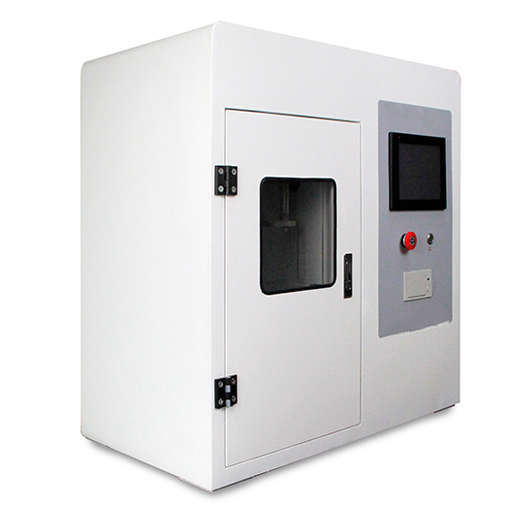
Working Principle and Operation Procedure of the Catheter Burst Pressure Tester
Working Principle
The Catheter Burst Pressure Tester follows the core concept of “determining safety through failure testing”, which means pressurizing the product until it reaches the failure point and then using the measured data to determine its safe operating range.
The tester mainly adopts the positive pressure method. A high-pressure pump control system injects an incompressible liquid (commonly water) or clean compressed air into the interior of the sample under test, such as a catheter balloon. The system continuously applies pressure according to a preset, stable, and adjustable pressure increase rate.
During the pressurization process, the high-precision pressure sensor monitors pressure changes in real time. When the sample experiences leakage, rupture, or bursting, the system detects the pressure drop signal and automatically records the peak pressure value before failure, which is defined as the burst pressure.
Operation Procedure
Proper operation is the foundation for obtaining accurate and repeatable test data. The standardized testing procedure mainly includes the following steps:
1. Pre-Test Preparation
The laboratory environment should remain stable, usually requiring controlled temperature and humidity conditions while avoiding vibration and strong electromagnetic interference.
The equipment should be placed horizontally and preheated for 15–20 minutes after startup.
The sample should undergo relevant clinical simulation pretreatment. For example, the catheter should be immersed in physiological saline at (37 ± 2)℃ for at least 1 minute to remove internal air bubbles.
2. Installation and Inspection
Securely connect the catheter hub to the equipment connector and seal the distal end of the catheter with a clamp.
Carefully inspect the entire hydraulic or pneumatic circuit to ensure that all connections are tight and that there are no leaks.
3. Parameter Setting and Testing
Set the appropriate pressure increase rate on the control interface according to the test requirements.
After starting the test, the equipment automatically increases pressure until the sample bursts. The system continuously records the pressure-time curve throughout the process and identifies the point at which the burst occurs.
Modern testers are usually integrated with multiple standard testing modes to meet different testing requirements:
Burst Pressure Test: Used to directly determine the maximum pressure capacity of the sample.
Creep Test: Used to observe performance changes under constant pressure conditions.
Pressure Holding Leakage Test: Used to verify sealing performance under specified pressure conditions.
The equipment supports both liquid and gas testing media to meet different testing requirements for various catheter applications. For example:
Intravascular catheters generally use liquid media for testing.
Non-vascular catheters can use gas media for evaluation.
This flexible testing capability allows the Catheter Burst Pressure Tester to provide reliable pressure performance evaluation for different types of medical catheter products.
Precautions, Common Issues, and Equipment Selection for the Catheter Burst Pressure Tester
1. Safety Precautions
When operating this type of high-pressure testing equipment, safety must always be the top priority.
Key safety precautions include:
Ensure that the fluid temperature inside the test chamber remains constant at (37 ± 2)℃.
Use reliable locking devices to securely fix the catheter connectors.
Thoroughly inspect the hydraulic/pneumatic circuit before testing to ensure there are no leaks.
2. Common Issues
The entire testing process should be conducted in an environment equipped with safety protection devices to prevent injury caused by high-pressure fluid spraying.
Common problems during testing include large data fluctuations and abnormal failure locations. These issues are usually related to the following key control factors:
Pressure control accuracy: The equipment must provide smooth and stable pressure increase without sudden impact or fluctuations.
Burst determination accuracy: Accurate burst detection relies on high-precision pressure sensors. In some cases, high-speed cameras may be used for visual confirmation of the failure process.
Data recording integrity: The system should be capable of continuously recording and storing test data throughout the entire testing process.
Strict environmental and sample control: Maintaining consistent test conditions and proper sample preparation is essential to ensuring repeatable and reliable test results.
3. Equipment Selection
When selecting a Catheter Burst Pressure Tester, several key factors should be considered:
Measurement Range
The pressure measurement range of the equipment must fully cover the required test pressure range of the catheter products being evaluated.
Testing Medium
The equipment’s compatibility with liquid or gas testing media should be confirmed according to the catheter type (vascular or non-vascular catheter).
Accuracy and Automation
High-precision sensors and automated testing procedures can significantly improve testing efficiency and enhance the reliability and consistency of test results.
Differences Between Burst Pressure Testing and Pressure Resistance Testing
Although both involve pressure testing, burst pressure testing and conventional vascular catheter pressure resistance testing have essential differences in terms of testing purpose, methods, and data application.
1. Testing Purpose
Burst pressure testing is a destructive test designed to identify the failure limit of a product. Its purpose is to determine the “maximum pressure” at which the product ruptures or fails.
Pressure resistance testing is used to verify the product’s ability to withstand continuous pressure. It focuses on evaluating the product’s sealing performance and stability under specified high-pressure conditions.
2. Testing Methods
The testing methods of the two are different:
Burst pressure testing: The pressure is continuously increased until the sample ruptures. The system records the peak pressure value before failure, which represents the burst pressure.
Pressure resistance testing: A constant pressure is maintained for a specified period, and the sample is observed for leakage, deformation, or other abnormal conditions.
3. Data Application
The data obtained from burst pressure testing and pressure resistance testing serve different purposes:
Burst pressure data is mainly used for product safety margin design, structural optimization, and determining the maximum pressure tolerance of the product.
Pressure resistance test data reflects the reliability of the product during clinical use and is mainly used to evaluate the fluid delivery performance and sealing reliability of catheters rather than structural strength.
For expansion devices such as balloon catheters, additional catheter pressure resistance testing systems are also required for fatigue performance evaluation.
These comprehensive testing requirements often require equipment with multi-station switching capabilities to perform different test procedures efficiently and meet various evaluation standards.
Importance of Catheter Burst Pressure Testing for Medical Devices
In medical applications such as cardiovascular intervention and urological surgery, catheters need to withstand complex pressure environments inside the human body. Burst pressure testing simulates extreme operating conditions to verify the maximum pressure capacity of catheters before failure. This test is directly related to the following key aspects:
1. Product Safety
Burst pressure testing helps prevent catheter rupture during clinical use, reducing the risk of serious complications such as internal bleeding caused by catheter failure.
2. Regulatory Compliance
Medical device registration processes generally require catheter products to comply with relevant standards, such as YY 0285 catheter burst pressure testing requirements, ensuring that products meet regulatory safety requirements.
3. Design Verification
The test results provide quantitative data for catheter material selection, structural optimization, and product performance improvement, helping engineers develop safer and more reliable catheter designs.
Currently, mainstream medical catheter burst pressure testers adopt the positive pressure testing method. By precisely controlling the pressurization rate of liquid or gas, the equipment records the peak pressure value at the moment the catheter ruptures.
The testing accuracy typically needs to reach within 0.5%, which places high requirements on the precision of the equipment’s pressure sensors and control systems.
Conclusion
In summary, as a high-precision pressure testing device, the Catheter Burst Pressure Tester plays an indispensable role in multiple critical stages, including medical device research and development, production quality control, and pre-clinical verification, thanks to its excellent performance and stable reliability.With the continuous advancement of medical technology and the emergence of new catheter materials, evaluation standards for catheter safety performance are becoming increasingly strict. This trend creates broader market opportunities and sustained application demand for high-precision and intelligent burst pressure testing equipment.We sincerely welcome inquiries regarding product performance, technical specifications, or specific application requirements. Our professional team will provide detailed product information, customized testing solutions, and comprehensive technical support services according to your specific needs.
Previous: What is an automotive seat dynamic comfort tester?
N e x t : the last page
