





What does a respirator fit tester do?
2026/07/17
Share:

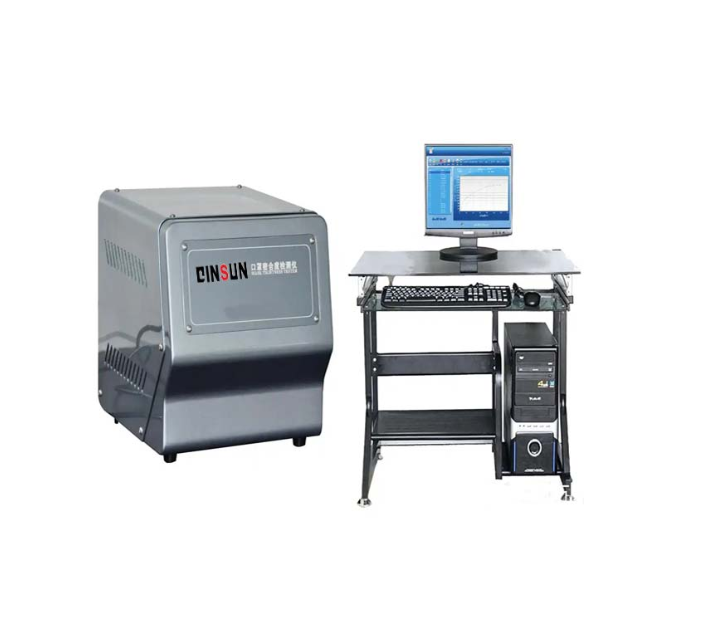
Main Structure of the Mask Fit Tester
The Mask Fit Tester features a highly integrated structure and strong operational stability. The entire system consists of five main components: an aerosol generation system, simulation system, particle detection system, intelligent control system, and sealed testing chamber.
The aerosol generation system includes an aerosol generator and concentration adjustment components. It can generate two types of test particles: salt-based and oil-based aerosols. The aerosol concentration is adjustable, allowing the equipment to meet different testing standards and requirements.
The simulation system is equipped with standardized head forms in multiple sizes, a breathing simulation pump, and motion drive components. It can simulate the wearing conditions of people with different facial shapes and various human activity postures.
The particle detection system is equipped with a laser particle counter and dual-channel sampling probes, which can separately collect particle concentration data inside and outside the mask. The detection error is extremely low, ensuring accurate and reliable test results.
The intelligent control system adopts a touch-screen display and integrates national standard testing programs. It can automatically complete data acquisition, calculation, storage, and generate test reports.
The sealed testing chamber features a light-proof and airtight structure, which can isolate external air interference. It is also equipped with aerosol leakage prevention safety protection functions to ensure safe laboratory operation.
Working Principle of the Mask Fit Tester
1. Aerosol Particle Concentration Detection Principle
The instrument uses salt-based or oil-based aerosols as the testing medium. The aerosol generator can produce fine particles with uniform particle size distribution and stable concentration, simulating airborne dust, microorganisms, and suspended pollutants.
During the testing process, a constant aerosol concentration is maintained inside the test chamber. A high-precision laser particle counter separately collects the particle concentration outside the mask and the particle concentration inside the mask near the facial contact area.
The total leakage rate of the mask is calculated based on the concentration difference between the inside and outside of the mask. The fit factor is determined by the ratio of external particle concentration to internal particle concentration.
A lower leakage rate and a higher fit factor indicate better sealing and fitting performance of the mask. This method can quantitatively evaluate the mask’s fit performance.
2. Human Breathing Simulation Principle
To closely replicate real wearing conditions, the equipment is equipped with an intelligent simulated head form and breathing simulation system, which can accurately reproduce human breathing frequency and airflow rate.
The instrument sets inhalation and exhalation cycles according to national standards to simulate different breathing conditions, including normal breathing and deep breathing. Meanwhile, the head form can perform movements such as head turning, head lifting, and jaw movement, reproducing facial deformation during daily mask wearing.
During dynamic movements, the system continuously collects particle concentration data to detect leakage caused by gaps formed after the mask undergoes force deformation. This avoids the limitations of static testing and ensures that test results better reflect actual wearing conditions.
3. Air Pressure Balance and Data Evaluation Principle
The test chamber is equipped with an air pressure balance control module, which maintains stable airflow conditions inside the chamber and prevents uneven aerosol distribution caused by pressure fluctuations, ensuring a consistent testing environment.
The equipment sampling pipeline is equipped with a high-precision flow sensor to accurately control the sampling airflow rate and prevent airflow interference from affecting test data accuracy.
After testing is completed, the system automatically summarizes leakage rate data under different movement conditions and compares the results with national standard limits to determine whether the product meets requirements.
Generally, the total leakage rate of protective masks must be below specified standards, while medical protective masks require stricter fit performance.
The equipment can classify mask protection suitability through data analysis, helping prevent low-quality masks with insufficient fit performance from entering the market.
Selecting the Appropriate Mask Fit Tester Based on Actual Application Scenarios
When selecting a Mask Fit Tester, the first step is to clearly define the application scenario and core testing requirements. Different application environments have different requirements for testing accuracy, portability, and applicable standards.
Medical Institutions or Laboratories
High-precision testing equipment that complies with strict standards is required. For example, a medical mask fit tester can ensure reliable and accurate test results, meeting the requirements of professional evaluation and quality control.
Industrial Production Environments
A tester with strong durability and the ability to support continuous operation is more suitable, such as a protective mask testing system, which can meet the needs of large-scale production inspection and routine quality control.
Temporary Testing or On-Site Applications
A portable mask fit tester provides greater flexibility and convenience, making it suitable for rapid evaluation of mask fit performance in different locations.
Precautions for Using the Mask Fit Tester
When using the Mask Fit Tester, the following precautions should be considered:
The tester should be calibrated regularly to ensure the accuracy and reliability of measurement results.
During the testing process, the test subject should maintain normal breathing and avoid excessive breathing force or intentionally holding their breath.
Test results may be affected by various factors, such as the test subject’s breathing habits, mask type, and wearing method. Therefore, when interpreting test results, these factors should be considered comprehensively.
If poor mask fit performance is detected, the mask should be replaced in time or the wearing method should be adjusted to improve the sealing effect.
Importance of the Mask Fit Tester in Mask Production and Application
1. Quality Control
The Mask Fit Tester provides an important quality control method for mask manufacturers. By testing the fit performance of masks, manufacturers can ensure product consistency and compliance with relevant standards and requirements.
2. Mask Selection and Wearing Guidance
The testing equipment can help users correctly select suitable masks and provide guidance on proper mask-wearing methods. This helps improve the protective performance of masks and reduce the risk of virus and bacteria transmission.
3. Research and Development
The tester can also be used for research and development of mask materials and designs. By evaluating the fit performance of masks made from different materials and with different structures, it can provide scientific data support for improving mask design and performance.
4. Standard Compliance and Supervision
Many countries and regions have established standards and requirements for masks, requiring masks to achieve specific filtration performance under certain conditions. The use of Mask Fit Testers helps ensure that mask manufacturers and users comply with these requirements while improving product reliability and safety.
The Mask Fit Tester plays an important role throughout the production and application processes of masks. It can ensure effective sealing between the mask and the face, improve filtration efficiency, and reduce the risk of virus and bacteria transmission.Mask manufacturers can use fit testers for quality control, while users can rely on test results to select and wear masks correctly. With continuous technological advancement, fit testing equipment will become more accurate and efficient, playing an increasingly important role in the development of the mask industry.
Conclusion
In summary, as the protective equipment industry continues to become more standardized, mask fit testing technology will continue to advance. The intelligent detection capabilities of fit testing equipment will also be further improved, promoting higher-quality protective masks and building a scientific protective barrier for respiratory safety.We sincerely welcome your inquiries or direct contact with us so that we can provide more detailed product information and professional solutions.
Previous: What is a catheter burst pressure tester?
N e x t : the last page
