





What is a contact heating and cooling tester?
2026/07/21
Share:

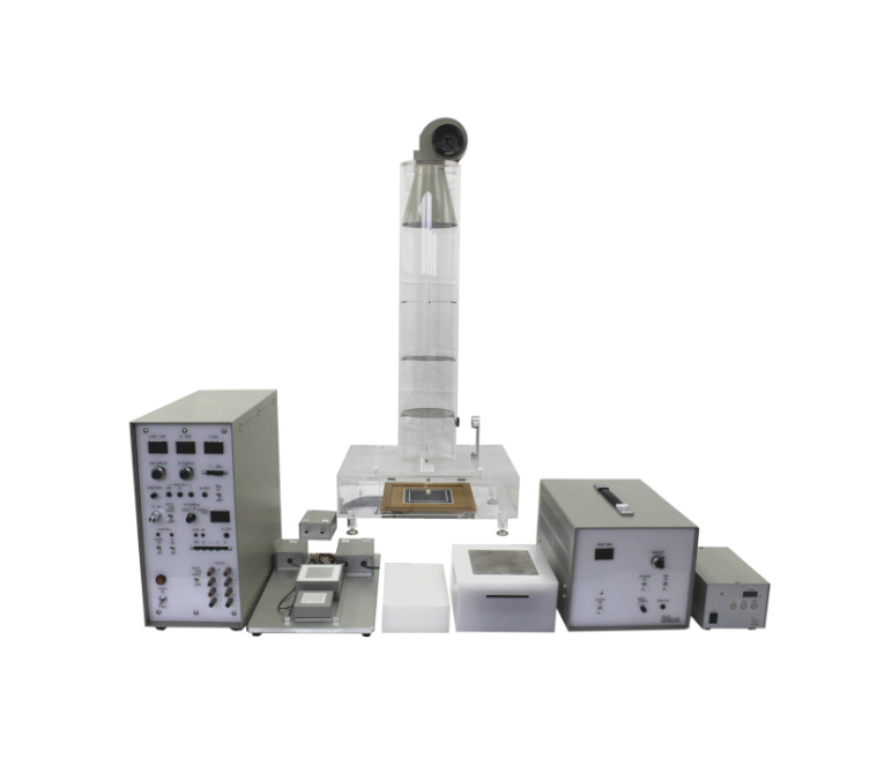
Composition of the Contact Thermal Sensation Tester
1. The core testing component is made of high thermal conductivity aluminum alloy and integrates a platinum resistance temperature sensor and heat flux sensing element. With a standardized design of volume and contact load, it can achieve rapid heating and cooling, with sensitive temperature response. It serves as the core module for heat output and data acquisition.
The equipment integrates a semiconductor refrigeration module and heat dissipation air duct, which can accurately maintain the constant temperature of the specimen. The base platform has a flat surface and is equipped with dedicated positioning fixtures, which can fix specimens with different thicknesses, prevent specimen compression displacement, and ensure that there is no gap on the testing contact surface.
2. The external circulating constant temperature air groove can regulate the temperature and humidity of the entire equipment testing environment, isolate the interference of external environmental temperature changes and humidity fluctuations, and provide the specimen with a pre-conditioning and testing environment that meets national standard requirements.
The touch-screen host system is equipped with dedicated analysis software, which can display temperature and heat flux curves in real time. Test data can be exported and saved as CSV documents. The system also provides functions such as batch testing, parameter presetting, and historical data retrieval, meeting the requirements of standardized laboratory data management.
3. The equipment includes steady-state thermal conductivity double plates, circulating wind tunnel insulation testing accessories, and wet-state wetting fixtures. By replacing accessories according to testing requirements, the equipment can switch between three types of tests: cool feeling, thermal conductivity, and thermal insulation, achieving multi-functional operation with one instrument.
Applications of the Contact Thermal Sensation Tester in the Textile Field
The thermal sensation of textiles is directly related to the wearing comfort and health experience of the human body. Different types of textiles, such as underwear, outerwear, and bedding products, have different requirements for thermal sensation performance indicators. Therefore, the Contact Thermal Sensation Tester has a wide range of applications in the textile field.
In the performance testing of underwear, the Contact Thermal Sensation Tester can be used to evaluate indicators such as softness, breathability, and thermal insulation performance of underwear. It can simulate the usage conditions of underwear under different environmental temperature and humidity conditions, thereby evaluating the comfort and durability of underwear.
In the performance testing of outerwear, the Contact Thermal Sensation Tester can be used to evaluate indicators such as thermal insulation performance, breathability, and washing durability of outerwear. It can simulate the usage conditions of outerwear under different environmental temperature and humidity conditions, thereby evaluating the comfort and durability of outerwear.
In the performance testing of bedding products, the Contact Thermal Sensation Tester can be used to evaluate indicators such as comfort, softness, and breathability of bedding products. It can simulate the usage conditions of bedding products under different environmental temperature and humidity conditions, thereby evaluating the comfort and durability of bedding products.
In conclusion, the Contact Thermal Sensation Tester has a wide range of applications in the textile field. It can be used to evaluate various performance indicators of textiles, helping textile manufacturers improve product quality and extend product service life.
Test Methods of the Contact Thermal Sensation Tester
The thermal sensation of fabrics is generally evaluated by using the maximum transient heat flux method, thermal absorptivity method, and thermal conductivity method. However, both the maximum transient heat flux test and the thermal absorptivity test include thermal conductivity as a parameter. Therefore, current evaluation methods for thermal sensation mainly focus on the maximum transient heat flux test and thermal absorptivity test.
I. Maximum Heat Flux Method (Q-max Method)
The basic principle of the maximum heat flux method is to measure the heat flux variation curve in real time during the transient heat transfer process that simulates the contact between human skin and fabric.
Before measurement, the sample needs to be placed on a sample holder with a constant temperature. Then, the heating plate made of a material with good thermal conductivity is heated to a temperature approximately 5–10°C higher than the sample temperature. During the measurement, the heating plate is placed on the upper surface of the sample. Heat flows from the higher-temperature heating plate to the sample, and the temperature of the heating plate as well as the variation curve of heat flux density at the contact surface over time are recorded and measured.
1. Q-max Test (Cool/Warm Feeling Test)
First, the sample is placed on the constant temperature platform, and the heat storage plate is placed on the heat source platform for heat accumulation. Then, the heat storage plate is quickly placed onto the surface of the sample.
The stored heat is immediately transferred to the lower-temperature sample side. The peak heat flux value measured during this process is the Q-max value. The entire testing process can be completed within 1 minute.
2. Testing of Steady-State Thermal Conductivity and Thermal Diffusivity
First, the constant temperature platform is set to room temperature. A sample with a size of 50 mm × 50 mm is placed on the constant temperature platform, and then the heating plate of the heat source platform is placed tightly against the specimen.
After the temperature of the heat source platform and the guard ring reaches a stable state, the steady-state thermal conductivity can be obtained by measuring the steady-state heat flux. The testing process can be completed within 2–3 minutes.
By collecting the dynamic heat flux and temperature variation curves before reaching the stable state and combining them with specific boundary conditions, the equipment can also measure the thermal diffusivity. After obtaining the thermal conductivity and thermal diffusivity measurement results, if the sample density is known, the specific heat capacity of the sample can be further calculated.
It can be seen that this type of thermal performance tester is a classic transient thermophysical property testing instrument. Through corresponding testing models and specific boundary conditions, it can measure the thermophysical performance parameters of samples in the thickness direction. In other words, the thermal performance testing of this type of instrument has clear directional characteristics.
3. Thermal Insulation Performance Test
The above-mentioned Contact Thermal Sensation Tester can be combined with a wind tunnel to perform thermal insulation performance testing of fabrics.
During the test, the sample and sample mounting frame are fixed together onto a 100 mm × 100 mm heat source platform. Normally, the air temperature inside the wind tunnel is the same as room temperature, and the heat source platform is set to a temperature 10°C higher than room temperature.
After the temperature of the heat source platform and the heat flux value reach a stable state, the heat flux value is measured to calculate the thermal insulation performance of the sample. The test can generally be completed within 2–5 minutes.
In actual testing, various testing methods can also be applied, such as the Wet method, Space method, and Wet Space method.
II. Thermal Absorptivity Method
During the transient heat transfer process when human skin contacts fabric, dynamic heat transfer is jointly affected by the fabric’s thermal conductivity, specific heat capacity, and density.
Thermal absorptivity is also commonly referred to as the thermal storage coefficient or thermal dissipation coefficient. For standardized testing of thermal absorptivity and other thermophysical performance parameters of fabrics, the United States introduced ASTM D7984 — Standard Test Method for Measurement of Thermal Effusivity of Fabrics Using a Modified Transient Plane Source (MTPS) Instrument in 2016.
The modified transient plane source method described in ASTM D7984 is based on the classical transient plane source method. It changes the original testing structure of a double-sample clamping film probe into a single-sample testing configuration.
The position originally occupied by the second sample is replaced with a material with known thermophysical properties. This material can also be integrated with the film probe to form an integrated testing probe. After this modification, most of the testing functions of the transient plane source method can still be achieved.
This method can measure thermal absorptivity and thermal conductivity, but it cannot directly measure the maximum heat flux density.
Advantages of the Contact Thermal Sensation Tester
The core advantage of the Contact Thermal Sensation Tester lies in its ability to highly simulate the tactile sensation of human skin. It converts subjective perceptions of coolness and warmth into objective and quantitative physical data, providing scientific evidence for textile research and development as well as quality control.
Main Advantages and Features:
Accurate Simulation of Human Contact Conditions:
The heat detection plate designed for the instrument simulates the actual conditions of human contact with objects in terms of both applied load (pressure) and contact area. This ensures that the measured maximum heat transfer amount can accurately reflect the cool and warm sensations actually perceived by the human body.
Compliance with International and National Standards:
This instrument is specially designed for testing the instant cooling sensation performance of textiles in contact with human skin. It fully complies with authoritative standard requirements and serves as a widely applicable compliance testing device in the industry.
High Sensitivity and Fast Response:
Equipped with a high-speed data acquisition card and high-precision temperature sensors, the instrument has a response time of ≤0.2 seconds and a resolution of 0.1°C. It can capture instantaneous changes in heat flux, ensuring the reliability and accuracy of test data.
Multi-Functional Expandability:
In addition to the core contact thermal sensation test, the instrument can also be equipped with optional measurement functions for thermal conductivity and thermal insulation performance. By simulating different environmental conditions, such as airflow speed and temperature differences, it can evaluate the comprehensive performance of materials in terms of cooling sensation during summer and thermal insulation during winter.
In summary, the Contact Thermal Sensation Tester demonstrates significant advantages in the field of material comfort evaluation due to its high sensitivity, rapid response capability, and excellent multifunctional expandability. Its accurate data acquisition and comprehensive performance simulation capabilities make it an important technical instrument worthy of attention from professionals in the industry.We sincerely welcome inquiries regarding instrument specifications, application scenarios, technical details, and other related topics. Please feel free to contact us or leave a message so that we can provide more detailed product technical information, application cases, and customized solutions according to your specific requirements.
Previous: What is a large-area 3D optical surface profilometer?
N e x t : How does a constant-elongation stress meter work?
