





How does a constant-elongation stress meter work?
2026/07/21
Share:

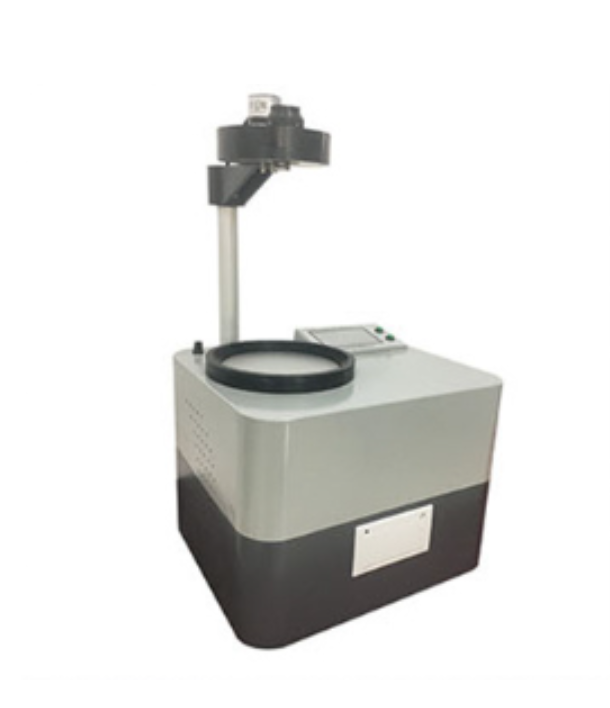
Test Principle and Procedure of Constant Elongation Stress Testing
1. Basic Principle of Constant Elongation Stress Testing
The constant elongation stress we refer to actually describes the ability of a material to resist deformation. During the test, the specimen is mounted on a tensile testing machine and stretched at a constant speed. The instrument records the force required when the material reaches a predetermined elongation rate.
This test is different from tensile strength testing. Tensile strength testing focuses on the maximum stress that a material can withstand before breaking, while constant elongation stress testing focuses on the stress performance of the material under a specific deformation condition. For example, 100% constant elongation stress refers to the stress value required when the material is stretched to twice its original length.
The test results can reflect the stiffness, elasticity, and other properties of the material. Generally, the higher the constant elongation stress value, the more difficult it is for the material to be stretched and the greater its stiffness. Conversely, a lower value indicates that the material is relatively softer and more flexible.
2. Detailed Test Procedure
Conducting constant elongation stress testing requires following a standardized operating procedure to ensure the comparability and accuracy of test results.
First, the specimen needs to be prepared according to the standard specifications. Common specimen shapes include dumbbell-shaped specimens and rectangular specimens. The specific selection depends on the testing standard and material type. The thickness and width of the specimen need to be accurately measured, as these dimensions directly affect the test results.
Next, the specimen is installed into the upper and lower grips of the tensile testing machine. During installation, attention should be paid to keeping the specimen vertical and avoiding tilting. At the same time, the grips should clamp the specimen evenly to prevent slipping or stress concentration during the test.
Then, the testing parameters are set, including tensile speed, test temperature, and other conditions. The tensile speed is usually specified by relevant standards, such as 500 mm/min. The test temperature must also be strictly controlled, as temperature changes can affect the mechanical properties of polymer materials.
After starting the testing equipment, the instrument automatically stretches the specimen and records the data. The testing system generates a stress-strain curve, from which the stress value at a specific elongation rate can be obtained.
3. Application Fields of Constant Elongation Stress Testing
This testing method is widely used in many industries.
In the rubber product industry, constant elongation stress testing is commonly used for quality control of products such as tires, sealing components, and conveyor belts. For example, tire rubber compounds need to have an appropriate constant elongation stress value to ensure sufficient stiffness for supporting vehicle weight while maintaining suitable elasticity for driving comfort.
In the plastics industry, this test can be used to evaluate the mechanical properties of products such as films, pipes, and profiles. By controlling constant elongation stress, manufacturers can ensure that products do not undergo excessive deformation due to external forces during use.
With the development of local industries in the Xinjiang region, constant elongation stress testing has also been increasingly applied in fields such as sealing components for energy equipment, rubber parts for agricultural machinery, and construction materials. This fully demonstrates the important role of this test in ensuring product quality.
4. Factors Affecting Test Results
Various factors can affect the results of constant elongation stress testing. Understanding these factors is important for correctly interpreting test data.
Material formulation is one of the main influencing factors. In polymer materials, the type and amount of fillers, the proportion of plasticizers, crosslinking density, and other factors can change the constant elongation stress value of the material. For example, increasing the amount of carbon black filler usually increases the constant elongation stress of rubber.
The influence of processing technology cannot be ignored. Mixing processes, vulcanization conditions, molding methods, and other manufacturing factors can change the microstructure of materials, thereby affecting their mechanical properties. Even with the same formulation, significantly different test results may be obtained under different processing conditions.
Testing conditions are also critical. In addition to the tensile speed and test temperature mentioned above, the pre-conditioning state of the specimen and the accuracy of the testing machine can also affect the results. Therefore, testing conditions must be strictly controlled to ensure result comparability.
5. Precautions During Testing
Several key points require special attention when performing constant elongation stress testing.
Specimen preparation must comply with relevant standards. Irregular cuts and excessive dimensional deviations may cause inaccurate test results. Using standard cutting dies and measuring tools is essential for ensuring specimen quality.
The testing environment needs to remain stable. Temperature fluctuations and humidity changes may affect test results. When conditions permit, testing should be carried out under constant temperature and humidity conditions.
Equipment calibration and maintenance are equally important. The tensile testing machine should be calibrated regularly to ensure the accuracy of force measurement and displacement control. At the same time, the wear condition of the grips should be checked frequently to avoid test errors caused by fixture problems.
6. Analysis and Interpretation of Test Results
After obtaining the test data, correctly analyzing and interpreting the results is also an important aspect.
Constant elongation stress reflects the stiffness of a material under specific deformation conditions, but a single numerical value cannot fully describe the overall performance of a material. Usually, it needs to be combined with other testing indicators, such as tensile strength, elongation at break, permanent deformation, and other related parameters, to comprehensively evaluate material performance.
Attention should also be paid to the dispersion of test results. Due to the inherent non-uniformity of materials and testing errors, test results from the same batch of materials may show certain variations. In such cases, data should be analyzed from a statistical perspective, focusing on the average value and standard deviation rather than a single measurement result.
Laboratory test results should also be correlated with actual service performance. For example, the constant elongation stress value of sealing components is directly related to their sealing effectiveness. By accumulating testing data, the relationship between testing indicators and actual application performance can be established, providing a basis for product design and quality control.
Through the above introduction, it is believed that everyone has gained a basic understanding of constant elongation stress testing. Although this test appears highly specialized, its principle is not complicated. It is an indispensable part of material quality control. In industrial production, such fundamental testing methods often play a critical role in ensuring product quality.
Importance of the Constant Elongation Stress Meter
As a core instrument for testing the mechanical properties of polymer materials, the Constant Elongation Stress Meter plays an important role mainly in the precise evaluation of material stiffness, process optimization, and quality control.
First, it is a key tool for evaluating the stiffness of elastomers such as rubber. Constant elongation stress reflects the ability of a material to resist deformation at a specific elongation rate and has a strong positive correlation with material hardness. The stress-strain data obtained through this instrument can objectively characterize the elastic recovery capability and durability of materials, providing scientific evidence for evaluating the tensile resistance performance of products during actual use.
Secondly, this equipment plays a guiding role in research and development as well as manufacturing process optimization. Researchers can use constant elongation stress testing data to conduct in-depth analysis of the effects of vulcanization systems, reinforcing agents, and additives on material performance. For example, by comparing changes in constant elongation stress under different formulations, process parameters can be precisely adjusted to meet complex performance requirements where high constant elongation stress and high elongation need to coexist, thereby improving the overall mechanical performance of products.
Finally, the Constant Elongation Stress Meter is an important part of ensuring that product quality meets international standards. Testing according to standards such as ASTM and ISO not only verifies the reliability of products such as rubber hoses, sealing components, and tire compounds, but also provides enterprises with highly comparable quality data. This helps companies establish quality advantages in market competition, ensuring the safety and stability of final products. It is an indispensable basic tool in materials science research and industrial quality control.
In summary, as a key instrument for evaluating the mechanical properties of materials, the Constant Elongation Stress Meter deserves in-depth attention due to its accurate measurement capability and wide range of applications. It not only provides scientific support for material research, development, and formulation optimization but also plays a crucial role in product quality control and performance verification.If there are further requirements regarding material testing, quality control, or equipment selection, or if more information is needed about the technical details, operating procedures, and standard applications of the Constant Elongation Stress Meter, we sincerely welcome inquiries and direct communication. Based on specific application scenarios and technical requirements, we can provide more detailed product technical documents, testing solution recommendations, and professional consulting services to assist in carrying out related work more efficiently.
Previous: What is a contact heating and cooling tester?
N e x t : What is an automatic cleanliness extractor?
