





What is an automatic cleanliness extractor?
2026/07/22
Share:

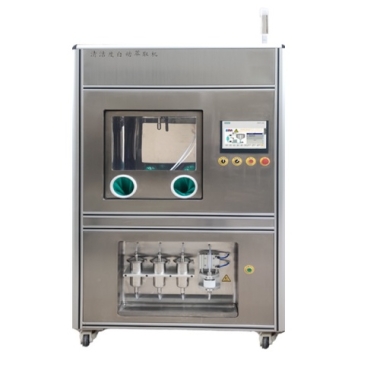
Main Workflow and Components of the Equipment
A typical Cleanliness Automatic Extractor usually follows the following systematic workflow, and its hardware configuration is closely designed around these procedures:
1. Cleaning and Extraction Unit
This is the initial workstation of the equipment. The system accurately positions the components to be tested inside a sealed cleaning chamber. According to the preset program, the cleaning nozzles are controlled to spray high-purity cleaning solvent onto the surface of the components from different angles, with specific pressure and duration.
The solvent thoroughly removes particle contaminants attached to the surface of the components, forming a cleaning solution containing contaminant particles. The entire process is carried out in a sealed environment, which can effectively prevent external contamination and solvent evaporation.
2. Filtration and Collection Unit
The particle-containing cleaning solution is automatically transferred to the filtration system. The core components of this unit include a precision balance and a filter membrane.
The system automatically places a clean filter membrane with a specified pore size onto the filtration base and performs tare weighing. Subsequently, the cleaning solution passes evenly through the filter membrane under negative pressure, while all insoluble particle contaminants are retained on the surface of the membrane.
After filtration is completed, the system automatically weighs the filter membrane containing the collected particles and calculates the total mass of particle contaminants through the differential weighing method.
3. Drying and Processing Unit
The wet filter membrane must be completely dried before further analysis can be performed. The equipment is usually equipped with a gentle and controllable drying station. Through circulating clean air or placement in a specific controlled environment, the system ensures that the solvent on the filter membrane is completely evaporated while preventing particles from being displaced due to excessive airflow.
4. Image Acquisition and Analysis Unit
After drying, the filter membrane is automatically transferred beneath a high-resolution scanning microscope or professional imaging system.
The system automatically performs rapid full-field scanning and imaging of the entire filter membrane to obtain high-resolution particle images. The built-in analysis software then automatically identifies and calculates particle information based on parameters such as grayscale, shape, and size.
The software can classify particles according to size ranges and calculate the number of particles within each size interval. Some advanced systems can also perform preliminary analysis of particle morphology.
5. Central Control System
As the “brain” of the equipment, the integrated software control platform is responsible for coordinating the sequential operation of all hardware units.
The operator only needs to select or edit the corresponding analysis standards in the software, set the cleaning parameters, filtration method, and analysis report template, and then start the entire process with one click.
The software is also responsible for data recording, storage, and management, ensuring that all operation steps and data changes are fully traceable.
Functional Perspective of Daily Maintenance
Daily maintenance should not be simply regarded as a checklist of routine care tasks. Instead, it should be considered a necessary calibration and control process to maintain the stability of the above-mentioned physical and chemical processes and ensure the representativeness of test results.
Maintenance of the Fluid System Cleanliness
Maintaining the cleanliness of the fluid system is the foundation of reliable operation. After each test, the storage tank, pipelines, and chambers should be completely drained and thoroughly flushed to prevent residual contaminants from the current test from causing cross-contamination in subsequent tests.
The sealing components of the pump should be inspected regularly. Even minor leakage may introduce external contaminants or cause unstable pressure, which can directly affect the cleaning and extraction force.
Maintenance of the Filtration and Sealing Unit
The filtration and sealing unit is a key focus of maintenance. The sealing rings of the filter membrane holder should always be kept in good condition. Any leakage may cause the contaminant-containing extraction solution to bypass the filter membrane, resulting in serious distortion of test results.
The clamping force of the filter holder should be regularly verified. Filters used in vacuum pumps or pressure pumps should be replaced according to the specified maintenance cycle to ensure stable suction or pressurization efficiency.
Verification of the Sensing and Calibration System
The verification of the sensing and calibration system is directly related to data reliability. The equipment may integrate various sensors, such as flow meters, pressure sensors, and precision balances. These sensors should be regularly calibrated or verified according to applicable standards.
For example, the precision and repeatability of the balance used for gravimetric measurement should be regularly confirmed with standard weights. Otherwise, the measured data of contaminant mass will lose its analytical value.
Monitoring of Environmental Control Factors
Environmental control factors are often overlooked during maintenance. The cleanliness, temperature, and humidity of the equipment operating environment should remain relatively stable.
Environmental dust may contaminate exposed filter membranes or components. Temperature fluctuations may affect the viscosity of the extraction solution, thereby changing fluid dynamic characteristics, and may also influence the weighing accuracy of the balance.
Recording environmental conditions helps trace the causes of abnormal data and improves the reliability and traceability of analysis results.
Advantages of Using a Fully Automatic Extraction Equipment
Compared with traditional manual methods, fully automatic extraction equipment offers advantages in multiple aspects:
1. High Result Consistency and Repeatability
The automated workflow completely eliminates the influence of subjective factors such as operator techniques, applied force, and time judgment. When the same component is analyzed multiple times using the same equipment at different times, the results demonstrate a high level of consistency and comparability, significantly improving the reliability of laboratory data.
2. Significant Improvement in Analysis Efficiency
The equipment can operate continuously for 24 hours without interruption, making it particularly suitable for batch sample testing. It frees laboratory personnel from repetitive manual operations, allowing them to focus on higher-value tasks such as result analysis and method development.
A complete extraction and analysis cycle using automated equipment is typically several times shorter than traditional manual methods.
3. Objective, Accurate, and Traceable Data
The automatic imaging system can capture every particle retained on the filter membrane, eliminating the fatigue and omission problems associated with manual visual inspection.
The digital reports generated by the equipment not only include information on total particle quantity and size distribution, but also provide panoramic images of the filter membrane and microscopic images of individual particles, ensuring comprehensive and objective data.
All operating parameters and test results are electronically recorded and stored, fully meeting the strict requirements of modern quality management systems for data integrity and traceability.
4. Reduced Long-Term Operating Costs
Although purchasing the equipment requires a certain initial investment, from a long-term operational perspective, the equipment can effectively reduce the cost per analysis by:
Reducing labor requirements;
Minimizing repeated testing caused by human errors;
Lowering solvent consumption through optimized spraying programs;
Increasing the overall sample processing capacity of the laboratory.
Standardized operation also reduces excessive dependence on individual operator skills and experience.
5. Improved Operational Safety
The entire extraction and filtration process is completed within a closed system, greatly reducing the possibility of operators coming into contact with organic solvents or other chemical reagents.
This not only improves the laboratory working environment but also complies with occupational health and safety requirements.
Equipment Selection and Application Considerations
When selecting a Cleanliness Automatic Extractor, users need to conduct a comprehensive evaluation based on their actual requirements:
1. Compatible Standards and Specifications
Confirm whether the equipment’s functional design and software analysis modules support the mainstream standards followed by the relevant industry, including international standards, national standards, or industry-specific standards.
2. Sample Size and Processing Capacity
Consider whether the size of the equipment’s cleaning chamber can accommodate the innovative components to be tested, and whether the number of samples that can be processed per unit time meets the requirements of daily testing or batch inspection.
3. Cleaning and Filtration Performance
Pay attention to the uniformity of the cleaning system coverage, pressure adjustment range, solvent recovery function, as well as the accuracy, weighing resolution, and operational stability of the filtration unit.
4. Imaging and Analysis Capability
Evaluate the resolution and scanning speed of the imaging system, as well as the reliability of the analysis software algorithms and particle classification functions, to determine whether they can meet the requirements for in-depth particle characterization.
5. System Integration and Expandability
Assess whether the equipment can seamlessly integrate with the Laboratory Information Management System (LIMS) and whether future functional upgrades or module expansions can be easily implemented.
In practical applications, this type of equipment has become an important component of quality control laboratories in high-end manufacturing industries. It can not only be used for incoming material inspection, production process monitoring, and finished product inspection, but can also provide accurate data support for production process improvement and assist in tracing contamination sources, thereby improving product cleanliness levels from the root.
Conclusion
In summary, the Cleanliness Automatic Extractor represents an important development direction for sample preparation toward intelligentization and standardization. Through highly integrated automated design, it transforms cleanliness analysis from an experience-based operation that relies on operator proficiency into a precise, efficient, and data-driven scientific process.It provides a solid technical foundation for improving product quality and reliability. With continuous technological advancement, this type of equipment will continue to develop in the future toward greater intelligence, miniaturization, and deeper analytical capabilities, providing stronger technical support for industrial cleanliness control.We sincerely welcome your inquiries or direct contact with us. We will provide more detailed product information and technical materials.
Previous: How does a constant-elongation stress meter work?
N e x t : What is an in-situ expansion analysis system?
