





What is an in-situ expansion analysis system?
2026/07/22
Share:

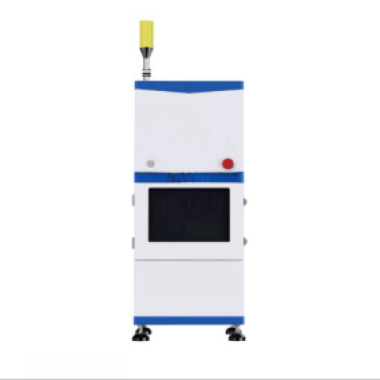
Importance of Evaluating Battery Expansion
Lithium-ion batteries, as one of the most widely used energy storage technologies today, have been applied across various industries. With the continuous expansion of application scenarios, the industry has also placed increasingly higher requirements on battery safety.
During the charging and discharging processes, lithium-ion batteries experience different degrees of expansion. On one hand, this expansion can cause deformation of the battery assembly space. On the other hand, the accumulation of irreversible expansion can damage the structure of active materials, thereby accelerating battery capacity degradation.
At the individual cell level, various methods have been developed to characterize battery cell expansion. For example, a certain pressure can be applied to the surface of a battery cell to measure the thickness change after expansion; alternatively, the cell thickness can be fixed to measure the variation in expansion force.
However, the expansion values obtained through these methods represent the overall expansion of the entire battery cell, involving multiple structures such as multilayer positive electrode sheets, negative electrode sheets, separators, aluminum-plastic films, or aluminum casings. These methods cannot accurately identify the source of expansion, nor can they quantitatively calculate the expansion contribution of individual materials. Therefore, certain limitations still exist for lithium battery researchers.
Coin cells are commonly used experimental batteries in lithium battery research and are assembled from a single layer of positive electrode, negative electrode, and separator. However, due to the constraints of the positive and negative electrode steel casings, the expansion of the electrode sheets themselves cannot be directly measured.
By eliminating the influence of the positive and negative electrode steel casings and using model coin cells specifically designed to investigate the expansion behavior of single-layer batteries, researchers can more directly analyze the expansion characteristics of active materials. This approach helps researchers evaluate the feasibility of material modification and optimization of process formulations.
Features and Advantages of In-Situ Expansion Analysis System
1. Product Features
Innovative In-Situ Non-Destructive Lithium Plating Detection Method
Provides an innovative approach for in-situ and non-destructive detection of lithium plating, enabling researchers to analyze battery degradation mechanisms without damaging the cell structure.
New Method for In-Situ Expansion Monitoring of Multiple Types of Battery Cells
Supports in-situ expansion monitoring of various types of battery cells, providing a comprehensive solution for studying cell expansion behavior under different conditions.
Quantitative Measurement of Cell Expansion Thickness and Expansion Force Variations
Accurately measures changes in battery cell thickness and expansion force, providing reliable data support for battery expansion behavior research.
Multiple Testing Modes
Supports various testing modes, including constant pressure mode, constant gap mode, and compression mode, to meet different research requirements.
2. Product Advantages
In-Situ Expansion Analysis System
The In-Situ Expansion Analysis System utilizes a highly stable and reliable automated platform equipped with high-precision thickness measurement sensors and mechanical force sensors. It enables long-term stable and accurate monitoring of battery cell thickness changes and expansion force variations, allowing comprehensive evaluation of cell performance under different operating conditions.
Multiple Testing Modes
The system supports both constant pressure testing mode and constant gap testing mode, enabling researchers to evaluate battery cell performance under different mechanical loading conditions and better understand the relationship between external constraints and cell expansion behavior.
High-Precision Control
Traditional fixtures used for constant gap testing of battery cells may cause approximately 70 μm deformation, resulting in inaccurate expansion force measurements.
The SWE In-Situ Expansion Analysis System adopts active modulation technology to control gap variation within approximately 1 μm, allowing accurate measurement of expansion force changes during the entire testing process and providing more reliable experimental data for battery research and development.
Operating Procedure of In-Situ Expansion Analysis System
The operating procedure of the In-Situ Expansion Analysis System is as follows:
1. Sample Preparation and Installation
Clean the largest surface of the pouch cell or stacked cell. Place buffer pads above and below the battery cell, then horizontally place the cell into the corresponding channel of the testing chamber, ensuring that the force-bearing surfaces are parallel and centered.
2. Software Parameter Setting
Start the control software, enter the battery cell number and sampling frequency, select the required testing mode, and set the target pressure value or initial preload force.
Configure the charging and discharging process parameters, including temperature, resting time, charge/discharge rate, and cutoff voltage/current.
3. Preloading and Calibration
Perform initial pressurization or positioning operations. After the pressure/displacement readings become stable, confirm the zero point.
Check the sensor readings to ensure that there are no abnormal fluctuations or signal deviations.
4. Start Synchronized Testing
After starting the test with one click, the system automatically synchronizes the mechanical loading system with the battery charging and discharging equipment.
It continuously collects real-time data, including:
Thickness variation;
Expansion force;
Voltage;
Current;
Capacity;
Temperature.
5. Process Monitoring and Completion
Monitor the real-time curves during testing to check whether any abnormal conditions occur. When the preset number of cycles or termination conditions are reached, the system automatically stops the test.
Finally, save the original data and export chart reports for subsequent analysis.
Key Maintenance Points of In-Situ Expansion Analysis System
The core maintenance of the In-Situ Expansion Analysis System focuses on contamination and impact prevention of precision displacement sensors, regular calibration of the mechanical loading mechanism, and verification of the synchronization stability between temperature control and electrochemical systems. A hierarchical maintenance record system should be established, including daily cleaning, weekly inspection, monthly calibration, and annual maintenance.
1. Displacement/Thickness Sensor Module
After completing daily tests, clean the sensing surface. A lint-free cloth combined with anhydrous ethanol can be used for cleaning. Hard objects are strictly prohibited from contacting or impacting the sensing components.
Check the optical path or probe alignment every week to ensure that the resolution remains stable without drift.
For optical sensor modules, effective dust protection measures should be implemented. For contact-type sensor modules, oil contamination and adhesion should be avoided.
2. Mechanical Loading and Fixture System
Before each experiment, check the flatness of the loading head and the stability of the preload force.
Every month, calibrate the load sensor using standard weights or standard force sources. Clean foreign materials from the guide rails to prevent operational sticking or abnormal movement.
3. Temperature Control and Environmental Coupling Unit
Regularly verify the temperature uniformity of the heating and cooling units, and inspect the aging condition of sealing components to prevent condensation from entering the electrical circuits.
Ensure that the timestamp synchronization error between the electrochemical workstation and the expansion data acquisition system is less than 10 ms.
4. Software and Data Integrity
Back up original data and calibration parameters every week, and verify the consistency of calculation formula versions.
When the equipment remains unused for a long period, release mechanical stress from the system. The equipment should be powered on and operated for at least 2 hours per week to prevent moisture accumulation.
Conclusion
In summary, the In-Situ Expansion Analysis System is an advanced experimental instrument capable of accurately, continuously, and synchronously measuring changes in battery thickness and expansion force during charging and discharging processes.It plays an irreplaceable role in key fields such as battery cell material research and development, process optimization, and safety evaluation. Therefore, it is highly valuable for further attention and in-depth understanding.We sincerely welcome you to leave messages or contact us directly. We will provide more detailed product information, technical specifications, application cases, and customized solutions, and we look forward to discussing how this equipment can support your specific research or production projects.
Previous: What is an automatic cleanliness extractor?
N e x t : What is a melt index?
