





What is a melt index?
2026/07/23
Share:

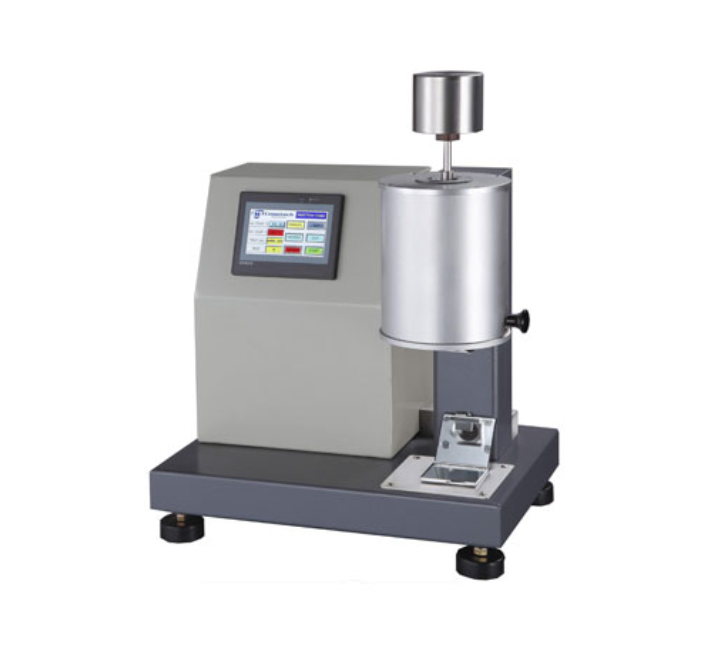
Working Principle and Operating Points of Melt Flow Index Tester
I. Working Principle
The core principle of the Melt Flow Index Tester is to determine the flow properties of plastic materials by measuring the extrusion rate of molten plastic through a die with a specified aperture at high temperature. During the test, a quantitative amount (usually several grams) of the plastic sample to be tested is placed into the barrel that has been preheated to the specified temperature. After the sample is completely melted, a constant load is applied to allow the molten plastic to flow out through a standardized capillary die.
The extruded plastic strands are cut at regular intervals, and the Melt Flow Index or Melt Flow Rate is calculated by measuring the mass of the extruded material and the time required for extrusion. This value directly reflects the flowability of the plastic material under specified temperature and load conditions and is a key indicator for evaluating the processing performance of plastics.
II. Operating Points
To ensure the accuracy and repeatability of the Melt Flow Index Test, the following points should be considered during operation:
1. Sample Preparation:
The sample must be sufficiently dried to prevent moisture from affecting the test results. At the same time, the sample quantity must be accurately weighed to minimize testing errors.
2. Temperature Control:
The test temperature must be set strictly according to the relevant standards or product requirements, and the temperature should remain stable. Temperature fluctuations will directly affect the melting condition and flow properties of the plastic material.
3. Load Application:
The applied load directly affects the extrusion speed of the molten plastic. Therefore, it is necessary to ensure that the applied load is accurate and meets the specified requirements.
4. Data Collection and Processing:
During the test, parameters such as extrusion time and mass must be accurately recorded. Necessary calculations and analysis should be completed, and multiple repeated tests should be performed with the average value taken to improve data reliability.
5. Instrument Maintenance:
The Melt Flow Index Tester requires regular cleaning, calibration, and maintenance to ensure that the instrument remains in good working condition.
Test Procedures and Maintenance of Melt Flow Index Tester
I. Test Procedures
When conducting a Melt Flow Index Test, strict testing standards must be followed to ensure the accuracy and comparability of test results. The main procedures include:
1. Sample Preparation:
Select plastic granules or powder samples that meet the testing standards and perform drying treatment to remove moisture and volatile substances, preventing them from affecting the test results.
2. Instrument Preheating:
According to the testing standard, heat the Melt Flow Index Tester to the specified test temperature, which is usually between 190°C and 260°C, and ensure that the barrel, die, and testing environment reach a stable condition.
3. Sample Loading:
Place the pretreated sample into the barrel and ensure that the sample is compactly filled without gaps.
4. Load Application:
Select an appropriate piston load according to the testing standard, start the test, and allow the piston to push the molten material out under a constant load.
5. Data Recording:
Within the specified testing time (such as 10 minutes), record the weight or volume of the extruded molten material and calculate the melt flow index.
6. Result Analysis:
Analyze the melt flow properties of the plastic material according to the test results, and evaluate its processing characteristics and product molding potential.
II. Maintenance Recommendations
As a high-precision thermal analysis and mechanical testing instrument, the long-term stability of the Melt Flow Index Tester is directly related to the repeatability of test data. To extend the service life of the Melt Flow Index Tester, a scientific daily maintenance system must be established.
1. Perform Daily Cleaning:
After each test, cleaning must be completed while the barrel and piston rod still retain residual heat. Polymers are highly prone to degradation and carbonization at high temperatures, making them difficult to remove after cooling and solidification. It is recommended to use non-woven fabric together with professional die cleaning rods to repeatedly wipe the inner wall of the barrel and the surface of the piston rod until they are clean and free of residue. For the precision capillary of the die, a dedicated cleaning needle should be used for unclogging to prevent blockage caused by carbonized materials.
2. Conduct Regular Calibration:
According to the ISO 1133 standard, the Melt Flow Index Tester should undergo a comprehensive calibration once a year, including comparison of the Melt Flow Rate (MFR) value using standard samples and verification of the internal temperature field of the barrel using a platinum resistance thermometer. The instruments produced by Chengde Yute (Deyoute) usually feature a self-calibration function, which can eliminate temperature control deviations caused by sensor aging.
3. Standardize Operation to Reduce Wear:
The instrument storage environment should be kept dry, dust-free, and free from corrosive gases. When the instrument is not used for a long period, anti-rust oil should be applied to the die and barrel. When adding samples, a funnel should be used to prevent particles from falling onto the heating wires, which may cause smoke generation or damage to the heating elements. Through proper maintenance procedures, a high-quality Melt Flow Index Tester can maintain stable accuracy for a long time, with a service life of more than ten years.
Application Fields of Melt Flow Index Tester
The Melt Flow Index Tester is widely used in various fields, including plastic processing, polymer material research, quality control, and product development.
1. Plastic Processing Industry:
In processes such as injection molding, extrusion, and blow molding, the Melt Flow Index is a key parameter for evaluating the flowability of plastic melts. It directly affects product molding quality, production efficiency, and energy consumption. By adjusting the melt flow index, processing parameters can be optimized, the rejection rate can be reduced, and product consistency and performance can be improved.
2. Polymer Material Research:
Researchers use the Melt Flow Index Tester to study the effects of different formulations, additives, or modifiers on the flow properties of plastics, providing scientific data for the development of new polymer materials. Meanwhile, the melt flow index is also an important tool for evaluating the processing window, thermal stability, and degradation behavior of materials.
3. Quality Control:
During stages such as raw material incoming inspection, production process monitoring, and finished product inspection, the Melt Flow Index Tester can ensure that the flow properties of plastic raw materials and finished products meet standard requirements, thereby maintaining stable and reliable product quality.
4. Product Development:
During the development stage of new products, the Melt Flow Index Tester helps engineers quickly select suitable material formulations, evaluate the processing adaptability of different materials, and shorten the product development cycle.
Technological Development and Future Trends
With the rapid development of the plastics industry, the Melt Flow Index Tester is continuously being upgraded and improved to meet broader application requirements and higher testing accuracy demands.
- Intelligent and Automated Operation:
Modern Melt Flow Index Testers are increasingly integrated with intelligent control systems to achieve automated operation of the testing process, reduce human errors, and improve testing efficiency.
- High Accuracy and Multi-Functionality:
By adopting high-precision sensors, advanced temperature control technologies, and data processing algorithms, the test results of Melt Flow Index Testers become more accurate and reliable. At the same time, these instruments can support multiple testing standards to meet diversified testing requirements.
- Online Monitoring and Remote Control:
With the development of Internet of Things (IoT) technology, Melt Flow Index Testers are beginning to support online monitoring functions, enabling real-time monitoring of changes in melt flow properties during production processes. This allows remote monitoring and data analysis, providing immediate support for production decisions.
- Green Environmental Protection and Sustainable Development:
With increasing environmental awareness, Melt Flow Index Testers are placing greater emphasis on energy conservation and emission reduction during testing processes. Meanwhile, in response to the testing requirements of new materials such as bio-based plastics and biodegradable plastics, new testing methods and standards are continuously being developed.
Conclusion
As an important testing instrument in the plastics industry, the Melt Flow Index Tester is not only related to the processing performance of plastic materials and the quality of plastic products but also serves as a key driving force for technological innovation and sustainable development in the plastics industry.With the advancement of technology and changes in market demands, the Melt Flow Index Tester will continue to develop toward greater intelligence, higher accuracy, multi-functionality, and environmental sustainability, contributing to the transformation, upgrading, and high-quality development of the plastics industry.For professionals engaged in plastic processing, research and development, and quality control, gaining an in-depth understanding and mastery of the working principles, testing methods, and application fields of the Melt Flow Index Tester will undoubtedly provide more opportunities and challenges for their professional development.
Previous: What is an in-situ expansion analysis system?
N e x t : What is Glass Scratch/Abrasion Tester?
