





What is a surgical mask flame retardant tester?
2026/07/24
Share:

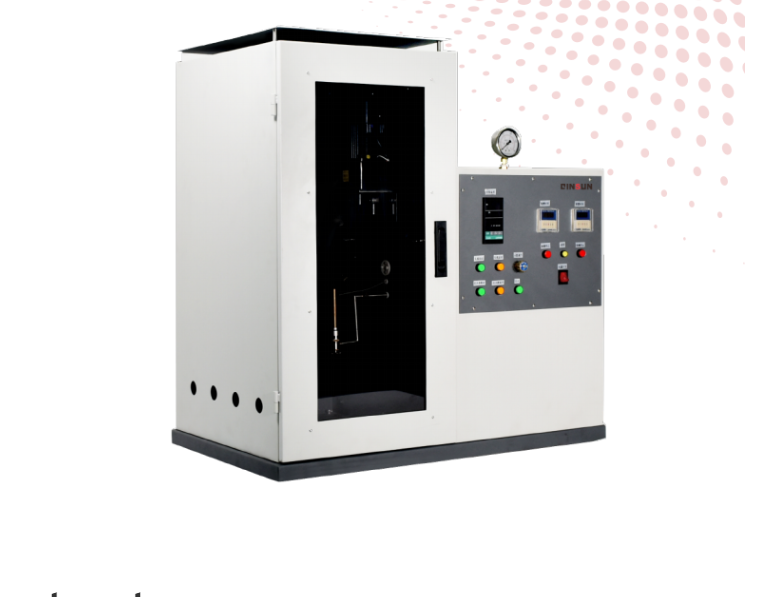
What Can a Mask Flame Resistance Tester Do
The Mask Flame Resistance Tester is a professional precision instrument designed to simulate real flame exposure conditions and evaluate the burning characteristics of masks after contact with a flame. Its primary function is to determine whether masks meet relevant flame resistance requirements through quantitative testing data, preventing non-compliant products from entering the market and ensuring the safety of users in high-risk environments.
In simple terms, the tester acts as a “flame safety inspector” for masks, serving as a key testing device for ensuring mask quality, safety compliance, and performance reliability.
Working Principle and Testing Process
The core principle of the Mask Flame Resistance Tester is to reproduce realistic flame exposure conditions and evaluate the combustion behavior of masks according to standardized testing procedures. The entire testing process is controlled precisely and follows industry testing requirements.
1. Test Sample Preparation
Before testing, the mask sample is prepared according to the applicable standard requirements. The sample may be cut into specified test pieces, or the complete mask can be mounted onto a metal headform to simulate actual wearing conditions.
To eliminate environmental influences on test results, the prepared samples are conditioned for 24 hours in an environment with a temperature of 23 ± 2°C and relative humidity of 50 ± 5%.
2. Flame Adjustment and Calibration
The burner generates a standardized flame for testing. The flame height is adjusted to 40 ± 2 mm to ensure consistent test conditions.
At a position 20 ± 2 mm above the burner tip, the flame temperature is controlled at approximately 800 ± 50°C. High-purity propane gas with a purity of ≥95% is used as the fuel source to maintain stable and reliable flame performance.
3. Flame Exposure Test
During testing, the burner is positioned at an angle of 45 ± 2° and brought into contact with the designated area of the mask sample.
After exposure to the flame for 3 seconds ± 0.2 seconds, the burner is removed. High-precision sensors automatically record key performance parameters, including:
Afterflame time
Smoldering time
Damage length
Burning behavior after flame exposure
These measured values provide objective data for evaluating the flame resistance performance of the mask.
4. Result Evaluation and Data Management
After completing the test, the instrument automatically stores the test data and supports the generation and printing of test reports.
The test results can then be compared with relevant standards to determine whether the mask meets flame resistance requirements. This ensures effective quality control during mask production, inspection, and certification processes.
By accurately simulating flame exposure conditions and providing reliable combustion performance data, the Mask Flame Resistance Tester helps manufacturers, laboratories, and quality inspection organizations verify mask safety performance and improve product reliability in demanding application environments.
Standards Followed by Mask Flame Resistance Tester
Testing without applicable standards is ineffective. Therefore, mask flame resistance testing must strictly comply with current international and national testing standards, which is also the key basis for equipment selection and testing implementation.
The main standards commonly applied for mask flame resistance evaluation include:
GB 2626-2019 — Respiratory Protective Equipment — Non-powered Air-purifying Particle Respirator
This standard specifies technical requirements and test methods for industrial respiratory protective masks, including relevant flame resistance performance requirements.
GB 19083-2010 — Technical Requirements for Protective Face Mask for Medical Use
This standard applies to medical protective masks and defines requirements for protective performance, including flame resistance testing.
YY 0469-2011 — Surgical Mask
This standard specifies technical requirements for medical surgical masks and includes related safety performance evaluation requirements.
Commonly used international standards include:
EN 149 — Respiratory Protective Devices — Filtering Half Masks to Protect Against Particles
Widely used in Europe for evaluating the performance and safety requirements of particle-filtering respirators.
ISO 17493 — Clothing and Equipment for Protection Against Heat — Test Method for Convective Heat Resistance Using a Hot Air Circulating Oven
Used internationally for evaluating the thermal and flame resistance performance of protective equipment materials.
Different types of masks correspond to different testing standards. For example:
Industrial protective masks generally need to comply with the flame resistance requirements specified in GB 2626-2019.
Medical protective masks must meet the relevant flame resistance requirements of GB 19083-2010.
During testing, the Mask Flame Resistance Tester must be configured according to the specific standard requirements, including flame conditions, exposure time, sample preparation method, and evaluation criteria, to ensure accurate and reliable test results.
Purchasing Guide for Mask Flame Resistance Tester
Four Key Selection Factors
For industry professionals, there are many brands and models of Mask Flame Resistance Testers available on the market. How can the right equipment be selected while avoiding unnecessary costs and unsuitable products? Based on practical testing requirements, the following four key selection factors can help users make a more reliable choice.
1. Accuracy Performance
Accuracy is one of the most important evaluation criteria for a flame resistance tester. Key indicators include flame height adjustment accuracy and burning time measurement accuracy.
It is recommended to select equipment with:
Flame height adjustment accuracy of approximately ±1 mm
Afterflame and smoldering time recording accuracy of 0.01 seconds
High-precision control and measurement can effectively reduce testing errors and improve the reliability of test results.
2. Testing Compatibility
A high-quality Mask Flame Resistance Tester should have good compatibility and be able to test different types of masks, including:
Flat medical masks
KN95 respirators
Medical protective masks
Industrial protective masks
The headform should support adjustable angles to simulate different wearing conditions and meet the testing requirements of various standards.
3. Operation Convenience and Safety
When selecting equipment, priority should be given to models with:
Touchscreen operation
Bilingual Chinese and English interface options
Complete ventilation systems
Automatic fire extinguishing or safety protection devices
These functions not only improve testing efficiency but also enhance operator safety during flame testing.
4. Compliance and Reliability
The selected tester should comply with relevant industry standards and provide stable operating performance. Reliable equipment ensures that testing data is accurate, traceable, and acceptable for quality inspection and certification purposes, reducing potential losses caused by repeated testing or non-compliance issues.
Precautions for Use and Equipment Selection
The following three points should be considered during equipment operation and selection to avoid common testing mistakes.
1. Proper Installation and Regular Calibration
The Mask Flame Resistance Tester is a precision testing instrument. It should be installed in a stable, well-ventilated, and draft-free environment, away from heat sources and strong electromagnetic interference.
According to JJF 1105 requirements, the instrument should generally be calibrated by a qualified metrology organization every 6 months. If the equipment is used more than 200 times per month, the calibration interval should be shortened to approximately 3 months to maintain measurement accuracy.
2. Strict Compliance with Sample Preparation Requirements
During testing, sample conditioning and preparation must be carried out strictly according to the applicable standard requirements.
Incorrect sample pretreatment may lead to inaccurate test results, resulting in unnecessary product retesting, increased costs, and delayed production schedules.
3. Avoid Overemphasizing High Configuration
When selecting a Mask Flame Resistance Tester, users should avoid blindly pursuing excessive functions or unnecessary configurations.
For small and medium-sized manufacturers, a standard model that meets routine testing requirements is usually sufficient. The key factors to consider should be:
Testing accuracy
Compliance with standards
Equipment stability
Manufacturer reliability
Avoid purchasing low-quality or non-compliant equipment, as such products may cause inaccurate results and affect product certification or quality control processes.
By focusing on accuracy, compatibility, safety, compliance, and practical application requirements, users can select a suitable Mask Flame Resistance Tester that provides reliable testing performance while maximizing investment value.
Significance of Mask Flame Resistance Tester in the Medical Protection Industry
The Mask Flame Resistance Tester plays a critical role in quality control and safety compliance of medical protective equipment. Its core value lies in ensuring the safety of healthcare professionals working in high-risk environments by verifying that protective masks maintain reliable flame resistance performance.
1. Ensuring the Safety of Healthcare Workers
Medical masks serve as the first line of protection for healthcare workers. In environments such as operating rooms and intensive care units, masks may be exposed to risks from high-temperature sparks or open flames generated by equipment such as electrosurgical instruments and laser surgical systems.
The Mask Flame Resistance Tester can strictly evaluate the behavior of mask materials when exposed to flame, ensuring that they do not continue burning or produce melting drips after ignition. This helps prevent severe facial burns caused by mask combustion and directly contributes to the personal safety of medical professionals.
2. Meeting Mandatory Safety Standards and Regulatory Requirements
In major global medical markets, regulatory authorities consider flame resistance performance as an important mandatory testing requirement for medical masks.
For example, relevant requirements for flame resistance and surface flammability performance are included in international standards such as ASTM standards in the United States and EN standards in Europe.
Flame resistance testing data is an essential basis for product compliance evaluation and market approval. Medical mask products without verified safety test results may face difficulties in meeting regulatory requirements and entering the market.
3. Maintaining Material Structural Integrity and Protective Performance
In addition to evaluating combustion behavior, flame resistance testing also helps assess the structural stability of mask materials under heat exposure.
Qualified flame-resistant materials should maintain the integrity of the filtration structure after short-term flame contact, avoiding performance degradation caused by:
Material shrinkage
Melting deformation
Structural damage
Maintaining the integrity of the filtration layer helps ensure that key protective properties, such as bacterial filtration efficiency (BFE) and particle filtration efficiency (PFE), remain effective. This allows masks to continue providing reliable biological barrier protection even under unexpected heat exposure, reducing infection risks caused by material failure.
Conclusion
Overall, the Mask Flame Resistance Tester is an essential safety testing instrument in the mask manufacturing industry. It plays a particularly important role in the production and quality inspection of industrial protective masks and medical protective masks.Its core value is to use scientific and accurate testing data to establish a reliable “flame safety barrier” for masks, ensuring product compliance and protecting the personal safety of users.We sincerely welcome inquiries and direct contact. Our professional team is ready to provide more detailed product information, technical specifications, and application solutions.
Previous: What is Luer conical joint multi-function tester?
N e x t : What is a Flex Durability Tester?
