





What is a Flex Durability Tester?
2026/07/24
Share:

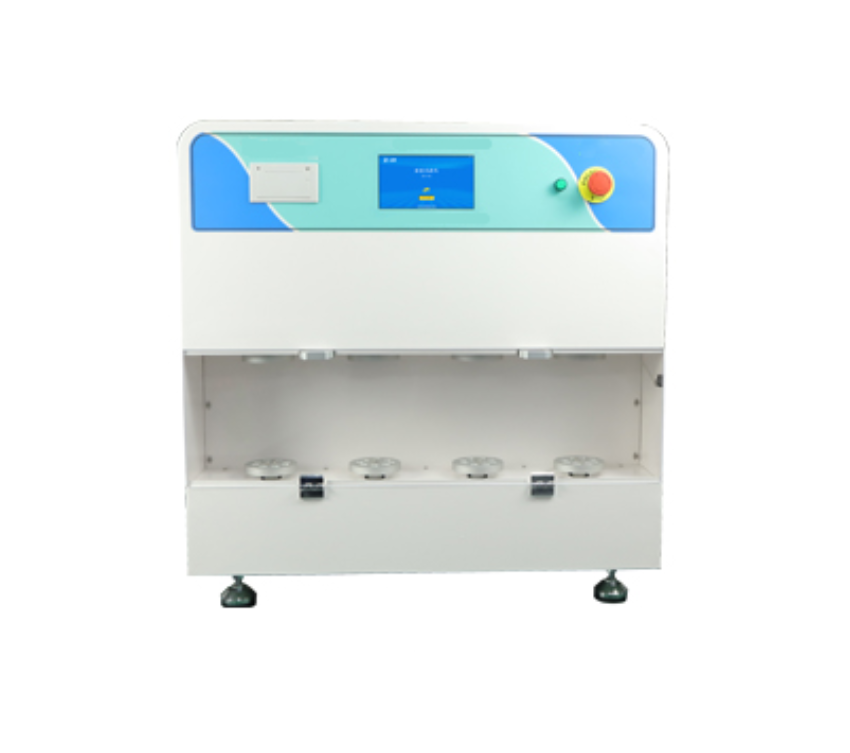
Technical Features of Flex Resistance Tester
The Flex Resistance Tester has achieved significant breakthroughs in technological innovation. The instrument adopts an advanced modular architecture design, integrating a precision mechanical system, intelligent control system, and high-accuracy data acquisition system into a unified testing platform.
1. Advanced Mechanical Structure Design
In terms of mechanical design, the tester adopts a servo motor direct-drive system combined with a preloaded ball screw transmission mechanism, effectively eliminating the backlash issues commonly found in traditional transmission systems.
The frame structure has been optimized through finite element analysis (FEA), significantly improving overall rigidity and reducing vibration amplitude to the micrometer level. This advanced structural design ensures excellent stability and reliability even during long-term, high-frequency operation.
2. Intelligent Control System
The intelligent control system is one of the core advantages of the instrument. The tester is equipped with a multi-core processor and real-time operating system, achieving millisecond-level system response.
The 7-inch high-color-gamut touchscreen supports multi-touch operation. The user interface is designed according to ergonomic principles, greatly improving operational convenience and efficiency.
Built-in intelligent algorithms can automatically identify material characteristics and adjust control parameters in real time, ensuring high accuracy, repeatability, and consistency of test results.
3. Comprehensive Safety Protection System
In terms of safety performance, the tester is equipped with a complete multi-level protection system, including:
Overload protection system: Automatically stops operation when the applied load exceeds the preset limit.
Emergency stop device: Quickly cuts off power in emergency situations to protect operators and equipment.
Displacement limit system: Prevents mechanical components from exceeding the safe operating range.
These safety functions work together to establish a reliable protection system for stable and secure operation.
4. High-Performance Testing Capability
The performance parameters of the Flex Resistance Tester are also highly impressive:
Test frequency: Adjustable from 1 to 60 cycles/min
Speed control accuracy: ±0.5%
Maximum load capacity: 2000 N
Force measurement accuracy: ±0.1%
Stroke control accuracy: ±0.05 mm
The data acquisition system uses high-precision electronic chips with a sampling frequency of up to 20.000 times per second. Combined with advanced digital filtering algorithms, it effectively eliminates signal interference and ensures accurate, reliable, and repeatable test data.
Overall, the Flex Resistance Tester combines precision mechanical design, intelligent control technology, advanced safety protection, and high-speed data acquisition capability, providing an efficient and reliable solution for evaluating the durability and flex resistance performance of packaging materials.
Test Method of Flex Resistance Tester
1. Working Principle
The technical principle of the Flex Resistance Tester is based on a closed-loop control system integrating mechanical transmission and sensor feedback. The instrument typically uses a PLC (Programmable Logic Controller) as the core control unit. Test parameters, such as flexing speed and cycle count, can be set through buttons or a touchscreen interface. The system then drives stainless steel clamps to apply reciprocating motion to the test specimen.
During the flexing process, the digital display system continuously records changes in force values and deformation data, generating visual test reports for analysis.
For example, textile materials used in garments are frequently subjected to repeated bending and folding movements at areas such as elbows and knees during daily wear. The tester can simulate these repeated mechanical actions to evaluate performance indicators such as fiber breaking strength, coating peeling rate, and material durability, helping manufacturers optimize production processes and improve product quality.
2. Testing Procedure
The testing process of the Flex Resistance Tester mainly consists of the following steps:
Step 1: Test Specimen Preparation
According to the relevant testing requirements, specimens with appropriate dimensions are cut from the packaging material to be tested. Necessary pretreatment procedures, such as cleaning and drying, are carried out to ensure consistent test conditions.
Step 2: Specimen Installation
The prepared specimen is securely mounted onto the Flex Resistance Tester. Proper fixation ensures that the specimen remains stable during the test without displacement, slipping, or unintended deformation.
Step 3: Setting Test Parameters
According to the specified test requirements, the operator sets the required testing parameters, including:
Flexing force
Flexing frequency
Test duration
Number of cycles
The instrument then performs the test according to the preset conditions.
Step 4: Start Testing
After all parameters are confirmed, the tester is started to perform the flexing test. During the testing process, the instrument continuously monitors and records changes in the specimen’s performance, providing real-time data on material behavior under repeated mechanical stress.
Step 5: Result Analysis
After completion of the test, the collected data is analyzed to evaluate the flex resistance performance of the packaging material.
The final results are used to determine whether the material meets relevant quality standards and performance requirements, providing reliable data support for material selection, quality control, and product improvement.
Application Value and Functions of Rub Resistance Tester
Application Value
Material Research and Development:
By testing with a rub resistance tester, the influence of different raw materials on the rub resistance performance of packaging materials can be clearly evaluated. The test results provide valuable guidance for material development, helping manufacturers select more suitable raw materials to improve the overall performance of packaging materials.
Process Optimization:
The test results obtained from the rub resistance tester can guide the optimization and improvement of production processes. By analyzing the test data, potential problems during production can be identified, allowing targeted adjustments and improvements to enhance the rub resistance performance of packaging products.
Quality Control:
The rub resistance tester is an important tool for quality control of packaging materials. Through regular testing, problems such as insufficient performance of packaging materials can be detected and resolved in a timely manner, ensuring stable and reliable product quality.
Functions
The rub resistance tester plays an important role in ensuring the quality of packaging materials. Through accurate testing and continuous optimization, the following objectives can be achieved:
1. Improving Product Market Competitiveness
With the help of a rub resistance tester, enterprises can produce packaging materials with superior performance to meet the market demand for high-quality packaging solutions. This not only improves product safety and reliability but also enhances market competitiveness, helping enterprises gain advantages in a highly competitive market environment.
2. Promoting Sustainable Development of the Packaging Industry
The application of rub resistance testers promotes the improvement of packaging material performance and technological innovation, contributing to the sustainable development of the packaging industry. It helps reduce the environmental impact of packaging materials throughout their entire lifecycle, including production, use, and disposal. In addition, by optimizing packaging material performance, manufacturers can reduce material consumption, lower production costs, and achieve resource conservation and recycling.
3. Strengthening Industry Communication and Cooperation
The application of rub resistance testers facilitates communication and cooperation within the packaging industry. Enterprises can share test data and practical experience to jointly overcome challenges encountered during the improvement of packaging material performance. Furthermore, industry collaboration can promote the development of new technologies and materials, driving the overall progress and development of the packaging sector.
Conclusion
The rub resistance tester plays an essential role in ensuring packaging material quality, improving product market competitiveness, promoting sustainable industry development, and strengthening industry communication and cooperation. With continuous technological advancement and the expansion of application fields, the rub resistance tester will play an increasingly important role in the future and contribute further to the advancement of the packaging industry.At the same time, it should be recognized that the rub resistance tester is only one part of the overall packaging material quality evaluation process. In practical applications, it is necessary to combine it with other testing methods, such as tensile strength testing and tear strength testing, to comprehensively evaluate the overall performance of packaging materials. Furthermore, continuous research and improvement are required in the design, manufacturing, and application stages of packaging materials to enhance their performance and reliability, providing stronger protection for the safe transportation and storage of products.
Previous: What is a surgical mask flame retardant tester?
N e x t : What is a bag lifting fatigue testing machine?
