





What is a bag lifting fatigue testing machine?
2026/07/24
Share:

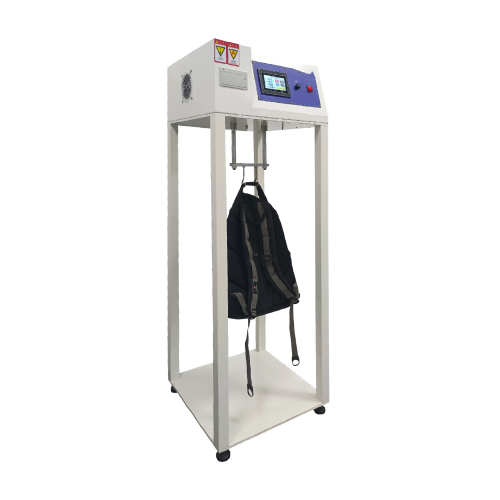
Why Bag Fatigue Testing Is Essential
During daily use, the handle area of a bag is subjected to dynamic alternating loads rather than static pressure. When consumers carry items while walking, the natural swinging motion of the arms causes the bag to move up and down, resulting in repeated tensile, bending, and frictional stresses at the handle attachment points. This type of dynamic fatigue is one of the main causes of bag failure, while traditional static load-bearing tests often fail to reveal these potential defects.
The Bag Fatigue Tester is a specialized testing device designed specifically for this working condition. By simulating the up-and-down movements that occur during actual use, the tester applies periodic loads to the handle area of the bag. After a specified number of fatigue cycles, the handle area is inspected for damage or breakage, allowing the durability performance of the bag to be accurately evaluated.
The Bag Fatigue Tester is suitable for fatigue testing of various products, including plastic shopping bags, vest-style garbage bags, kraft paper bags, woven bags, and other carrying bags. It is widely used by quality inspection organizations and bag manufacturers for product quality control and performance evaluation.
Key Features of the Bag Fatigue Tester
The equipment integrates advanced technology with user-friendly design to improve testing efficiency and reliability:
Microcomputer Control and Large LCD Display: Equipped with a microcomputer control system and a large LCD screen, the tester displays test parameters in real time, providing intuitive operation and convenient monitoring.
Four-Column Structure: The robust four-column design ensures excellent stability during high-frequency vibration tests, minimizes testing errors, and improves measurement accuracy.
User-Friendly PVC Control Panel: The simple and clear operating interface reduces the learning difficulty and is suitable for various users.
Flexible Test Settings: The tester allows users to freely set the fatigue cycle count or testing duration, meeting the standard requirement of 3.600 cycles as well as customized testing requirements.
High-Quality Components: Premium components are selected to ensure low operating noise, long service life, and reliable performance for long-term use.
Automatic Test Result Printing: After the test is completed, the system automatically generates a test report, facilitating quality management and compliance verification.
Working Principle: Simulating Real-World Usage Conditions
The Bag Fatigue Tester evaluates the durability of bags by simulating the repeated stresses experienced by plastic shopping bags during actual use. The testing process includes the following steps:
Simulated Loading: A granular mixture (such as sand or plastic particles) with a weight equal to twice the rated load capacity of the bag is filled into the bag until it reaches approximately three-quarters of the bag’s total volume.
Fatigue Testing: The loaded bag is suspended on the testing machine and subjected to vibration at a frequency of 2–3 Hz (approximately 130 cycles per minute) with an amplitude of 30 mm ± 2 mm.
Cycle Control: Users can preset the number of fatigue cycles or the testing duration. After the test is completed, the bag body and handle areas are inspected for any signs of damage or breakage.
Result Output: The equipment automatically prints the test results, providing clear records of compliance data for quality evaluation and verification.
Test Procedure and Parameter Interpretation of the Bag Fatigue Tester
1. Test Procedure of the Bag Fatigue Tester
First, it is important to understand that the testing principle of the Bag Fatigue Tester is based on the simulation of real-world usage conditions. Before the test begins, the specimens must be prepared according to the relevant standards. A granular mixture with a weight equivalent to twice the nominal load capacity of the bag (usually particles with a diameter of 3–5 mm, such as sand or plastic granules) is filled into the bag. The filling volume should be approximately three-quarters of the total bag capacity.
This loading method is designed based on scientific considerations. The loading condition of twice the nominal weight simulates situations where consumers may exceed the rated carrying capacity during actual use, providing a more rigorous evaluation of product performance. Filling the bag to three-quarters of its capacity simulates the dynamic impact caused by the movement of contents inside the bag during carrying. Compared with a fully filled static load, this method better reflects the actual stress conditions experienced during use.
After specimen preparation, the handles of the bag are suspended on the fixtures of the tester, ensuring that the bag is vertically positioned and securely clamped. The microcomputer control system is then used to set the required test cycles (with a maximum setting of up to 999.999 cycles). After the equipment starts, the tester performs continuous vertical reciprocating movements at the specified amplitude and frequency. The machine automatically stops once the preset number of cycles is reached.
After testing, the operator removes the specimen and visually inspects the handle area under sufficient lighting conditions to check for any damage, tearing, or breakage. Based on the inspection results, the conformity of the specimen is determined.
2. Interpretation of Key Technical Parameters
The technical parameters of the Bag Fatigue Tester are designed according to the requirements of relevant testing standards. Understanding these parameters helps ensure correct operation and reliable test results.
Amplitude: 30 ± 2 mm
The amplitude refers to the vertical distance between the highest and lowest points of the up-and-down movement. This parameter simulates the natural swinging range of a bag when carried by a person during normal walking. The control accuracy of ±2 mm ensures stable and repeatable test conditions, which relies on the rigid mechanical structure and precise transmission system.
Vibration Frequency: 2–3 Hz
The vibration frequency corresponds to approximately 140 cycles per minute and is designed to simulate the swinging frequency of a bag during normal walking. It should be noted that the latest version of the relevant standard has refined the frequency requirement from the original range of 2–3 Hz to a target value of 2.2 ± 0.2 Hz, reflecting stricter requirements for test condition consistency and repeatability.
Test Space Height: ≤1000 mm
The maximum test height is designed to accommodate most common bag specifications, including supermarket shopping bags, takeaway packaging bags, gift bags, and other similar products. For bags with extra-long handles or special designs, users should confirm that the total suspended height of the specimen is within the allowable range of the equipment.
Maximum Load Capacity: 20 kg
The maximum load capacity of 20 kg covers the testing requirements of various products, from lightweight shopping bags to heavy-duty woven bags. During actual testing, the loading weight should be selected according to the nominal load capacity of the specimen, and the filling material should be prepared according to the standard requirement of twice the nominal load weight.
Selection Recommendations for the Bag Fatigue Tester
When selecting a Bag Fatigue Tester, multiple factors should be considered comprehensively to ensure that the chosen equipment fully meets actual testing requirements while providing reliable long-term performance and user experience. The following are several key selection recommendations for reference.
1. Parameter Compatibility
This is the foundation of equipment selection. The key point is to ensure that the technical specifications of the tester can cover your routine testing requirements.
First, the size range of the test specimens should be confirmed, such as the maximum bag height supported by the equipment. Secondly, the maximum load requirement during testing should be evaluated to ensure that the tester has sufficient load capacity. In addition, the adjustment requirements of the test frequency should also be considered. The typical frequency range for bag fatigue testing is 2–3 Hz, so selecting equipment that supports this frequency range with flexible adjustment capability is essential.
2. Expandable Functions
In addition to meeting basic testing requirements, extended functions of the equipment can significantly improve testing efficiency and operational convenience.
It is recommended to check whether the tester is equipped with data output interfaces, allowing test results to be easily transferred to a computer for further analysis. The automatic test report generation function can greatly reduce the time required for data processing. If operators come from different regions, a multilingual operating interface can effectively lower the learning barrier and improve the overall user experience.
3. After-Sales Service
Comprehensive after-sales service is essential for ensuring the long-term stable operation of the equipment and maximizing its value.
During the selection process, special attention should be paid to the supplier’s local technical support capabilities, including response speed and the professional expertise of technical engineers. The availability of spare parts and the completeness of the spare parts supply system are also important factors, as they directly affect the maintenance cycle when equipment failures occur.
Furthermore, a systematic and detailed operation training program is indispensable. Proper training helps operators quickly master equipment operation, use the tester according to standard procedures, and avoid potential instrument damage caused by improper operation.
In conclusion, the Bag Fatigue Tester is a critical testing instrument for evaluating the durability and safety performance of packaging bags. Its importance should not be overlooked, and it is highly valuable for further understanding and evaluation.We sincerely welcome you to leave a message or contact us directly for more information. We will provide detailed product documents, technical specifications, and application cases to help you comprehensively evaluate whether the equipment meets your specific testing requirements.
Previous: What is a Flex Durability Tester?
N e x t : What is the car seat test?
