





What is the car seat test?
2026/07/27
Share:

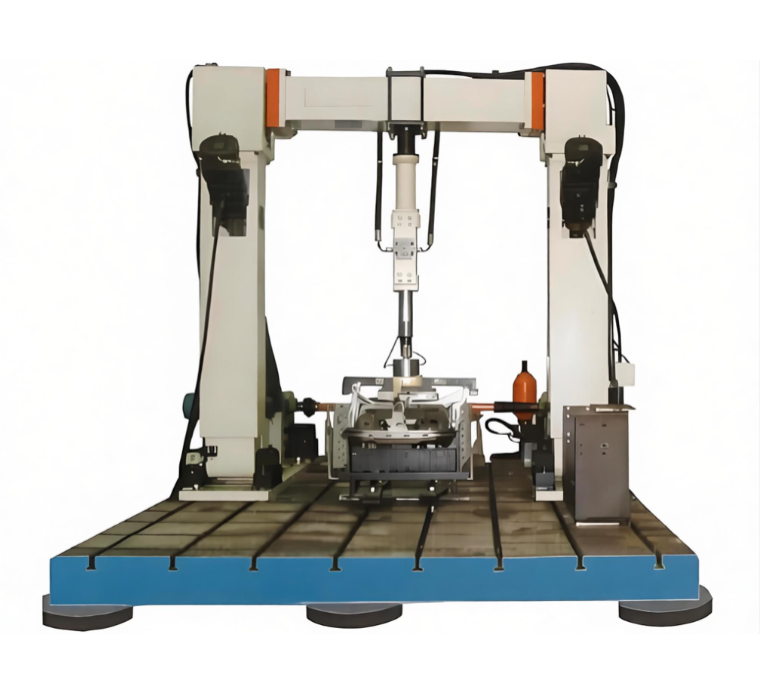
Test Principle of Automotive Seat Fatigue Tester
The core principle of the Automotive Seat Fatigue Tester is to reproduce the repeated compression conditions experienced by vehicle seats during daily use. The equipment uses a standard compression pad to continuously perform compression and recovery cycles on seat foam specimens, simulating the stress conditions caused by repeated sitting and loading over years of vehicle operation.
The tester uses a servo control system to accurately regulate the compression stroke and impact force. The loading force can reach more than 750 N, while the compression stroke can be adjusted according to requirements within the range of 150 mm to 180 mm. The reciprocating compression frequency can be adjusted up to 75 cycles per minute, allowing continuous cyclic testing according to the preset number of test cycles.
After tens of thousands of repeated compression cycles, the fatigue resistance of the foam material can be evaluated by comparing the thickness and hardness values before and after testing. The thickness loss rate and reduction in support performance are calculated to determine the long-term durability of the material.
If the foam shows excessive deformation or insufficient rebound ability after compression, it indicates that seats made from this material are more likely to experience problems such as seat collapse, reduced cushioning support, and a softer sitting feel during actual use. Through fatigue testing, unqualified raw materials and foam formulations can be identified and eliminated at an early stage, helping improve seat quality and reliability.
Operating Procedure of Automotive Seat Fatigue Tester
1. Operating Process
The core operating process of the Automotive Seat Fatigue Tester consists of: specimen preparation and conditioning → equipment calibration and clamping → parameter setting → automatic cyclic testing → post-test appearance and dimensional inspection.
Specimen Preparation and Pre-conditioning
According to relevant standards, cut the seat foam, fabric seams, or structural component specimens into required sizes. Place the specimens under standard temperature and humidity conditions for a specified period to eliminate internal stress and ensure that the specimen surfaces are free from defects.
Equipment Inspection and Calibration
Turn on the equipment and allow it to warm up. Confirm that the force sensor, displacement sensor, and emergency stop device are functioning properly. Perform an unloaded operation test to verify the stability and smoothness of the mechanical system.
Specimen Installation and Alignment
Fix the specimen onto the dedicated fixture or work platform. Adjust the installation position to ensure that the loading axis is aligned with the center of the applied force, preventing uneven loading caused by misalignment.
Parameter Setting
Enter the required test parameters into the control system, including the test mode (such as compression or reciprocating tilting test), number of cycles, loading frequency, stroke/load limit, and holding time. (Specific values should be determined according to the applicable testing standard and are not listed here.)
Test Start and Monitoring
Start the automatic testing program. The equipment performs cyclic loading according to the preset parameters. During the test, continuously monitor the operating condition. If abnormal situations occur, such as unusual noise, specimen displacement, or excessive stroke movement, immediately activate the emergency stop function.
Test Completion and Post-test Inspection
After reaching the preset number of cycles or failure criteria, the equipment automatically stops. Remove the specimen and conduct visual inspections for cracking, fracture, permanent deformation, or other damage. Measure changes in critical dimensions and performance parameters.
Reset and Cleaning
Remove any residual materials from the fixtures, reset the equipment to the initial position, switch off the power supply, and record the test data and operating log.
2. Key Precautions
Safety Protection
During the entire testing process, it is strictly prohibited to place hands or any body parts into the loading area. Safety must be ensured through protective covers and photoelectric protection devices.
Alignment Requirements
Improper specimen positioning may cause stress concentration and lead to inaccurate failure results. Repeated adjustment is required to ensure precise alignment and concentric loading.
Environmental Consistency
The condition of the specimen is highly affected by temperature and humidity. Therefore, the pre-conditioning process must strictly follow the specified environmental requirements.
Abnormal Situation Handling
For abnormal shutdowns, the cause must be investigated, such as fixture loosening, sensor drift, or mechanical failure. The equipment should not be restarted directly by simply cutting off and reconnecting the power supply without troubleshooting.
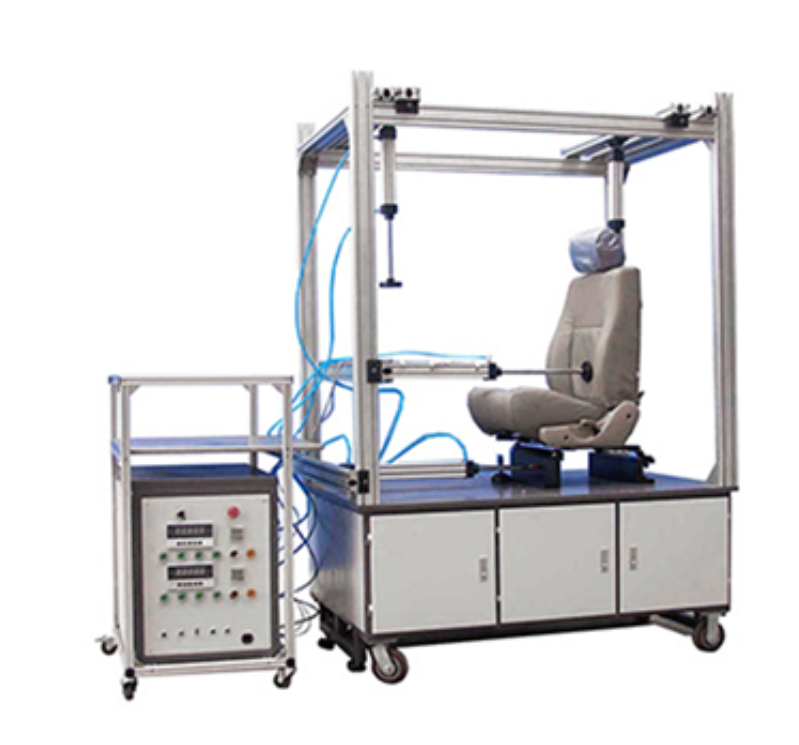
Industry Applications and Value of Automotive Seat Fatigue Tester
Automotive seat fatigue testing is a crucial part of vehicle development and manufacturing. Its core purpose is to simulate long-term loading conditions under real operating scenarios to evaluate the structural integrity, material durability, and functional stability of automotive seats. This testing not only determines the physical service life of the product but also directly affects driving comfort, user experience, and brand reputation. The following sections introduce the main application scenarios and core values of automotive seat fatigue testing in the industry.
I. Industry Application Scenarios
1. Vehicle Development and Design Validation Stage
During the early stage of vehicle development, engineers use fatigue testing to validate seat design concepts. By simulating different occupant body types, repeated entry and exit movements, posture adjustments during long-distance driving, and vibration environments during vehicle operation, testing teams can accurately identify potential weaknesses in the seat structure.
The testing process helps verify:
Fatigue resistance of seat frame welding points;
Smooth operation and durability of seat slide rail mechanisms;
Reliability of adjustment motors under repeated operation.
The purpose of this stage is to optimize the design from the beginning and avoid major modifications caused by structural defects during later production stages.
2. Supply Chain Material and Component Quality Control
Automotive seats are composed of various materials, including foam, fabric, leather, plastic components, and metal frames. Fatigue testing is widely applied for raw material evaluation and component qualification.
Foam Materials
The tester evaluates the rebound performance of seat cushions and backrest foams after repeated compression cycles, helping prevent problems such as:
Seat cushion collapse;
Reduced support performance;
Loss of comfort after long-term use.
Surface Materials
The durability of leather and fabric materials is evaluated under repeated friction, stretching, temperature, and humidity variations to ensure long-lasting appearance and resistance to aging.
Mechanical Components
Adjustable components such as headrests, armrests, and lumbar support mechanisms are subjected to cyclic loading tests to ensure reliable operation throughout the product lifecycle while reducing the risk of loosening, failure, or breakage.
3. Mass Production Consistency Monitoring and Compliance Certification
During mass production, fatigue testing serves as an important quality control method for product consistency inspection. It ensures that vehicle seats meet the original design requirements before vehicles leave the factory.
At the same time, fatigue testing is often an essential requirement for compliance with domestic and international standards as well as industry certifications. It provides technical support and compliance evidence for automotive products entering global markets.
4. Smart Cockpit and New Function Development
With the development of vehicles toward the concept of a "third living space", automotive seats are increasingly integrated with advanced functions, including:
Heating systems;
Ventilation systems;
Massage functions;
Zero-gravity seating modes.
Fatigue testing must cover the combined operation of electronic components and mechanical structures. It verifies:
Response accuracy and stability of intelligent adjustment systems after thousands of operations;
Reliability of sensors under long-term vibration conditions;
Durability of integrated seat functions throughout the vehicle lifecycle.
II. Core Value of Automotive Seat Fatigue Testing
1. Improving Driving Comfort and Health Protection
Fatigue testing quantifies changes in seat support performance after long-term use, helping manufacturers optimize ergonomic design.
Scientific and effective testing ensures that seats can maintain reasonable pressure distribution even after extended use, reducing:
Lower back discomfort;
Physical fatigue during long-distance driving;
Poor sitting posture caused by insufficient support.
As a result, overall passenger comfort and health protection can be significantly improved.
2. Reducing After-sales Costs and Brand Risks
Problems such as seat cushion collapse, abnormal noise, and adjustment failures are common sources of automotive customer complaints.
By conducting accelerated fatigue tests during the laboratory development stage, manufacturers can identify and solve potential quality issues before product launch, significantly reducing:
Large-scale recalls;
Warranty claims;
Repair costs.
At the same time, excellent durability performance helps strengthen brand reputation, improve customer satisfaction, and increase user loyalty.
3. Shortening Development Cycles and Optimizing Costs
Modern fatigue testing combined with simulation technology enables faster design optimization and product iteration.
By accurately predicting:
Material service life;
Structural failure modes;
Potential durability risks,
engineers can avoid both:
Excessive design that causes unnecessary material costs;
Insufficient design that leads to quality problems.
This data-driven development approach significantly shortens the R&D cycle and improves resource utilization efficiency.
4. Enhancing Market Competitiveness
In an increasingly competitive automotive market, seat durability has become one of the key indicators of overall vehicle quality.
Through strict fatigue testing and authoritative certification, automotive manufacturers can demonstrate product reliability to consumers and establish differentiated competitive advantages.
Especially in premium vehicles and new energy vehicles, high-quality seat comfort and durability have become important factors influencing consumer purchasing decisions.
Conclusion
With the automotive industry moving toward higher quality and stricter standards, the Automotive Seat Fatigue Tester is continuously developing toward higher precision, greater intelligence, and multi-condition integrated testing capabilities.It not only improves the safety, reliability, and durability of automotive interiors but also provides strong technical support for Chinese automotive manufacturers competing in the global market.Through scientific and standardized testing methods, manufacturers can more accurately predict seat service life, continuously optimize product performance, and ultimately provide consumers with safer, more comfortable, and more durable driving experiences.We sincerely welcome your inquiries and discussions. Please feel free to contact us for more detailed product information and technical support.
Previous: What is a bag lifting fatigue testing machine?
N e x t : What is a syringe used in a laboratory?
