





How are safety shoes tested?
2026/07/27
Share:

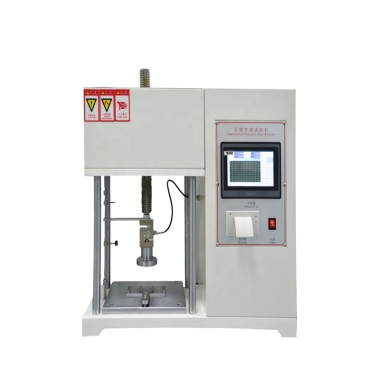
Working Principle and Testing Procedure of Safety Shoe Compression and Puncture Testing Machine
Working Principle
The Safety Shoe Compression and Puncture Testing Machine is designed based on mechanical principles and integrates key components such as high-precision sensors, a control system, and testing fixtures. Its primary function is to simulate two major types of occupational injuries that workers’ feet may encounter in actual working environments:
Compression injuries caused by falling heavy objects or prolonged pressure;
Puncture injuries caused by sharp objects penetrating the sole.
By applying controlled compression force and puncture force, the testing machine performs rigorous evaluations on safety footwear to determine its ability to resist these potential hazards and verify its protective performance.
Specifically, the compression testing module uses a hydraulic or mechanical loading system to gradually apply pressure to the safety shoe toe cap until the preset maximum load is reached or obvious deformation and damage occur. This process evaluates the compression resistance of the toe protection area.
The puncture testing module uses a specially designed sharp probe to simulate the process of sharp objects penetrating the shoe sole. During the test, the equipment records the maximum force required for penetration and the penetration depth, which are used to evaluate the puncture resistance of the sole structure.
Testing Procedure
1. Sample Preparation
Select the safety shoe samples to be tested and ensure that their specifications and conditions meet the requirements of the applicable testing standards.
2. Installation and Calibration
Fix the safety shoes securely onto the testing fixture of the machine, ensuring stable positioning without affecting the test results. At the same time, perform necessary calibration of the equipment to ensure accurate and reliable test data.
3. Parameter Setting
According to the testing standards or customer requirements, set the relevant parameters for compression and puncture tests, such as:
Maximum compression force;
Puncture speed;
Other required test conditions.
4. Test Start
Start the testing machine. The equipment performs compression and puncture tests according to the preset program and automatically records and displays relevant test data during the process.
5. Data Analysis
After the test is completed, analyze and process the collected data to evaluate whether the safety shoes meet the required standards for:
Compression resistance;
Puncture resistance;
Overall protective performance.
6. Test Report Preparation
Prepare a detailed test report based on the test results, including:
Test procedures;
Recorded data;
Data analysis;
Final evaluation results.
The completed report provides reliable technical support for safety shoe quality control, product development, and compliance verification.
Importance of Safety Shoe Compression and Puncture Testing Machine
The value of the Safety Shoe Compression and Puncture Testing Machine in safety footwear performance evaluation is mainly reflected in the following four aspects:
1. Scientific Evaluation of Protective Performance
The equipment can simulate compression and puncture conditions in real working environments and evaluate the protective performance of safety shoes through standardized force application.
It helps determine whether safety footwear can withstand the specified external forces without damage, ensuring that the shoes provide sufficient protection for workers during operations.
2. Reducing the Risk of Worker Injuries
Safety shoes are an important type of personal protective equipment (PPE) for workers. Their main function is to prevent foot injuries caused by:
Penetration from sharp objects;
Impact from falling objects;
External compression forces.
Through testing with this equipment, manufacturers and inspection organizations can ensure that safety shoes entering the market and being used in workplaces meet required protection standards, effectively reducing the risk of occupational foot injuries.
3. Improving Overall Workplace Safety
Workplace safety is a fundamental requirement for protecting workers' health and life. By conducting compression and puncture resistance tests on safety footwear, companies can verify that products comply with relevant standards and specifications.
From the perspective of personal protection, qualified safety shoes provide an additional safety barrier, helping improve the overall safety level of the workplace and reducing potential occupational hazards.
4. Protecting Workers’ Foot Health
Workers often need to stand or walk for extended periods during daily operations. Poor-quality or non-compliant safety shoes may cause:
Foot discomfort;
Excessive fatigue;
Long-term foot injuries.
By using the testing machine to evaluate and select qualified safety footwear, manufacturers and employers can ensure that workers receive reliable foot protection, improving comfort and supporting long-term occupational health.
In summary, the Safety Shoe Compression and Puncture Testing Machine is not only an essential tool for verifying safety footwear protection performance but also an important guarantee for occupational safety management. Through accurate and standardized testing, it helps manufacturers improve product quality, ensures compliance with safety standards, and provides reliable protection for workers in demanding industrial environments.
Selection Guide for Safety Shoe Compression and Puncture Testing Machine
Manufacturers producing safety shoes, occupational protective footwear, and work shoes generally need to be equipped with a compression and puncture testing machine. Whether for routine factory inspection, customer audits, third-party testing, or national standard registration, this equipment is an essential quality control instrument.
Many manufacturers purchasing this type of equipment for the first time may have difficulty distinguishing between different models, specifications, and configurations. As a result, they may purchase unsuitable models, low-configuration equipment, or machines that cannot meet testing requirements.
I. Core Functions of the Equipment
Safety shoes have two mandatory performance tests that must be evaluated:
1. Toe Cap Compression Resistance Test
Simulates situations such as:
Heavy objects pressing on the shoe;
Falling object impacts;
and evaluates the deformation resistance and protective capability of the steel toe cap.
2. Sole Puncture Resistance Test
Simulates real workplace hazards such as:
Nails on construction sites;
Sharp hard objects penetrating the sole;
and evaluates the puncture resistance of the protective midsole.
II. How to Choose Between the Two Main Models
1. Touchscreen Integrated Standard Model (Preferred Choice for Shoe Manufacturers)
Applicable Applications:
Small and medium-sized footwear factories;
Mass production sampling inspection;
Daily quality control;
Customer factory audits.
Advantages:
Simple operation;
Compact design;
High cost-effectiveness;
Built-in printing function;
Stable testing data.
Functions:
Integrates both compression testing and puncture testing, meeting the requirements of routine factory inspection and quality control.
2. Computer-Connected Advanced Model (For Laboratories / Large Manufacturers / Third-Party Testing)
Applicable Applications:
Professional laboratories;
Third-party testing organizations;
Large manufacturers requiring complete data reports and long-term data storage.
Advantages:
Automatically generates force-displacement curves;
Supports complete test data storage;
Allows export of professional test reports;
Provides long-term data traceability.
For many bidding projects and quality system audits, computer-connected models with complete data records are often preferred due to their stronger data management capability.
III. How to Distinguish Standard and Optional Configurations
(Avoid Missing Accessories That Affect Equipment Usage)
Standard Complete Configuration (Required)
The complete standard package should include:
Main testing machine;
Toe cap compression fixture;
Sole puncture fixture;
Standard steel nail for national standard testing;
Touchscreen display with built-in printing function.
Recommended Optional Configurations
Computer Connection System
Used for generating formal test reports and improving data management capability.
High-Precision Displacement Sensor
Used to further improve measurement accuracy and provide more detailed test data.
IV. Quick Selection Based on Actual Requirements
1. Only Need Routine Factory Inspection and Standard Customer Audits
Recommended Choice:
Touchscreen integrated 20 kN standard model
Advantages:
Meets daily testing requirements;
Stable performance;
High cost-effectiveness.
2. Need Third-Party Testing, Official Reports, System Audits, or Large Customer Orders
Recommended Choice:
Computer-connected model
Advantages:
Test data can be stored;
Complete traceability is available;
Professional reports can be generated;
Better suited for strict quality management requirements.
3. Producing Export Safety Shoes and Meeting European/American Standards
Recommended Choice:
High-configuration computer-controlled model
Advantages:
Suitable for international testing requirements;
Supports testing according to standards such as EN, ISO, and ASTM;
Better meets the requirements of export certification and compliance verification.
Conclusion
In summary, selecting a Safety Shoe Compression and Puncture Testing Machine does not mean choosing the most expensive model. The key is selecting equipment that complies with testing standards and matches actual production requirements.
For ordinary footwear manufacturers, a touchscreen integrated model is usually sufficient for daily quality inspection. However, companies involved in third-party testing, export orders, certification audits, or large-scale customer projects should choose a computer-connected model with data storage and curve report generation capabilities.
Choosing the correct model can help avoid problems during:Third-party inspection;Customer factory audits;Product shipment;Tender projects.It also helps reduce additional costs caused by equipment replacement, repeated testing, or corrective actions.For footwear quality inspection equipment, the goal is not the highest configuration but compliance, reliability, and stable testing performance. Selecting a machine that meets required standards while avoiding low-quality or incomplete configurations can truly help manufacturers reduce defective product rates and successfully pass customer audits.
In conclusion, the Safety Shoe Compression and Puncture Testing Machine evaluates the protective performance of safety footwear, helping reduce occupational injury risks, improve workplace safety, and protect workers' health. It plays an important role in workplace safety management and occupational protection.We sincerely welcome your inquiries and discussions. Please feel free to contact us, and we will provide more detailed product information and technical support.
Previous: What is a syringe used in a laboratory?
N e x t : Why is modern safety testing reliant on high-precision test dummy body component
