





What is an Adiabatic Accelerated Calorimeter?
2026/07/28
Share:

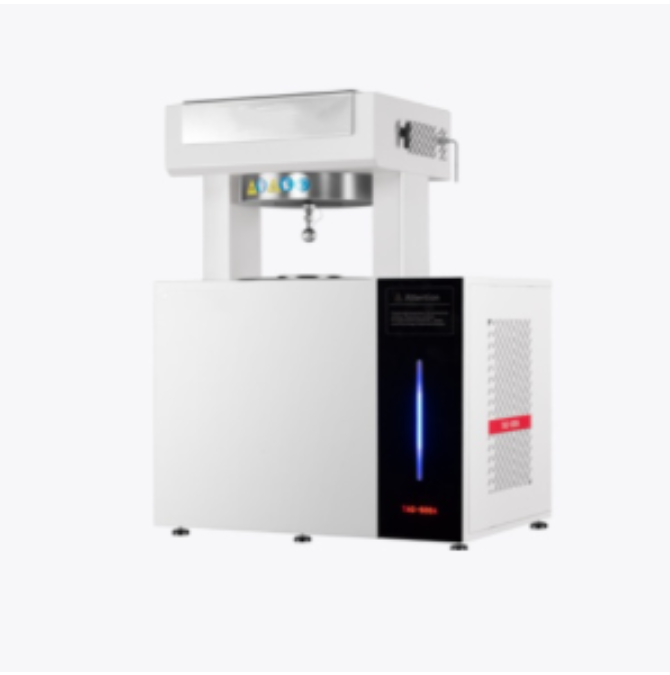
Principle and Technical Features of Accelerating Rate Calorimeter
The Accelerating Rate Calorimeter (ARC) is based on the adiabatic principle. Through dynamic temperature control compensation, the instrument enables the surrounding environment temperature to continuously track the sample temperature in real time, eliminating heat exchange between the sample and the environment. It simulates a zero heat-loss condition to accurately measure the self-heating behavior of materials and determine key thermal parameters, including the onset temperature of exothermic reactions, temperature rise rate, and thermal runaway kinetic characteristics.
1. Core Working Mechanism
Adiabatic Environment Construction
The instrument uses high-precision temperature sensors to monitor sample temperature and dynamically controls the heating chamber or furnace temperature to maintain consistency with the sample temperature (ΔT ≈ 0).
This prevents heat loss from the sample to the external environment or heat transfer from the environment into the sample, creating an approximately ideal adiabatic testing system.
“Heat-Wait-Search” (HWS) Mode
The ARC commonly adopts the Heat-Wait-Search (HWS) testing procedure, which includes three main stages:
1. Heat
The system heats the sample to a preset temperature increment.
2. Wait
The system maintains a constant temperature period to allow thermal equilibrium and eliminate temperature lag effects.
3. Search
The instrument detects whether the sample begins to generate heat spontaneously. When the temperature rise rate exceeds a preset threshold (for example, 0.02°C/min), the system identifies the occurrence of self-heating.
If no exothermic reaction is detected, the instrument continues to the next heating cycle. Once self-heating is triggered, the system automatically switches to the adiabatic tracking mode, continuously following the sample temperature increase until the reaction is completed.
Synchronized Data Acquisition
The instrument continuously records key parameters including temperature, pressure, and their changing rates. Combined with heat capacity data, the system calculates important thermal characteristics such as:
Adiabatic temperature rise
Reaction enthalpy
Maximum reaction rate
Time to reach maximum reaction rate
These data provide a scientific basis for evaluating thermal hazards and reaction safety.
2. Key Technical Features
Low Thermal Inertia Design
The instrument adopts a thin-wall, low-heat-capacity sample vessel design to reduce the Phi factor (φ).
By minimizing the influence of the sample container’s heat capacity on measurement results, the system reduces data deviation and enables test results to better represent actual operating conditions.
Multi-mode Testing Capability
The ARC supports multiple testing modes, including:
Isothermal scanning mode
Adiabatic scanning mode
Heat-Wait-Search (HWS) mode
These modes make the instrument suitable for various applications, including:
Chemical thermal stability evaluation
Battery thermal runaway analysis
Process safety assessment
Hazardous reaction risk prediction
Integrated Safety Monitoring System
The instrument integrates multiple safety protection functions, including:
Overpressure alarm
Overtemperature alarm
Video recording function
Some advanced models are equipped with pressure compensation systems to handle reactions involving gas generation, ensuring safer and more reliable testing under high-pressure conditions.
The Accelerating Rate Calorimeter provides accurate thermal behavior analysis under near-adiabatic conditions, making it an essential instrument for chemical safety research, battery safety evaluation, and industrial process risk control.
Operating Procedures and Precautions for Accelerating Rate Calorimeter
The Accelerating Rate Calorimeter (ARC) is a precision analytical instrument widely used in chemical engineering, chemical safety research, and material science. By simulating an adiabatic environment, it can accurately determine the initial temperature of sample thermal decomposition and continuously record detailed temperature and pressure variation curves during the adiabatic decomposition process.
I. Operating Procedures
The standard operating procedures for conducting experiments with an Accelerating Rate Calorimeter are generally as follows:
1. Sample Preparation and Initial Weighing
First, select a clean and dry sample vessel. Use a precision balance to accurately weigh the total mass of the empty sample vessel, the corresponding connecting nut, and the sealing gasket. Record the measurement result for reference.
2. Sample Loading and Net Mass Calculation
Carefully add an accurately calculated amount of the test sample into the weighed sample vessel according to experimental requirements.
After loading the sample, weigh the entire assembly again using the precision balance. The net sample mass can be calculated by subtracting the initial mass from the final measured mass.
3. Sample Installation and System Sealing Check
Install the sample vessel containing the test material securely into the sample chamber of the calorimeter. Connect all required pipelines and electrical connections according to the operating procedures.
After installation, a strict leak-tightness inspection must be performed to ensure that the entire test chamber remains completely sealed during the experiment without any leakage.
4. Closing the Safety Protection System
After confirming that the sealing performance meets requirements, carefully close the protective door or chamber cover of the Accelerating Rate Calorimeter and prepare to start the experiment.
5. Setting Test Parameters and Starting the Experiment
Run the preset or customized experimental program through the instrument control software. According to the characteristics of the sample and the testing objectives, carefully set key experimental parameters, including:
Initial temperature
Heating rate
Pressure threshold
Other relevant test conditions
The parameter settings should be saved as independent files for future data tracking and analysis.
Before officially starting the test, the pressure sensor must also be calibrated according to instrument requirements. Accurate zero-point calibration and range calibration should be performed to ensure that the collected pressure data are reliable and accurate.
II. Precautions
When operating an Accelerating Rate Calorimeter, the following precautions should be followed:
1. Proper Installation Environment
The instrument should be installed and operated in a dry, clean environment free from dust and strong electromagnetic interference. Avoid direct exposure to sunlight.
2. Familiarization with Operating Procedures
Before operation, carefully read and understand the instrument manual. Operators should fully understand the working principle, operating procedures, and safety requirements of the equipment.
3. Personal Protective Equipment
Operators must wear appropriate personal protective equipment, including:
Laboratory coat
Safety goggles
Protective gloves
Laboratory safety shoes
4. Ensure Proper Ventilation
The laboratory should maintain good ventilation to prevent potential harm caused by hazardous gases or vapors released during testing.
5. Electrical Safety Check
Ensure that the power cable and grounding wire are correctly connected to prevent electrical hazards such as electric shock.
6. Avoid Moving the Instrument During Testing
Do not move the instrument during the experiment, as vibration or displacement may affect test stability and measurement accuracy.
7. Post-test Maintenance
After completing the experiment, turn off the instrument power supply in a timely manner and clean the sample chamber and heating furnace to maintain equipment performance and extend service life.
Proper operation and maintenance of the Accelerating Rate Calorimeter can ensure accurate thermal analysis results, improve testing safety, and provide reliable data support for chemical safety evaluation, battery thermal runaway research, and material development.
Core Value of Accelerating Rate Calorimeter
The core importance of the Accelerating Rate Calorimeter (ARC) lies in its unique ability to accurately simulate the entire thermal runaway process under industrial-scale “zero heat loss” conditions. It provides irreplaceable data support for accident prevention, process safety design, and risk assessment in the chemical, energy, and pharmaceutical industries.
1. Core Advantages and Irreplaceable Capabilities
Simulating Extremely Realistic Operating Conditions
Through dynamic adiabatic tracking technology, the ARC eliminates heat loss interference commonly found in laboratory testing and accurately reproduces the heat accumulation and self-accelerating decomposition process that may occur in industrial storage tanks or battery packs under extreme conditions, such as cooling system failure or stirring interruption.
This capability cannot be achieved by conventional thermal analysis equipment such as Differential Scanning Calorimeters (DSC).
Identifying Hidden Safety Risks
The ARC can detect early-stage self-heating phenomena, including reactions with extremely low onset temperatures or very slow temperature increases.
By identifying potential hazards during the “incubation period” that may be overlooked by conventional testing methods, the instrument helps prevent incorrect safety assessments and reduces the risk of unexpected thermal accidents.
Obtaining Comprehensive Thermal and Pressure Parameters
The instrument simultaneously measures:
Temperature
Pressure
Temperature and pressure change rates
By establishing the relationship between thermal effects and gas generation behavior, the ARC provides essential pressure-temperature coupling data for the design of pressure relief systems, such as safety valve sizing and emergency venting solutions.
2. Key Application Value
Supporting Inherently Safer Process Design
By determining critical parameters such as:
Self-accelerating decomposition temperature (SADT)
Time to maximum reaction rate
Maximum heat release rate
the ARC helps establish safe storage and transportation conditions, define operating temperature limits, and determine emergency response windows.
Accident Investigation and Reaction Mechanism Analysis
During thermal runaway accident investigations, the ARC can reproduce the actual reaction initiation point and evolution process.
It helps identify fundamental causes such as:
Impurity-catalyzed reactions
Material incompatibility
Unexpected exothermic behavior
rather than relying solely on theoretical assumptions.
Foundation for New Energy Safety
For high-energy systems such as lithium-ion batteries, the ARC helps determine:
Thermal runaway triggering thresholds
Chain reaction characteristics
Critical temperature conditions
The test results provide direct technical input for:
Battery thermal management system alarm settings
Safety protection strategies
Explosion-proof structure optimization
Supporting Compliance and Safety Standards
As a key recommended testing instrument in safety evaluation standards such as GB/T and ASTM standards, the ARC provides essential data for:
Chemical hazard classification
Safety certification
Regulatory compliance
Commercial approval of hazardous materials
Conclusion
In summary, the Accelerating Rate Calorimeter serves as a critical bridge between microscopic chemical reaction characteristics and macroscopic industrial safety boundaries.It transforms invisible thermal hazards into measurable engineering parameters, enabling companies to identify risks in advance and prevent thermal explosion accidents at the source.For more information, please feel free to contact us. We will provide professional product details and technical support.
Previous: Why is modern safety testing reliant on high-precision test dummy body component
N e x t : What is an arc resistance tester?
