





What is the ignition temperature test?
2026/07/30
Share:

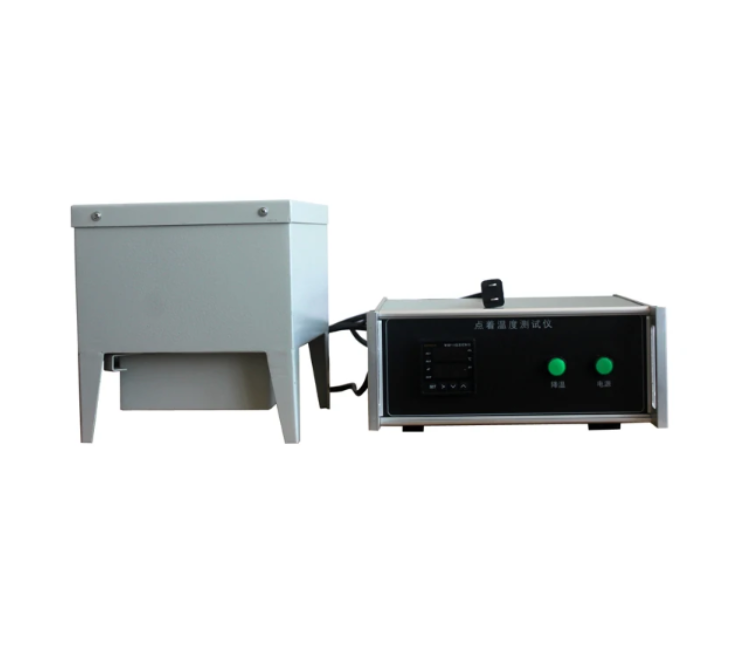
Components of Ignition Temperature Tester
1. High-Temperature Test Chamber and Temperature Control System
The tester is equipped with a high-temperature sealed furnace chamber, circulating air duct system, thermal insulation layer, and heat dissipation protection structure, which create a uniform and stable high-temperature testing environment. These components eliminate local temperature differences, ensuring that the specimen is heated evenly throughout the test process.
The system integrates an intelligent PID temperature controller, high-efficiency heating elements, temperature sensing probes, and power regulation modules to achieve precise temperature control and uniform heating rates. It ensures that the furnace temperature remains stable and controllable, fully meeting the test condition requirements specified by relevant national standards.
2. Ignition System, Combustion Detection System, and Intelligent Control System
The tester adopts a standard butane igniter, automatic ignition mechanism, flame height adjustment assembly, and ignition delay control module to provide a standardized ignition source, meeting the requirements for standardized flash ignition temperature testing.
A high-sensitivity flame sensor, signal acquisition module, and combustion status recognition system are integrated to monitor combustion phenomena inside the furnace in real time. The system can accurately detect ignition signals such as flash ignition, visible flame formation, and spontaneous combustion, enabling precise determination of the material’s critical combustion state.
The equipment is also equipped with a touchscreen control panel, programmable control system, data storage module, and audible & visual alarm device, enabling integrated intelligent operation including parameter setting, automatic testing, data calculation, and test report export.
What is the Purpose of Ignition Temperature Tester
The Ignition Temperature Tester is mainly used to determine the flash ignition temperature and auto-ignition temperature of plastics using the hot air furnace method. It is one of the commonly used testing methods for evaluating the ignition characteristics and fire safety performance of plastic materials.
1. Flash Ignition Temperature and Auto-Ignition Temperature Testing
During testing, the specimen is heated at different temperatures inside the heating chamber of the hot air furnace. A small flame is applied at the opening above the furnace to ignite the combustible gases released from the specimen, allowing the flash ignition temperature to be determined.
The auto-ignition temperature is measured using the same test method, with the main difference being that no external ignition flame is applied during the test. The material ignites only through self-heating under specified conditions.
2. Flash Ignition Temperature
Flash ignition temperature refers to the lowest temperature at which a sufficient amount of flammable gases released from a material can be ignited when an ignition flame is applied under specified test conditions.
This parameter reflects the tendency of a material to produce combustible gases and ignite when exposed to an external ignition source.
3. Auto-Ignition Temperature
Auto-ignition temperature refers to the lowest temperature at which a material ignites due to its own heating without the presence of any external ignition source under specified test conditions.
This value is an important indicator for evaluating the thermal stability and spontaneous combustion risk of plastic materials.
4. Glowing Combustion
Glowing combustion refers to a combustion state in which no visible flame is generated in the solid phase of the material, but the combustion area exhibits a glowing phenomenon.
This phenomenon is commonly associated with slow oxidation and heat accumulation inside solid materials. Evaluating glowing combustion behavior helps provide a more comprehensive understanding of material fire characteristics and combustion mechanisms.
Through the measurement of flash ignition temperature, auto-ignition temperature, and glowing combustion characteristics, the Ignition Temperature Tester provides important technical data for plastic material selection, flame-retardant performance evaluation, product safety design, and compliance testing.
Applications of Ignition Temperature Tester
The Ignition Temperature Tester is widely used in industries involving plastic materials, flame-retardant materials, automotive components, electrical products, transportation equipment, and material research. It provides accurate evaluation of ignition characteristics and thermal safety performance, helping manufacturers improve material safety and comply with industry requirements.
1. Plastic Material and Flame-Retardant Material Manufacturing
Manufacturers of general plastics, engineering plastics, and modified flame-retardant plastics can use the tester to measure the ignition temperature of raw materials and modified materials.
The test results help optimize the addition ratio of flame retardants and improve modification processes, enhancing the high-temperature resistance and fire safety performance of materials. This prevents plastic materials that fail to meet thermal safety requirements from entering industries such as electronics and electrical equipment manufacturing.
2. Electrical Appliance and Electronic Component Manufacturing
Manufacturers of household appliance housings, electrical insulation components, and circuit board auxiliary materials can use ignition temperature testing to strictly control the heat resistance and fire safety performance of electrical materials.
The tester helps prevent thermal decomposition and ignition caused by long-term heating during electrical operation, improving the fire safety of household appliances and supporting compliance with basic requirements for certifications such as 3C certification.
3. Automotive Interior Material Industry
Suppliers of automotive seat leather, interior plastic components, roof lining materials, and wiring harness protective sleeves can utilize the tester to perform ignition temperature evaluation of interior materials.
By identifying materials with higher heat resistance and lower ignition risk, manufacturers can reduce the possibility of vehicle fires caused by high-temperature environments and improve compliance with automotive interior fire safety requirements from vehicle manufacturers.
4. Rail Transit and Aerospace Material Applications
Materials used in high-speed rail and aircraft interiors, including interior panels, flame-retardant insulation materials, and sealing composite materials, require extremely high levels of fire resistance and thermal stability.
The tester can accurately determine the ignition temperature of these materials, strictly evaluate their combustion limits, and enhance the passive fire protection capability of rail transportation and aerospace equipment.
5. Research and Development of Advanced Flame-Retardant Materials
Developers of modified flame-retardant resins, high-temperature-resistant composite coatings, and flame-retardant textile fabrics can use the tester to compare ignition temperature differences among materials with different formulations and processing technologies.
The test data supports continuous optimization of flame-retardant formulations and assists in developing new safety materials with higher heat resistance and improved fire-retardant performance.
6. Universities, Research Institutes, and Professional Laboratories
Laboratories specializing in materials engineering, safety engineering, and polymer materials can use the tester to study material thermal decomposition behavior, combustion mechanisms, and failure mechanisms under high-temperature conditions.
The equipment supports research projects related to flame-retardant modification and material safety evaluation. It can also serve as a practical training instrument for cultivating professional technicians in material fire testing, safety assessment, and fire-resistant material selection.
Through these applications, the Ignition Temperature Tester provides reliable technical support for material development, fire safety evaluation, quality control, and compliance testing, helping industries develop safer and more heat-resistant products.
Operating Procedures of Ignition Temperature Tester
1. Basic Operation Steps
① Power-On Preparation
Install the power supply and press the power button to start the tester. If the equipment has not been used for a long period, check the battery level, temperature sensor, and probe condition before operation to ensure the instrument is functioning properly.
② Confirm Test Type and Measurement Mode
Before testing, select the appropriate measurement mode according to the testing requirements:
Contact Measurement Mode:
The probe needs to be in direct contact with the measured object to obtain temperature data through heat transfer.
Non-Contact Infrared Measurement Mode:
Temperature measurement is performed without direct contact by detecting infrared radiation emitted from the target surface.
For infrared models equipped with laser aiming, press the laser button to activate the visible laser spot for target positioning. The laser only serves as an aiming indicator and does not participate in the temperature measurement process.
③ Measurement Operation
Contact Measurement Method:
Place the probe firmly against the surface of the test object or insert it into the designated measurement hole. Maintain stable contact until the temperature reading becomes stable (usually indicated by a beep signal or the display stopping flashing).
Non-Contact Infrared Measurement Method:
Align the sensor vertically with the target surface while maintaining an appropriate measurement distance. Press the trigger or measurement button and wait for the temperature value to appear on the display.
④ Reading Results and Shutdown
After measurement, check the displayed test results and record the required data. Turn off the instrument after testing. For contact-type probes, clean and disinfect the probe surface after use to maintain measurement accuracy and hygiene.
2. Key Operating Precautions
① Laser Function Explanation
For infrared temperature testers, the red laser point is only a visible aiming assistance tool used for positioning the measurement area. It is not the temperature measurement beam and does not affect the temperature measurement principle. In dark environments, the laser can help accurately locate the target area.
② Environmental Interference Control
During testing, avoid interference factors such as:
Direct exposure to strong light sources
Steam or smoke obstruction
Dust contamination on the sensor window
When measuring shiny metal surfaces, reflected infrared radiation may cause inaccurate readings. It is recommended to apply adhesive tape or use a matte coating on the surface to improve measurement reliability.
③ Contact and Measurement Requirements
For contact measurement, ensure that the probe has sufficient thermal contact with the measured object to achieve effective heat transfer.
For non-contact infrared measurement, ensure that the target area is larger than the instrument’s measurement spot size and keep the sensor perpendicular to the measured surface.
④ Maintenance and Storage
Clean the probe or infrared lens regularly to prevent contamination from affecting measurement accuracy.
Remove batteries if the instrument will not be used for an extended period.
Store the tester in a dry and clean environment.
Select the correct measurement mode according to different materials and avoid mixing measurement methods improperly to reduce testing errors.
Proper operation and maintenance of the Ignition Temperature Tester can effectively improve test accuracy, extend equipment service life, and ensure reliable evaluation of material ignition characteristics and thermal safety performance.
Importance of Ignition Temperature Tester
The Ignition Temperature Tester plays a critical role in material safety evaluation and flame-retardant performance research. Its importance is mainly reflected in the following aspects:
1. Key Basis for Evaluating Material Fire Risk
The tester is used to determine the ignition characteristics of solid materials such as plastics, rubber, and wood under specified testing conditions.
By obtaining the ignition temperature value of a material, it provides a direct evaluation of the material’s flammability performance. This helps researchers and manufacturers identify materials that are more likely to ignite under high-temperature environments, enabling fire hazards to be controlled at the material selection stage.
2. Standardized Comparison and Material Selection Reference
Ignition temperature is not an absolute physical property of a material. Instead, it is a reference indicator obtained under standardized laboratory conditions.
This allows materials from different batches, formulations, or categories to be compared under the same testing conditions. During the development of new flame-retardant materials or the selection of industrial materials, ignition temperature data serves as an important evaluation criterion for determining whether materials can meet safety requirements and pass application approval.
3. Supporting Product Design and Safety Standard Development
Based on relevant national and industry standards, ignition temperature test results are widely used for environmental adaptability verification of products in fields such as electrical and electronic equipment, automotive components, and aerospace materials.
Accurate ignition temperature data helps engineers optimize product designs, establish appropriate fire safety requirements, and improve the reliability and durability of products operating under high-temperature conditions. It effectively reduces the risk of serious safety incidents caused by combustible materials.
Conclusion
In summary, the Ignition Temperature Tester provides scientific and objective technical support for the quantitative evaluation of material flame-retardant performance by simulating a hot air furnace heating environment combined with a precise ignition mechanism.As an essential testing instrument for material safety assessment, it plays an important role in ensuring industrial production safety, improving product reliability, and protecting life and property safety.For more information about product specifications, testing solutions, and application details, please feel free to contact us.
Previous: What is a collapsible hardness tester for sponge foam?
N e x t : What is the Dry Fallen Wadding Tester?
