





What is the Dry Fallen Wadding Tester?
2026/07/30
Share:

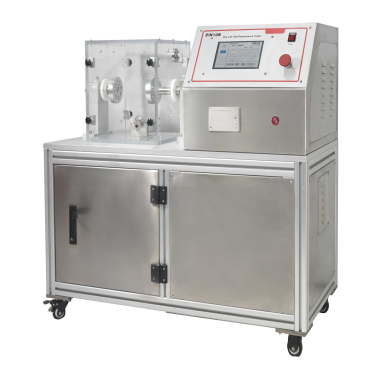
Four Core Modules of Dry State Lint Tester
The Dry State Lint Tester is designed to evaluate the amount of fiber debris and lint generated by nonwoven fabrics, medical nonwoven materials, and other textile materials under dry conditions. It can perform dry lint shedding tests on raw nonwoven fabrics and various textile materials.
The equipment consists of four precision-integrated modules that work together to ensure stable testing processes and reliable test results. The detailed structure is as follows:
1. Twisting Simulation Module (Core Execution Unit)
Main Components:
Servo motor
Adjustable specimen fixtures
Angle sensor
Functions:
The fixtures can securely hold specimens with dimensions of 200 mm × 200 mm / 300 mm × 300 mm. The servo motor drives the fixture to achieve precise twisting movement within a range of 0–180°, with an angle accuracy of ±1°.
The twisting frequency can be adjusted between 5–20 cycles/min, with an adjustment accuracy of ±1 cycle/min. The angle sensor provides real-time feedback on the twisting position to prevent excessive twisting damage to the specimen.
Advantages:
The fixtures are made of soft silicone material, which prevents additional lint generation caused by friction or scratching during clamping. This ensures that the detected lint is generated only from the twisting action itself, improving the accuracy and reliability of test results.
2. Constant Temperature and Humidity Environment Module (Basic Protection Unit)
Main Components:
Precision air conditioning system
Humidity sensor
Temperature controller
Functions:
The module maintains the testing chamber environment at:
Temperature: (23 ± 1)℃
Relative humidity: (50 ± 3)% RH
The environmental conditions comply with the requirements of GB/T 38465-2020.
The chamber has a volume of 0.5 m³ and is equipped with an air circulation system to ensure uniform temperature and humidity distribution:
Temperature difference: ≤ 0.5℃
Humidity difference: ≤ 2% RH
Advantages:
The tester adopts a ductless airflow design, preventing airflow disturbance from affecting lint movement and ensuring accurate lint collection results.
3. Lint Collection and Detection Module (Data Acquisition Unit)
Main Components:
Low-noise fan
High-efficiency HEPA filter
High-resolution industrial camera
Image analysis processor
Functions:
After completion of the twisting test, the fan generates a stable airflow of 0.3 m/s to transport the released lint inside the chamber onto the HEPA filter.
The industrial camera captures images of the filter surface, and the image analysis processor automatically identifies lint particles with a size of ≥50 μm. It then calculates the quantity and maximum size of collected lint particles.
Advantages:
The filter can be quickly replaced, supporting parallel specimen testing.
The camera is equipped with a dust-proof lens design to prevent contamination from affecting detection accuracy.
Automated image analysis improves testing efficiency and reduces human evaluation errors.
4. Data Processing and Safety Module (Control Center Unit)
Main Components:
Touchscreen display
Embedded control system
Safety sensors
Functions:
The module displays real-time testing parameters, including:
Twisting angle
Twisting frequency
Temperature and humidity conditions
Lint counting results
The system can store up to 10.000 test records and supports exporting test reports in Excel/PDF formats, including lint distribution analysis charts.
Safety sensors monitor chamber door status. The twisting operation will be disabled if the chamber door is not properly closed. The system also provides motor overload protection, automatically stopping operation when excessive load is detected.
Advantages:
Simple and intuitive operating interface
Supports Chinese and English language switching
Encrypted data storage prevents unauthorized modification
Suitable for different user requirements and international testing environments
Through the coordinated operation of these four modules, the Dry State Lint Tester provides a standardized, accurate, and efficient solution for evaluating fiber shedding performance of nonwoven fabrics and textile materials, supporting quality control, material development, and cleanliness assessment in industries such as medical textiles, hygiene products, and high-performance nonwoven materials.
Working Principle of Dry State Lint Tester
The core principle of the Dry State Lint Tester is based on the Gelbo Flex Test Method. By simulating the mechanical stress conditions caused by twisting, bending, and friction during the actual use of materials, the tester evaluates the amount of lint, fiber fragments, and particles released from textile materials.
The testing process mainly consists of three steps:
1. Mechanical Stress Simulation
The test specimen, such as nonwoven fabric, surgical gowns, cleanroom garments, and other textile materials, is fixed onto a specially designed specimen holder.
During testing, the movable plate performs reciprocating motion at a frequency of 60 cycles/min, while simultaneously rotating alternately 180° clockwise and counterclockwise, generating combined twisting and compression forces.
This process accurately reproduces the mechanical stress conditions that materials experience during actual use, such as the folding, stretching, and deformation of surgical gowns caused by body movements during medical operations.
2. Particle Collection
After mechanical deformation begins, the built-in air suction pump starts operation and generates a stable airflow to transport the released lint and particles from the specimen into the detection channel.
The airflow channel adopts a closed structural design to prevent external contamination and environmental interference, ensuring accurate and reliable test results.
3. Particle Classification and Counting
A laser dust particle counter performs multi-channel particle counting and classification on the collected airflow. The system displays test data in real time and automatically generates test reports.
For example, when testing a certain brand of surgical gown material, the instrument can accurately measure the quantity of particles larger than 0.5 μm, providing quantitative data support for cleanliness classification and material performance evaluation.
Through the combination of mechanical stress simulation, controlled particle collection, and precise particle counting technology, the Dry State Lint Tester provides an objective and standardized method for evaluating lint generation performance of textile materials. It is widely used in fields with strict cleanliness requirements, including medical protective textiles, cleanroom garments, pharmaceutical production environments, and high-performance nonwoven materials.
Technical Advantages of Dry State Lint Tester
The Dry State Lint Tester has become a benchmark tool for quality control in the industry through three major technological breakthroughs:
1. Automated Operation
The tester achieves full automation throughout the entire process, from specimen fixation to data output, minimizing human intervention and significantly improving testing repeatability and consistency.
For example, comparative tests conducted by a laboratory showed that under automated operation conditions, the deviation rate among three repeated tests of the same material was less than 2%, demonstrating excellent measurement stability and reliability.
2. Digital Measurement Technology
The tester integrates a laser particle counter with an intelligent control system to achieve precise quantitative analysis of particle quantity and particle size distribution.
During testing, the system can accurately detect and classify different particle sizes, providing detailed data support for material performance optimization.
For example, when evaluating medical nonwoven materials, advanced equipment can accurately distinguish the quantity of particles with sizes of 0.3 μm and 0.5 μm, helping manufacturers optimize material structures and improve cleanliness performance.
3. High Efficiency and Safety Performance
The tester can complete 1 m³ space sampling within 36 minutes, enabling rapid verification of cleanroom cleanliness levels and improving testing efficiency.
The equipment is designed with a negative-pressure testing system to ensure safe operation. The inner and outer structures adopt stainless steel and powder-coated cold-rolled steel plates, respectively, combined with high-efficiency filtration devices to effectively prevent particle contamination and protect operators during testing.
Through the combination of automation, digital measurement, high-efficiency sampling, and safety protection technologies, the Dry State Lint Tester provides an accurate, reliable, and efficient solution for evaluating fiber shedding and particle release performance. It is widely applicable to industries with strict cleanliness requirements, including medical textiles, cleanroom garments, pharmaceutical manufacturing, electronics, and advanced nonwoven material applications.
Core Functions of Dry State Lint Tester
Unlike conventional dry lint testers that mainly focus on friction and vibration simulation, the core function of the Dry State Lint Tester is to simulate the twisting deformation of textile materials during actual use and accurately evaluate the quantity and size distribution of released lint under such conditions. It effectively addresses three major challenges:
1. Reproducing Real-World Usage Conditions
The tester is designed to simulate twisting actions that occur during the actual use of textiles, such as medical personnel putting on and removing protective clothing or workers operating equipment in electronics manufacturing environments.
By controlling twisting angles and frequencies, the equipment can simulate different levels of deformation intensity and evaluate fiber shedding caused by twisting stress. This helps eliminate potential risks where materials pass static testing requirements but exceed lint emission limits during dynamic use.
2. Precise Control of Fine Lint Particles
The tester focuses on detecting lint particles with a size of ≥50 μm. These particles can easily become suspended in the air and may contaminate pharmaceutical production environments or damage sensitive electronic components.
Combined with industry cleanliness requirements and quality control standards, the tester helps ensure that the amount of released lint remains within specified limits, such as ≤800 particles per square meter.
3. Supporting Material Optimization
By comparing lint shedding data of different textile materials after twisting deformation, manufacturers can obtain reliable material selection references.
The test results help enterprises develop textiles with better twisting resistance, lower lint generation, and improved cleanliness performance, supporting continuous product improvement and innovation.
Conclusion
In summary, the Dry State Lint Tester demonstrates indispensable value in many critical fields through its core advantages, including accurate monitoring of fine lint particles, optimization of material selection, and support for compliance with strict industry standards.It plays an important role in ensuring cleanliness control in pharmaceutical manufacturing, improving production yield in electronic component manufacturing, and promoting innovation in textile material development.As a professional testing instrument, the Dry State Lint Tester provides reliable technical support for quality evaluation and process optimization. Enterprises, research institutions, and industry professionals are welcome to contact us directly via phone, email, or official website to obtain more detailed information regarding product specifications, application cases, and customized testing solutions.
Previous: What is the ignition temperature test?
N e x t : What is an automotive seat frame durability tester?
