





What is an automotive wire cyclic bending testing machine?
2026/07/31
Share:

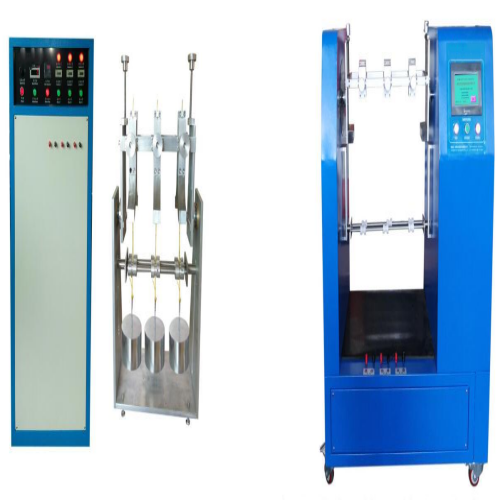
Working Principle of Automotive Wire Harness Cyclic Bending Testing Machine
The core working principle of the Automotive Wire Harness Cyclic Bending Testing Machine is to reproduce the repeated bending stresses experienced by automotive wires during actual service through the coordinated operation of mechanical structures and electrical monitoring systems. The equipment continuously captures changes in wire performance in real time and ultimately evaluates bending durability life, safety, and reliability. Essentially, it adopts a closed-loop testing concept of “simulating real operating stresses + monitoring the critical point of failure in real time.”
I. Mechanical Drive Module
The mechanical drive module is the power core of the testing machine. It usually adopts a stepper motor or servo motor as the power source and converts the motor’s rotary motion into reciprocating swinging or torsional movement of the testing fixture through transmission mechanisms such as belts, cams, or gears. This module allows precise setting of key parameters including bending angle and bending speed, thereby simulating different wire bending conditions under various application scenarios.
For door wire harness testing, the system can set symmetrical bending angles from 0° to 90° on both sides to simulate the movement trajectory during vehicle door opening and closing. For chassis wire harness testing, the bending speed can be adjusted to match the vibration frequency generated during vehicle operation.
II. Sample Fixing and Force Control Module
To ensure that bending stress is concentrated on the specific test area of the wire, the sample fixing and force control module adopts a specially designed profiling fixture. The fixed-end fixture clamps the wire connector, terminal, or non-test area, while the movable-end fixture clamps the test section of the wire and moves together with the drive mechanism.
In some tests, a specific load, such as 5N or 10N weights, is applied to the movable end to simulate the pulling force experienced by wires during actual use. Alternatively, the fixed end can be connected to a rated current source, allowing the wire to be tested under energized heating conditions to reproduce the mechanical stress environment under actual load operation.
During testing, the wire is installed on the fixture strictly according to the actual vehicle wiring layout. Fasteners such as clips and cable ties are used to ensure that the bending radius, stress points, and installation conditions are consistent with real vehicle applications.
III. Electrical Monitoring Module
Mechanical bending is the testing process, while electrical failure is the final evaluation criterion. The online electrical monitoring system integrated into the testing machine continuously supplies current to the wire during the test and monitors three critical parameters in real time.
Conduction resistance: A sudden increase or continuous rise in resistance indicates potential internal wire strand breakage and serves as an early warning of conductor failure.
Instantaneous open circuit/short circuit: The system can capture transient failures occurring at the microsecond level and accurately identify the exact moment of failure.
Insulation resistance: The system monitors whether the insulation layer has cracked or failed due to wear. Once the measured value exceeds the preset threshold, the equipment immediately determines that the sample has failed and automatically stops the test.
IV. Control and Feedback System
The control and feedback system generally consists of a programmable logic controller (PLC) and a touchscreen human-machine interface (HMI). Operators can preset testing parameters such as bending angle, bending speed, cycle count, and applied load through the touchscreen. After the test starts, the PLC precisely controls the drive module to perform the programmed movements while simultaneously triggering the electrical monitoring module to collect data. The system displays real-time information such as bending cycles and electrical parameters.
When the test is completed or the sample fails, the equipment automatically stops operation, records the final test data, and provides sound and light alarms. The entire testing process achieves intelligent control and digitalized data management, ensuring efficient and reliable evaluation of automotive wire harness durability performance.
Key Application Scenarios of Automotive Wire Harness Cyclic Bending Testing Machine
1. Door and Trunk Wire Harnesses
Vehicle doors and trunks are among the components with the highest opening and closing frequency. The wire harnesses connecting the vehicle body and door panels must withstand tens of thousands of bending cycles caused by repeated opening and closing operations. The cyclic bending testing machine can simulate this process to verify the reliability of wire harnesses under long-term frequent operation, preventing failures of vehicle windows, door locks, audio systems, and other functions caused by wire breakage.
2. Seat Adjustment Wire Harnesses
Modern vehicles are equipped with multi-directional electric seat adjustment functions, and the wire harnesses beneath the seats continuously bend as the seats move. The testing machine can simulate wire harness deformation during seat forward/backward movement and backrest angle adjustment, ensuring that functions such as seat heating, ventilation, and safety sensors remain unaffected throughout the entire vehicle service life.
3. Engine Compartment and Chassis Wire Harnesses
Although wire harnesses in these areas are mainly exposed to challenges such as vibration and high temperatures, they may also experience small periodic bending stresses caused by suspension movement and engine vibration during vehicle operation. By adjusting frequency and amplitude, the testing machine can simulate this high-frequency, low-amplitude bending stress and evaluate the vibration fatigue resistance of wire harnesses.
Importance of Automotive Wire Cyclic Bending Testing Machine
The Automotive Wire Cyclic Bending Testing Machine is a critical piece of equipment used to verify the fatigue life and electrical continuity performance of wire harnesses under dynamic alternating stress conditions. By using mechanical reciprocating bending to simulate real operating conditions and real-time monitoring of open-circuit failures, the equipment ensures electrical safety throughout the entire vehicle service life.
1. Prevention of Hidden Failures
Wire harnesses installed in moving areas such as vehicle doors and engine hoods are continuously subjected to repeated bending stresses during long-term operation. This can easily cause metal fatigue fractures of copper conductors or wear damage to insulation layers. The testing machine can accurately identify these potential risks before vehicle assembly, preventing safety issues such as short circuits, signal loss, and electrical system failures after vehicle delivery.
2. Accelerated Service Life Verification
The equipment can concentrate years of vehicle vibration and bending stresses into a short laboratory testing period, enabling rapid durability verification and significantly shortening the R&D validation cycle. This helps automotive manufacturers meet the durability development requirements of complete vehicles.
3. Ensuring System Reliability
The testing machine not only evaluates the performance of the wire conductor itself but also simultaneously assesses the reliability of terminal crimping strength, sheath fatigue resistance, and overall wire harness structural durability. This ensures stable electrical transmission performance under complex operating conditions.
4. Foundation for Compliance and Quality Control
The equipment can perform mandatory or voluntary testing according to industry standards such as ISO and GB standards. It serves as an essential tool for automotive manufacturers and suppliers to obtain quality certifications, control supply chain quality, and ensure compliance with industry requirements.
In summary, with the continuous development of automotive electrification and intelligent technologies, the performance requirements for automotive wires are becoming increasingly demanding. The Automotive Wire Cyclic Bending Testing Machine will continue to be upgraded and optimized, playing an increasingly important role across a wider range of applications. It will provide stronger support for automotive safety, reliability, and quality assurance.Feel free to contact us directly for more product information and technical details.
Previous: What is an automotive seat frame durability tester?
N e x t : What is a glass bottle internal pressure resistance tester?
