





What is the Touch Haptics Test System?
2026/08/03
Share:

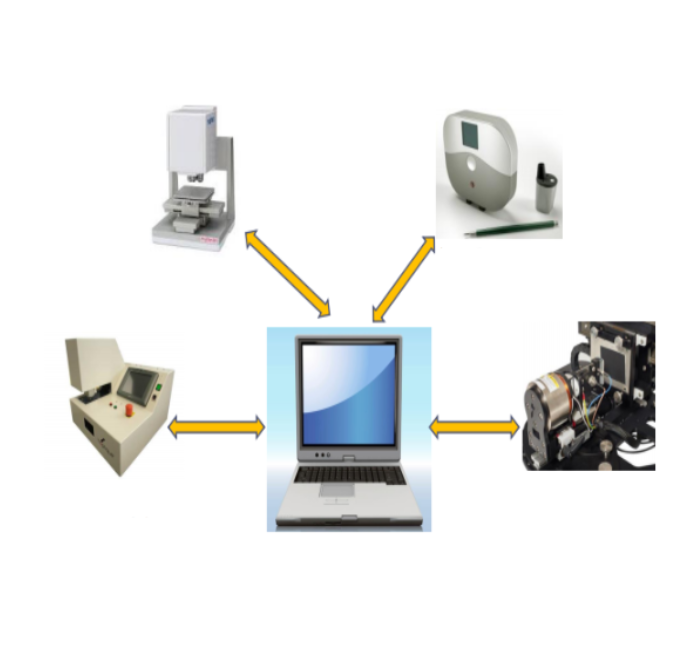
Detailed Principle of Automotive Interior Material Tactile Perceived Quality Testing System
1. Simulation Principle Based on Human Tactile Perception Mechanism
Human tactile perception of automotive interior materials is a comprehensive sensory response formed when skin receptors receive physical stimuli from material surfaces and transmit signals to the cerebral cortex.
The tactile perceived quality testing system is developed based on this mechanism and achieves accurate evaluation by simulating human touching behaviors.
At the physiological level, mechanoreceptors in human skin, such as Meissner corpuscles and Merkel cells, are highly sensitive to physical characteristics of materials, including surface roughness, hardness, and elasticity.
When fingers touch, slide, or press an interior material, these receptors capture subtle changes in surface texture, deformation under pressure, and other physical information, converting them into neural signals that form tactile sensations.
The testing system uses high-precision sensors to reproduce key parameters involved in human touch, including pressure, movement speed, and contact area.
By simulating finger actions such as stroking, pressing, and sliding, the system accurately collects the physical responses of materials under different contact conditions, corresponding to the physiological process of human tactile perception.
For seat leather testing, the system simulates both the pressure distribution generated when the human body sits on the seat and the hand-touching motion across the leather surface.
It collects data such as compression recovery characteristics and surface friction coefficient of leather materials. These parameters are directly related to the tactile sensations experienced during actual human contact.
2. Principle of Multi-Dimensional Physical Parameter Quantification and Correlation Analysis
The tactile perceived quality of automotive interior materials involves multiple physical dimensions, including roughness, hardness, elasticity, and friction coefficient.
The testing system quantitatively measures these parameters and establishes correlation models between physical characteristics and subjective tactile sensations, enabling objective evaluation of tactile quality.
The system utilizes professional testing equipment to measure various material properties:
A high-precision surface roughness tester is used to analyze microscopic surface textures and obtain parameters such as Ra (arithmetic mean deviation) and Rz (maximum height of profile). These values characterize the surface smoothness and texture structure of materials.
A hardness tester measures parameters such as Shore hardness and Rockwell hardness, reflecting the softness or firmness of materials.
A universal testing machine simulates different pressing forces to obtain elasticity-related data, including elastic modulus and compression permanent deformation rate, which represent the material’s deformation and recovery ability.
A friction and wear testing machine measures the static friction coefficient and dynamic friction coefficient of material surfaces, reflecting the sense of smoothness, resistance, or stickiness during touch.
After collecting multi-dimensional physical parameters, the system combines large-scale human subjective tactile evaluation data and applies machine learning algorithms to establish correlation models.
For example, surface roughness and friction coefficient can be correlated with subjective descriptions such as “fineness” and “smoothness.” By analyzing the influence weight of different parameters on human perception, the system achieves the conversion from objective physical measurements to subjective tactile perceived quality evaluation.
3. Standardized Environment and Process Control Principle
To ensure testing accuracy and repeatability, the tactile perceived quality testing system strictly follows standardized environmental and process control principles to eliminate interference from external factors.
In terms of environmental control, testing is conducted under controlled temperature and humidity conditions.
Typically, the testing environment is maintained at 23°C ± 2°C with a relative humidity of 50% ± 5%.
Temperature and humidity can significantly influence the physical properties of materials. For example, high temperatures may soften plastic interior components, while humidity variations can affect the elasticity and friction coefficient of leather materials. Under standardized conditions, material properties remain stable, allowing test results to accurately represent the inherent characteristics of the materials.
Regarding process control, the system establishes standardized operating procedures to ensure consistency.
Taking shearling interior material testing as an example, samples must be conditioned in a standard environment for at least 24 hours before testing to achieve equilibrium.
During the test, the system performs procedures including visual inspection, tactile evaluation, and parameter acquisition according to specified pressure, speed, and contact angle requirements. Each testing step has clearly defined operating standards and recording requirements, minimizing deviations caused by differences in manual operation.
Core Function of Automotive Interior Material Tactile Perceived Quality Testing System
The core function of the Automotive Interior Material Tactile Perceived Quality Testing System is to transform subjective human perceptions of “touch feeling” into objective and measurable physical data.
By simulating real human touch behaviors, including stroking and pressing, the system accurately evaluates key tactile characteristics of materials, such as:Surface roughness,Damping characteristics,Thermal sensation,Softness and hardness,Adhesion and sliding properties.This technology replaces unreliable manual evaluation methods and provides a standardized approach for automotive interior quality control, material selection, product development, and early risk prediction.
Core Functions and Specific Applications
1. Objectification of Subjective Perception
The system establishes mathematical models that correlate “stroking sensations” (such as roughness, damping, thermal sensation, and softness) and “pressing sensations” (such as softness, hardness, rebound performance, and firmness) with measurable physical parameters.
By converting vague sensory descriptions into precise mechanical data, including friction coefficient, pressing force, and restoring force, the system eliminates individual differences and fatigue-related errors associated with traditional manual evaluations.
2. Quantitative Measurement of Key Performance Parameters
The system automatically measures and analyzes critical tactile-related parameters, including:
Micro and macro surface roughness distribution
Static and dynamic friction forces
Maximum friction acceleration
Vibration frequency
Pulse frequency of stick-slip phenomena
These measurements help identify whether materials may cause unwanted noises, such as squeaking sounds, or create undesirable sticky and uncomfortable tactile sensations during actual use.
3. R&D Validation and Consistency Quality Control
During material selection and mass production stages, the system compares the force–displacement curve characteristics of samples from different production batches.
This ensures high consistency of tactile performance across different manufacturing batches, helping automotive manufacturers and suppliers resolve potential quality disputes within the supply chain.
4. Cost and Development Cycle Optimization
By using objective test data to predict potential risks in tactile perceived quality at an early development stage, the system reduces repeated prototyping and subjective evaluation processes.
This effectively shortens material development and validation cycles while lowering trial-and-error costs during product development.
Industry Challenges Addressed by the System
1. Breaking the Lack of Standardized Evaluation Methods
The system addresses the long-standing challenge that traditional materials such as leather and fabrics lack unified and objective tactile evaluation standards.
It reduces reliance on expert “hand-feel judgment,” which often leads to inconsistent results that are difficult to reproduce and standardize.
2. Preventing Design and Material Defects
The system can identify potential tactile quality issues caused by material microstructures or manufacturing processes at an early stage.
For example, it can detect undesirable characteristics such as:
Excessive roughness or resistance
Overly slippery surfaces
Excessive cold-touch sensation
This helps prevent customer complaints after mass production and improves overall product quality.
3. Supporting Premium Automotive Positioning
By providing objective data related to tactile quality, refinement, and luxury perception, the system supports automotive manufacturers in achieving high-end product positioning.
The test results provide scientific evidence that directly influences consumer purchasing decisions and enhances brand value.
Conclusion
Overall, the Automotive Interior Material Tactile Perceived Quality Testing System plays an essential role throughout the entire product development and quality control process.It not only enables systematic quantification and optimization of material tactile performance but also provides scientific data support for automotive manufacturers to accurately control interior quality. As a result, it effectively improves overall product competitiveness and user satisfaction.We welcome automotive manufacturers, component suppliers, and material research partners to explore this essential testing solution. Please feel free to contact us for more information regarding product functions, testing solutions, and cooperation opportunities.
Previous: What is a glass bottle internal pressure resistance tester?
N e x t : What is an assembly line in the automotive industry?
