





What is an assembly line in the automotive industry?
2026/08/03
Share:

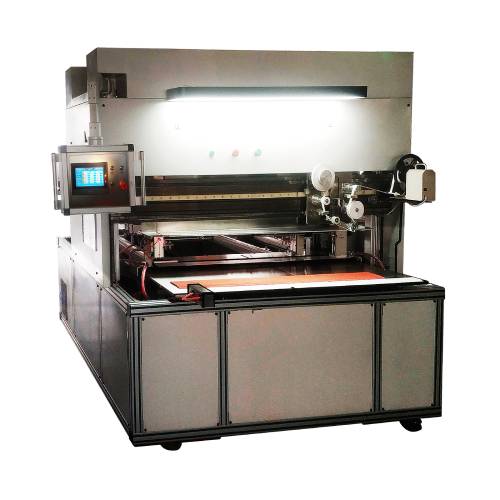
Working Principle of Automotive Cargo Cover Assembly Production Line
1. Material Conveying and Transfer Principle
Using a belt conveyor or chain plate conveyor system as the transportation carrier, semi-finished components and tooling fixtures, including cargo cover end caps, winding tubes, springs, curtain fabrics, clips, and damping components, are accurately transferred to designated workstations according to the preset production cycle.
The system enables orderly material distribution and continuous production flow, ensuring smooth and uninterrupted assembly operations.
2. Step-by-Step Integrated Assembly Principle
Each workstation performs specific assembly tasks according to the predetermined production sequence. The complete assembly process includes:
Frame positioning → Pre-installation and fixation of the internal return spring → Curtain fabric and winding tube bonding and locking → Press fitting and assembly of left and right end caps → Alignment and installation of damping structures → Integration of locking mechanisms
Throughout the process, pneumatic pressing systems and positioning fixtures are used for precise positioning and restriction. This ensures high consistency of component coaxiality and assembly clearances, preventing assembly misalignment, looseness, and positional deviation.
3. Tension and Rebound Adjustment Principle
The dedicated adjustment station simulates actual operating conditions through external pulling and retracting movements.
By accurately adjusting the preload force of the internal spring and the damping resistance, the system calibrates key performance parameters of the cargo cover, including:
Extension and retraction smoothness
Retracting speed
Parking stability
Stretching tension
This ensures smooth deployment, neat retraction, and stable stopping performance without jamming or interruption.
4. Online Performance Inspection Principle
After assembly, finished products are automatically transferred to the inspection station, where the system performs:
Extension and retraction cycle testing
Locking reliability testing
Tensile load testing
At the same time, it verifies critical performance indicators such as:
Extension stroke
Rebound force
Clip fixing strength
The system quickly identifies defective products caused by poor assembly, abnormal spring force, jamming, or locking failures, ensuring only qualified products proceed to the next stage.
5. Electrical Control and Integrated Line Coordination Principle
The entire production line is centrally controlled by a PLC control system, which precisely manages:
Conveyor speed
Workstation start/stop operations
Pressing force
Assembly sequence timing
Process parameters
The system coordinates manual-assisted stations with automated tooling equipment, ensuring consistent assembly standards and highly uniform product quality across the same production batch.
Finally, completed products are automatically discharged, sorted, and organized for subsequent packaging or delivery, completing the entire automated production process.
Applications of Automotive Cargo Cover Assembly Production Line
1. Large-Scale Mass Production of Automotive Cargo Covers
Large-scale production of automotive cargo covers is the most important application scenario for assembly production lines. Manufacturing companies rely on automated production lines to complete the entire assembly process, significantly increasing daily output and meeting the high-volume supply requirements of automotive manufacturers.
Standardized assembly effectively reduces human operation errors, stabilizes finished product quality, and minimizes after-sales issues such as retraction jamming, looseness, and abnormal noise.
2. Flexible Production for Automotive Interior Component Manufacturers
Automotive interior component manufacturers often undertake orders for cargo covers used in multiple SUV and MPV models.
The rapid changeover capability of the assembly production line enables mixed production of cargo covers with different sizes and specifications on the same line. This eliminates the need to build multiple dedicated production lines, effectively reducing factory space requirements and equipment investment costs while improving overall production line utilization.
3. Supporting Vehicle Manufacturers’ Supplier Quality Requirements
When vehicle manufacturers evaluate the production capabilities and qualifications of component suppliers, automated assembly production lines serve as an important basis for ensuring both production capacity and product quality.
Cargo covers manufactured through standardized assembly processes achieve high dimensional accuracy and assembly consistency, meeting vehicle installation requirements. This helps reduce rework rates during vehicle interior assembly and improves overall vehicle production efficiency.
4. Process Optimization and Product Quality Improvement
Technical teams can utilize production line operation data to analyze the frequency and causes of assembly defects at each workstation.
Based on the analysis results, process parameters such as:
Press-fitting force
Tightening torque
Spring preload force
can be optimized accordingly.
By continuously improving assembly procedures, companies can reduce issues such as component damage and assembly misalignment, while steadily enhancing product durability and user experience.
5. Supporting Intelligent Manufacturing Transformation
Automated production lines significantly reduce the number of manual assembly positions, lowering labor management requirements and production costs.
Through centralized process control and automated material transfer, the system meets the development trend of intelligent manufacturing in the automotive component industry. It helps enterprises upgrade their production models and improve the overall modernization level of manufacturing workshops.
6. Prototype Validation and New Product Development
During the development and finalization stage of new cargo cover models, manufacturers can conduct small-batch trial assembly on the production line.
This allows verification of:
Structural design feasibility
Assembly process rationality
Component compatibility
Based on problems identified during assembly, companies can optimize product structures and manufacturing processes, shortening the transition period from development to mass production.
7. Standardized Quality Control and Traceability Management
The assembly production line provides unified assembly standards and consistent process parameters, eliminating individual differences caused by manual operations.
As a result, products from the same production batch achieve high consistency in:
Extension and retraction feel
Installation dimensions
Load-bearing performance
This facilitates product quality control and batch traceability, helping automotive component manufacturers meet the strict quality management requirements of the automotive industry.
Core Functions of Automotive Cargo Cover Assembly Production Line
The Automotive Cargo Cover Assembly Production Line is an automated integrated manufacturing system specially designed for vehicle trunk cargo covers. Its core function is to solve the limitations of traditional manual assembly, such as low production efficiency and poor consistency, through standardized and continuous production processes. Its key functions are reflected in the following three aspects:
1. Improving Production Efficiency and Expanding Manufacturing Capacity
The assembly production line integrates multiple processes, including automatic feeding, positioning assembly, press fitting and fastening, spring installation, and finished product unloading.
By utilizing mechanical transmission systems and servo drive technology, the line achieves continuous integrated assembly from individual components to finished products.
This production mode significantly reduces the production cycle time per unit, meets the high-volume supply requirements of automotive manufacturers, greatly increases daily production capacity, and helps enterprises achieve large-scale mass production.
2. Ensuring Assembly Accuracy and Product Quality
Through dedicated profiled tooling fixtures, pneumatic clamping systems, and servo torque tightening mechanisms, the production line ensures precise positioning of components and consistent fastening torque of assembly parts.
The online functional inspection process can simulate actual operating conditions to evaluate:
Extension and retraction smoothness
Damping performance
Abnormal noise conditions
Defective products are automatically identified and separated.
This not only eliminates individual differences caused by manual assembly but also effectively reduces quality issues after delivery, such as looseness, jamming, and abnormal operation. As a result, products from the same batch achieve highly consistent performance and reliability.
3. Achieving Flexible Production and Cost Optimization
The production line features rapid model changeover capability. By adjusting tooling fixtures and process parameters, it can support mixed production of cargo covers with different dimensions and specifications for various SUV and MPV models.
This eliminates the need for multiple dedicated production lines, saving factory space and reducing equipment investment.
Meanwhile, automated operations reduce dependence on manual labor, lowering labor costs and management complexity. Through production data feedback and process parameter optimization, the system further improves overall production line utilization and manufacturing modernization.
Future Development Trends of Automotive Cargo Cover Assembly Production Line
With increasingly competitive automotive markets, vehicle manufacturers continue to demand higher standards for interior component assembly accuracy, user experience, and supply reliability.
Although the cargo cover is a relatively small interior component, its assembly quality directly affects the user experience and overall vehicle reputation.
In the future, Automotive Cargo Cover Assembly Production Lines will continue to develop toward:
Fully automated unmanned material loading
AI-based defect prediction and intelligent inspection
Multi-process integrated production systems
Interconnected production data management
Faster and more flexible model changeover capabilities
These technological advancements will further improve production efficiency and finished product quality, providing strong support for large-scale, intelligent, and standardized manufacturing of automotive interior components.By ensuring stable and reliable supply of trunk cargo covers for various vehicle models, advanced assembly production lines will contribute to the high-quality development of the automotive interior manufacturing industry.
Previous: What is the Touch Haptics Test System?
N e x t : How does the film heat shrinkage tester work?
