





What is the Roof-Mounted Photovoltaic Module Fire Test Apparatus?
2026/08/05
Share:

Why Photovoltaic Modules Must Undergo Combustion Testing
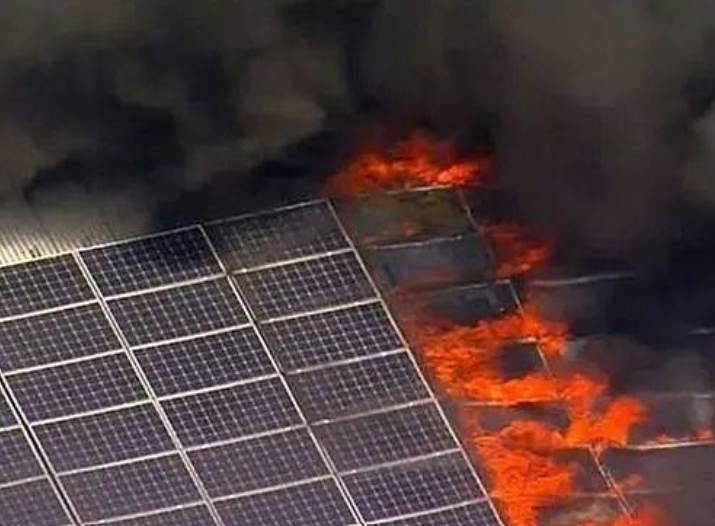
During the production process, photovoltaic panels must go through multiple stages of quality inspection to ensure their safety and stability during actual use. Among these, combustion performance testing is an essential procedure used to evaluate the fire resistance capability of the panels.
In combustion performance testing, the panels are subjected to flames at different intensity levels to simulate the fire scenarios they might encounter in real-world applications. Throughout the testing process, qualified professionals apply controlled burning to the panels in accordance with prescribed testing methods and procedures, while observing their combustion behavior and smoke emission characteristics. Through the analysis of these data, the combustion performance of the panels and their safety performance in the event of a fire can be assessed.
In combustion performance testing, the combustion behavior and smoke emission levels of the panels are critical evaluation indicators. An ideal photovoltaic panel should possess good flame-retardant properties, effectively preventing the spread of fire even when exposed to actual fire conditions. At the same time, the amount of smoke generated should be kept to a minimum to avoid causing harm to personnel and the environment.
In addition to combustion performance testing, photovoltaic panels are also required to undergo a variety of other tests, including electrical performance testing and environmental adaptability testing. These tests are all designed to ensure that the panels can operate stably and efficiently under diverse environmental and climatic conditions, while also safeguarding the safety of the end users.
Principle of the Rooftop Photovoltaic Module Combustion Tester
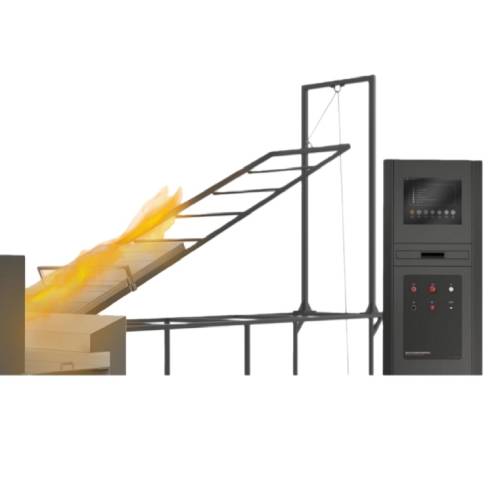
The core principle of the Rooftop Photovoltaic Module Combustion Tester is to apply standardized fire exposure to photovoltaic modules under simulated real-fire scenarios through controlled thermal radiation flames, directional airflow, and inclined flame-impingement angles. The instrument observes the modules' flame spread, burn-through, dripping, and self-extinguishing behaviors, and thereby determines their fire resistance rating.
1. Operational Logic and Mechanisms
Simulated Fire-Exposure Environment: The equipment establishes an integrated testing environment that comprises a flame source with a specified heat flux, a wind tunnel with adjustable wind speed, and a test deck with adjustable inclination angle. This configuration reproduces the coupled effects of thermal radiation and wind-assisted combustion that occur in rooftop fire scenarios.
Graded Attack Modes: The system sequentially performs the surface flame spread test and the burning brand test. These two procedures respectively evaluate the module's ability to resist the spread of external fire sources and its capacity to prevent sustained internal smoldering combustion.
Process Monitoring and Criteria: By utilizing thermocouple arrays and high-speed observation systems, the instrument records in real time whether the flame has crossed the designated boundary, whether ignitable dripping materials have been generated, and whether the module self-extinguishes after the fire source is removed. These observations serve as the basis for determining whether the module passes or fails the test.
2. Key Components and Functions
Combustion Generation System: This system employs a gas burner to produce a stable flame. The thermal output intensity is regulated through flow control valves, ensuring consistency of the fire source across different tests.
Airflow Control System: Equipped with guide vanes and a blower fan, this system generates a uniform and controllable horizontal wind speed above the test deck, simulating the influence of natural wind on fire behavior.
Sample Mounting Mechanism: This mechanism supports multi-angle inclined installation to match the actual fire-exposure geometric relationships corresponding to different rooftop slopes.
Data Acquisition Unit: This unit integrates temperature sensing devices and image recording apparatus to automatically capture key phenomena throughout the entire combustion process, thereby assisting manual or automated rating determinations.
Advantages of the Rooftop Photovoltaic Module Combustion Tester
The core advantage of the Rooftop Photovoltaic Module Combustion Tester lies in its ability to highly reproduce real rooftop fire conditions. Through multi-source coupled thermal environment simulation and fully automated process control, it accurately evaluates the flame-retardant rating and structural safety of modules under external fire attack.
Realistic Scenario Reproduction Capability: The instrument integrates a radiant heat source, controllable wind speed, and an open-flame ignition source to simultaneously simulate the combined effects of thermal radiation, wind-driven flame spread, and flying-brand ignition that occur in actual fire scenarios. This overcomes the limitation of traditional small-scale tests, which cannot reflect the fire characteristics specific to rooftop installations.
Multi-Standard Compatible Testing: A single unit is capable of performing multiple test procedures, including intermittent flame application, flame spread, burning wood, and flying-brand tests, covering major domestic and international fire safety standards. This eliminates the need for equipment replacement and meets both certification and research and development requirements.
Precise Environmental Regulation: The system employs variable-frequency blowers and automatic valve systems to achieve precise closed-loop control of airflow velocity, heat flux, and ignition timing. This ensures that test conditions remain stable and repeatable, thereby eliminating human operational errors.
Intuitive Observation and Judgment: Equipped with high-definition observation windows and a multi-point temperature monitoring network, the instrument captures in real time the flame spread path, dripping materials, and burn-through conditions. Combined with an automatic data acquisition system, it enables objective determination of the fire resistance rating.
Safety and Integrated Design: The instrument features built-in gas leak alarms, over-temperature protection, and a high-efficiency smoke exhaust and purification system. It operates within a closed protective environment, ensuring both operator safety and compliant treatment of exhaust gases.
In summary, the Rooftop Photovoltaic Module Combustion Tester, as a critical piece of equipment for evaluating the fire performance of photovoltaic systems, demonstrates significant value in safeguarding building fire safety and advancing industry standards through its scientifically rigorous testing capabilities, intuitive and efficient observation and judgment functions, and comprehensive and reliable integrated safety design. It is therefore deserving of our full attention. We sincerely welcome industry peers, research institutions, and relevant users to contact us directly via the link below to obtain more detailed technical specifications, application case studies, and customized solutions regarding this tester.
Previous: How does the car seat center of gravity measuring tester work?
N e x t : Why is the oil separator test rig important?
