





Why is the oil separator test rig important?
2026/08/05
Share:

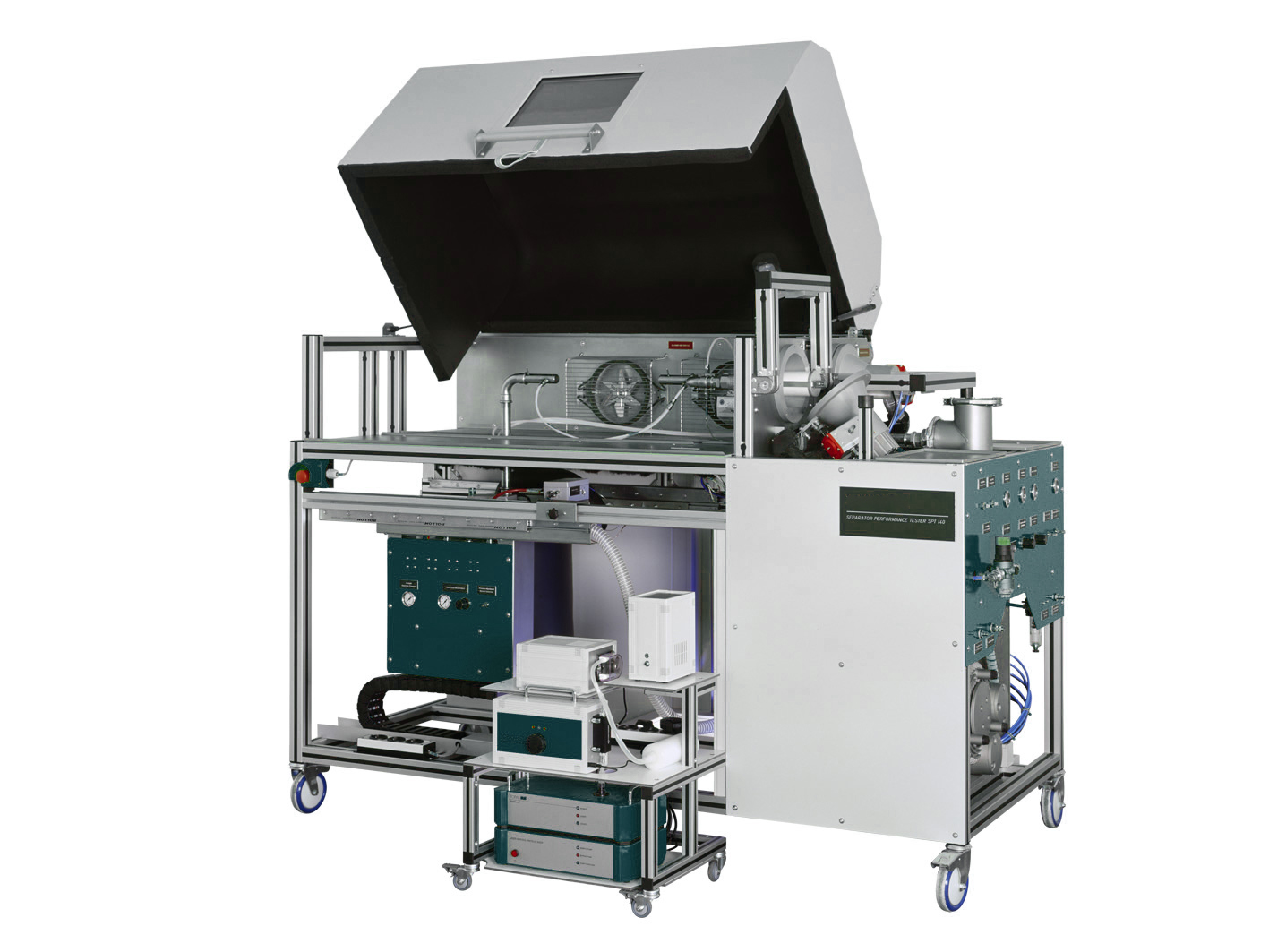
Why Has the Oil Mist Separator Test System Become an Industrial Necessity
1. Why Has It Transitioned from "Optional" to "Essential"
In the past, oil mist treatment was often regarded as an auxiliary environmental protection measure. Today, it has transformed into a fundamental configuration of the production system. On the one hand, regulatory enforcement has shifted from "post-incident punishment" to "source control." Facilities without oil mist purification equipment cannot pass environmental impact assessments or occupational health acceptance inspections. On the other hand, modern precision manufacturing demands extremely high cleanliness standards for the workshop micro-environment. Oil mist adhesion directly reduces product yield and impairs equipment precision, making it unacceptable to operate under compromised conditions. Furthermore, with the increasing prevalence of green supply chain audits, downstream customers have incorporated oil mist treatment into their supplier qualification criteria. The absence of this capability means direct loss of market orders.
2. Core Factors That Make It an Industrial Necessity
The oil mist separator has become an industrial necessity because it serves as a fourfold irreplaceable line of defense: safeguarding occupational health, avoiding legal compliance risks, maintaining equipment precision and safety, and enabling resource recycling.
Mandatory Occupational Health Protection: Oil mist particulates can penetrate deep into the alveoli and carry carcinogenic substances. Long-term exposure may lead to respiratory diseases, skin disorders, and eye injuries. The installation of purification equipment is the baseline requirement for employers to fulfill their safety responsibilities and to avoid occupational disease disputes.
Regulatory Compliance for Business Survival: National ambient air pollutant emission standards and workplace occupational health standards are becoming increasingly stringent. Direct emission without treatment can result in fines, production suspension for rectification, or even license revocation. Compliant emission is a prerequisite for the continued operation of any enterprise.
Asset Protection and Equipment Safety: Oil mist deposition can cause electrical short circuits, guide rail corrosion, wear on precision components, and slippery floor hazards. It significantly shortens the service life of expensive machine tools and may even trigger fires. The installation of purification devices is a critical measure for reducing operation and maintenance losses.
Resource Cost Efficiency and Lean Production: Recovering cutting fluids and lubricating oils directly reduces material consumption and waste liquid treatment costs. At the same time, a clean working environment improves operational visibility and employee performance stability, thereby supporting continuous and efficient production.
In brief, the oil mist separator is no longer a mere environmental protection device. It is a critical infrastructure component that connects legal compliance, personnel safety, asset preservation, and production continuity. Its absence signifies systemic risk.
Working Principle of the Oil Mist Separator Test System
The Oil Mist Separator Test System operates by simulating real-condition airflow and utilizing a standard aerosol generation source to produce a controllable oil mist. After the mist passes through the separator under test, a high-precision detection unit compares the aerosol concentration and state at the inlet and outlet, thereby determining the separation efficiency and operational performance.
1. Core Workflow
Aerosol Generation: The system drives a dedicated aerosol generation device to produce a standard oil mist airflow with a stable particle size distribution and controllable concentration, simulating the pollution load found in actual industrial environments.
Sample Loading: The oil-laden airflow enters the oil mist separator under test at a set flow velocity, where it undergoes separation processes such as interception, impaction, coalescence, or electrostatic adsorption within the internal structure.
Condition Monitoring: Airflow samples are synchronously collected at both the inlet and outlet of the separator to measure residual oil mist particle content, phase changes (transition from aerosol to liquid state), and airflow resistance conditions.
Performance Evaluation: The separation efficiency is calculated by comparing the concentration differences between the inlet and outlet aerosols. This is combined with pressure drop variations to assess filter clogging trends and overall operational stability.
2. Key Technical Mechanisms
Physical Interception Verification: This mechanism validates the ability of the fiber layer to perform inertial interception, diffusion adsorption, and coalescence of tiny oil particles into droplets, while also confirming the drainage effectiveness of the accumulated liquid oil under the influence of gravity.
Multi-Principle Adaptation Testing: For different separator types, including centrifugal, filtration, and electrostatic models, the system separately verifies the actual efficiency of cyclone centrifugal separation, deep-bed fiber filtration, or electric field adsorption of charged particles.
Dynamic Load Simulation: By adjusting the airflow velocity and oil mist concentration, the system tests the separation stability and penetration resistance of the equipment under variable operating conditions, thereby eliminating the interference of transient fluctuations.
Precautions for Using the Oil Mist Separator Test System
When using the Oil Mist Separator Test System, the core requirements demand strict control over medium safety, airtight integrity, electrostatic protection, authenticity of operating condition simulation, and emergency shutdown mechanisms, in order to prevent fire, explosion, data distortion, or equipment damage.
Safety and Environmental Control: The testing area must be well-ventilated and free from open flames or spark sources. All electrical facilities must comply with the required explosion-proof ratings. If the test involves flammable oil mist or high-pressure gases, electrostatic grounding and forced exhaust ventilation must be installed. It is strictly prohibited to disconnect any connections while the system is under pressure.
System Isolation and Pretreatment: Before testing, the gas supply must be completely shut off, pressure must be released and the system must be emptied, and any residual combustible materials must be purged using an inert gas. The housing should be inspected to ensure there are no cracks and that all flange seals are reliable. All valves and pressure gauges must be within their calibration validity periods.
Standardization of Test Conditions: The rated airflow rate and oil mist particle size distribution must be strictly matched. The pressurization and temperature ramping rates must be controlled to avoid thermal stress damage. The air duct must be constructed of grounded metal material to eliminate electrostatic interference, and isokinetic sampling must be ensured.
Instrument Calibration and Data Validity: Particle counters, flowmeters, and differential pressure sensors must be calibrated on a regular basis, with accuracy typically required to be within plus or minus five percent. Blank tests must be performed to correct for background counts, preventing residual particles from causing artificially inflated efficiency readings.
Process Monitoring and Emergency Response: A designated supervisor must monitor real-time pressure, current, and leakage conditions. If any abnormality is detected, the system must be immediately shut down and pressure must be relieved. Fire extinguishing equipment and leakage handling tools must be available on site, and evacuation routes must be clearly defined.
In summary, the oil mist separator, with its excellent performance and environmentally friendly attributes, has become an essential piece of equipment for air purification in the industrial sector. It enables the recovery and reuse of oil mist, optimizes the production environment, protects the health of workers, and reduces environmental pollution.
Previous: What is the Roof-Mounted Photovoltaic Module Fire Test Apparatus?
N e x t : How does a guide pin anchoring force tester work?
