





How does a guide pin anchoring force tester work?
2026/08/06
Share:

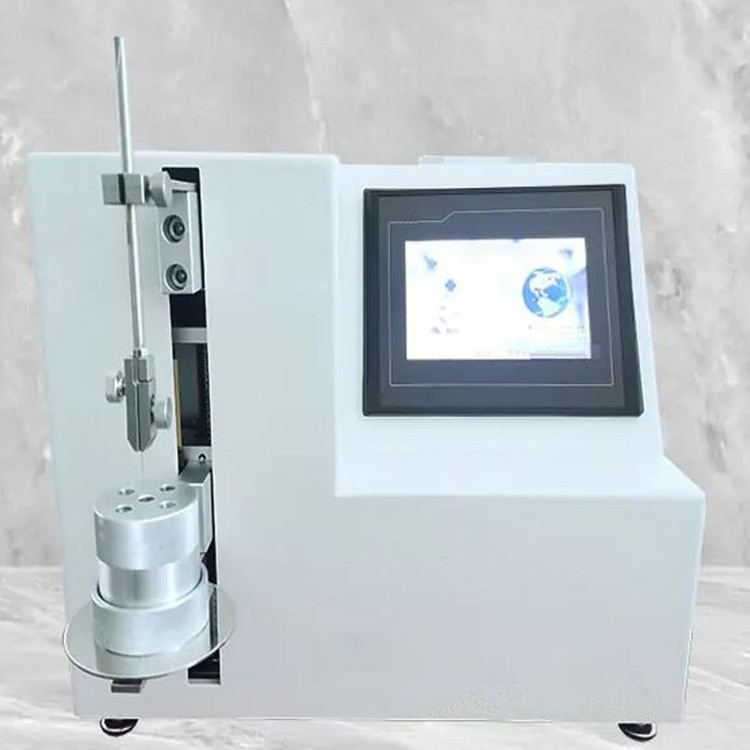
Core Working Principle
The Guide Pin Anchoring Force Tester operates on the principle of "force-displacement closed-loop control." The core mechanism employs a high-precision servo motor or pneumatic cylinder to drive the testing platform, applying axial tensile force to the guide pin secured within the bionic tissue simulation module.
Mechanical Loading: The system applies tensile force to the specimen at a preset rate (typically 50 mm/min, adjustable within a range of 0.1–500 mm/min), simulating the external forces experienced by the needle body during clinical procedures.
Data Acquisition: A high-sensitivity force sensor captures real-time electrical signals generated by physical deformation. These signals are transmitted to the control system via a high-resolution AD converter, achieving a resolution of up to 0.01 N.
Process Simulation: The testing cycle covers the full sequence—preloading, holding, and tensile loading until failure (needle pull-out or tissue rupture). Simultaneously, a force-displacement curve is plotted in real time, with automatic identification of the yield point and the peak anchoring force.
Main Structure and Functional Components
To ensure testing accuracy and repeatability, a professional-grade tester typically comprises the following three major modules:
Mechanical Testing Module: This includes the power drive unit and specialized fixtures. The fixture design must ensure that the tensile force direction is strictly aligned with the needle axis to avoid test errors caused by eccentric loading. The force sensor typically covers a range of 0–50 N, with a control accuracy of ±1%.
Simulated Tissue System: Constructed from elastic materials such as silicone or polyurethane, with adjustable Shore hardness (e.g., A 10–60) to simulate different human tissues (e.g., breast soft tissue, fibrous tissue). Certain advanced models support the integration of bone-simulating materials to expand testing scenarios for bone puncture anchoring force evaluation.
Intelligent Control System: Equipped with an embedded operating system and a touchscreen human-machine interface, supporting bilingual display (Chinese/English). It can automatically execute test cycles and features overload automatic power-off and automatic data storage upon power failure. Additionally, an onboard printer can generate test reports containing force curves, standard deviation, and pass rate statistics.
Testing Procedure of the Guide Pin Anchoring Force Tester
A standardized operating procedure is essential to ensure data reliability and test result consistency. The entire process comprises the following four key stages:
Specimen Preparation: First, intercept a section of the positioning wire or guide pin containing the complete anchoring structure as the test specimen. Then, strictly following the actual clinical implantation angle and orientation requirements, securely mount and fix the specimen in the dedicated test fixture, ensuring that the simulated environment accurately reflects real-world usage conditions.
Parameter Configuration: Input basic information such as the product model and production batch number on the device control interface. Next, precisely set the tensile rate, test mode (e.g., static hold or dynamic cycling), and the expected safety threshold range in accordance with relevant testing standards or research requirements.
Automated Testing: Upon starting the device, the system automatically executes the tensile or pull-out cycle according to the preset program. Throughout the test, high-precision sensors monitor and record the force variation curve in real time. Should the real-time anchoring force exceed the preset safe operating range (e.g., 0.5–3.0 N, with specific values depending on the design standards of different products), the system will immediately trigger an audible and visual alarm to alert the operator.
Result Evaluation and Reporting: Upon test completion, the system automatically analyzes the collected data to calculate key performance indicators, including maximum anchoring force, average anchoring force, and displacement curve. Finally, a standardized visual test report containing data charts, key parameters, and conclusive judgments is automatically generated. This report serves not only for pass/fail determination of individual product quality but also provides comprehensive evidence for subsequent quality traceability, process optimization, and comparative performance analysis.
Application Scenarios and Value
The Guide Pin Anchoring Force Tester is a specialized mechanical testing device designed for the quantitative determination of the pull-out resistance (anchoring force) of single-use breast localization wires and their guide pins in simulated tissue. Its core purpose is to ensure the stability of preoperative lesion marking and surgical precision.
1. Core Application Scenarios
Medical Device Production Quality Control: Used for optimizing needle body structures (e.g., barbs, hooks) during the R&D phase of new products, as well as for batch sampling inspection in mass production, to ensure that the anchoring force of factory-delivered products complies with the national standard safety range.
Clinical Preoperative Assessment and Research: Simulates different tissue hardness levels (breast, adipose, fibrous tissue, etc.) to test the fixation effectiveness of guide pins, providing data support for surgical planning. In research, it is used to analyze the correlation between material properties and anchoring performance.
Third-Party Testing and Regulatory Inspection: Serves as a critical piece of equipment for regulatory sampling and type testing, determining whether products meet qualification criteria and preventing medical incidents caused by anchoring failure.
2. Core Value Proposition
Ensuring Surgical Precision and Safety: Quantitatively evaluates the anti-migration capability of guide pins after implantation, preventing localization wire displacement or dislodgement during surgery due to insufficient anchoring force, thereby avoiding tumor remnants or inadvertent resection of healthy tissue.
Mitigating Excessive Tissue Damage Risks: Through precise measurement, prevents excessive anchoring force that could cause tissue tearing or difficult removal, balancing the clinical requirements of "secure fixation" and "tissue-friendly" design.
Compliance and Traceability Foundation: Strictly adheres to standards, providing high-precision (±0.01 N) test reports that are printable and exportable, meeting the requirements for medical device registration, production traceability, and regulatory compliance.
In summary, the Guide Pin Anchoring Force Tester provides objective, quantitative evaluation criteria for the physical performance of medical devices through high-precision mechanical simulation and data analysis, playing a significant role in enhancing the safety and precision of interventional procedures.
Previous: Why is the oil separator test rig important?
N e x t : Are your medical gloves truly waterproof?
