





Are your medical gloves truly waterproof?
2026/08/06
Share:

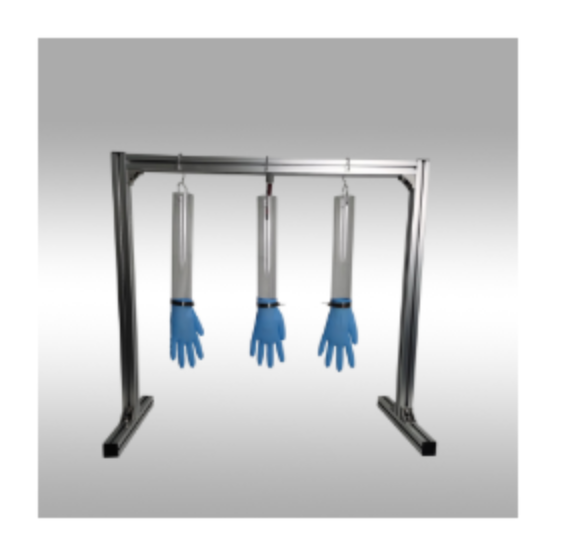
Core Principle of the Equipment: Seal Integrity Verification Simulating Real-World Usage Scenarios
The tester employs the water penetration method to simulate the liquid environments that gloves may encounter during actual use. The equipment consists of a transparent cylindrical cylinder, a suspension device, a pneumatic sealing system, and an intelligent control system:
Transparent Cylindrical Cylinder: A transparent container with an outer diameter of 60 mm and an inner diameter of 50 mm, capable of holding 1000 mL of water, ensuring that the glove remains in a vertical position after filling, facilitating observation of leakage points.
Pneumatic Sealing System: Utilizes specially designed sample clamps and a high-precision pressure gauge (accuracy ±1 kPa), with a stable air supply provided by an air compressor, achieving a seamless seal between the glove and the pneumatic circuit to prevent data deviations caused by air leakage during testing.
Intelligent Timing Module: Equipped with a built-in high-precision timer, preset test duration (typically 1 minute), and automatically records the glove's sealing performance under sustained pressure.
Five Steps to Complete the Full Testing Process
The equipment is designed with user-friendly operation in mind, and the entire testing procedure has been simplified into the following five steps:
Step 1: Equipment Inspection and Calibration
Check whether the air supply connection is properly installed and confirm that the equipment is powered by an AC 220V power supply.
Verify that the pressure gauge reading is 0 kPa.
Fill the transparent cylindrical chamber with 1000 mL of distilled water and ensure that the liquid level marking line is clearly visible.
Step 2: Glove Installation and Sealing
Place the glove under test onto the specially designed sample holder, ensuring that the wrist area fully covers the sealing ring.
Rotate the pneumatic valve to increase the pressure to 1.2 kPa (simulating actual operating pressure).
Observe whether the pressure gauge fluctuation remains within ±0.1 kPa to confirm that the sealing system is leak-free.
Step 3: Start the Testing Program
Press the start button, and the equipment will automatically perform the following operations:
Slowly inject water into the cylindrical chamber until the liquid level reaches the marked line.
Simultaneously activate the timer and maintain continuous pressurization for 1 minute.
Monitor pressure changes in real time. If the pressure drops by more than 0.5 kPa, an alarm will be triggered automatically.
Step 4: Result Evaluation and Data Recording
After the test is completed, inspect the glove surface for any water leakage:
Pass: No leakage is observed, and the pressure value remains stable throughout the test.
Fail: Continuous water droplets appear on the glove surface or the pressure drops rapidly.
The built-in printer automatically generates a test report, including test time, pressure curve, leakage location, and other relevant data.
Step 5: Equipment Cleaning and Maintenance
Drain the remaining water from the cylindrical chamber and wipe the sample holder surface with a soft cloth.
Regularly calibrate the pressure gauge (recommended every 3 months).
Replace the sealing ring after approximately every 500 tests.
Wide Application Fields of Medical Glove Water Impermeability Tester
1. Glove Manufacturers: A Core Quality Control Tool in Production Processes
Production Monitoring:
During the manufacturing process of medical rubber examination gloves, sterilized rubber surgical gloves, chemical protective gloves, and microbial protective gloves, this equipment is used to test the water impermeability performance of each batch of gloves. It ensures that products comply with national standards and internal quality control requirements.
Process Optimization:
By regularly testing and analyzing variations in glove sealing performance, such as those caused by material formulation, vulcanization processes, mold precision, and other factors, manufacturers can optimize production parameters and reduce the rejection rate of defective products.
Export Compliance:
The tester provides standardized testing data for products exported to Europe, America, and other international markets, helping enterprises meet regulatory requirements and obtain relevant international certifications.
2. Labor Protection Product Inspection Institutions: Core Equipment for Third-Party Testing
Product Certification:
According to applicable national standards, testing institutions use this equipment to evaluate the water impermeability of submitted gloves and issue authoritative test reports. These reports provide technical support for medical protective glove certification, including disposable and sterilized glove classifications.
Market Sampling Inspection:
In cooperation with regulatory authorities, inspection organizations can perform random sampling tests on gloves circulating in the market, identify substandard products, and help maintain medical safety.
Research and Development Support:
The tester provides performance verification data for the development of new glove materials, such as nitrile rubber and polyurethane, as well as innovative glove designs, including reinforced fingertips and anti-slip surface textures.
3. Medical Institutions: A Critical Barrier for Infection Control
Procurement Inspection:
When purchasing medical gloves, hospitals can use this equipment to conduct sampling inspections on supplier products, ensuring that gloves effectively prevent the penetration of blood, body fluids, and other contaminants, thereby reducing occupational exposure risks for healthcare workers.
Pre-use Screening:
During emergency situations, such as epidemic outbreaks, medical institutions can perform rapid water impermeability tests on gloves to prevent cross-infection caused by defective protective equipment.
4. Research and Education Fields: A Driving Force for Technological Innovation
Material Research:
Universities and research institutes use this equipment to study the penetration mechanisms of glove materials and develop more efficient barrier materials and coating technologies.
Teaching Experiments:
Medical schools and vocational training institutions utilize the tester as an educational tool to demonstrate glove performance testing methods and improve students’ practical operation skills.
With its standardized design, intelligent operation, and modular maintenance features, the Medical Glove Water Impermeability Tester has redefined the efficiency and accuracy of protective performance testing. As medical safety requirements continue to become more stringent worldwide, this equipment has become an essential tool for ensuring glove quality, reducing infection risks, and building an invisible safety barrier for healthcare professionals around the world.
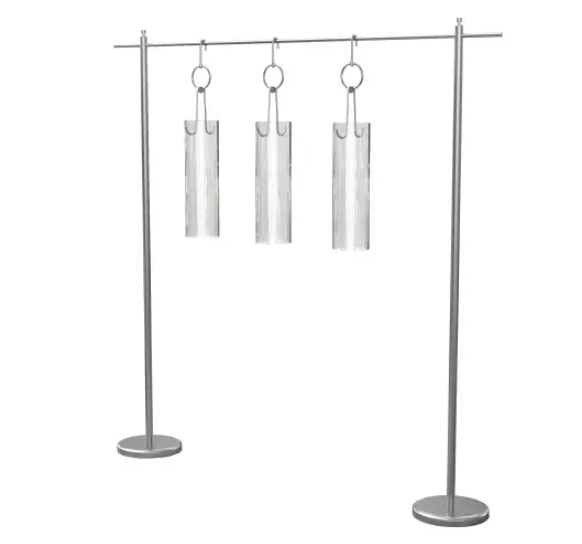
Functions of Medical Glove Water Impermeability Tester
The primary function of the Medical Glove Water Impermeability Tester is to simulate liquid penetration risks under real application conditions and transform the abstract concept of "water resistance performance" into traceable and objective test data. Its core value is reflected in the following three aspects:
1. Ensuring Biological Safety Protection
During surgical procedures or the handling of contaminated materials, even minor defects in gloves may allow blood, body fluids, or chemical agents to penetrate and contact healthcare workers’ skin.
The tester applies controlled pressure or water-filling methods to accurately detect microscopic leakage, ensuring reliable isolation performance when gloves come into contact with infectious substances. This effectively reduces the risk of occupational exposure among medical professionals.
2. Compliance with National Standards and Industry Regulations
The equipment is designed in strict accordance with authoritative domestic and international standards, including GB 10213-2006 "Rubber Examination Gloves for Medical Use" Annex A, GB 7543-2006 "Rubber Surgical Gloves—Sterile or Non-Sterile" Annex A, and the international standard ASTM D5151.
Using a dedicated impermeability tester for inspection is an essential compliance procedure for glove manufacturers seeking market access and for medical institutions conducting incoming product quality inspections.
3. Improving Quality Control Efficiency
Traditional manual visual inspection methods are inefficient and highly subjective. Modern water impermeability testers are typically equipped with multi-station testing systems, automatic water filling, intelligent timing functions, and data printing capabilities.
These features significantly improve batch testing efficiency while enabling quality traceability through electronic records, allowing manufacturers to identify and analyze potential defects in production processes.
Future Development Trends
With continuous technological advancement, medical glove water impermeability testers are expected to develop toward intelligence, portability, and multifunctionality.
For example, by integrating artificial intelligence technology, future testers may automatically analyze test data and provide optimization recommendations. Portable testing devices will enable hospitals and inspection organizations to conduct rapid on-site testing. Multifunctional testing systems will be capable of evaluating additional glove performance indicators, such as tensile strength and tear resistance, further improving testing efficiency and comprehensiveness.
Previous: How does a guide pin anchoring force tester work?
N e x t : How does a cork puncture and chip detection instrument work?
