





How does a cork puncture and chip detection instrument work?
2026/08/06
Share:

Limitations of Traditional Testing Methods
In traditional manual inspection methods, operators rely on visual observation to identify and count fragments collected on the filter membrane at a specified distance. However, this approach has several significant limitations:
High Subjective Error:
Small fragments can easily be overlooked, and different operators may apply inconsistent judgment criteria, resulting in variations in test results.
Poor Repeatability:
Manual puncture operations make it difficult to maintain consistent puncture speed, angle, and force for each test, leading to significant data fluctuations and reduced test reliability.
Low Testing Efficiency:
Manual counting is time-consuming and labor-intensive, making it difficult to meet the requirements of large-scale batch sampling inspections.
Environmental Interference:
Traditional methods often lack a standardized clean testing environment, and external dust particles or contaminants may interfere with the accuracy of test results.
Technical Advantages of Modern Pharmaceutical Rubber Stopper Fragment Shedding Testers
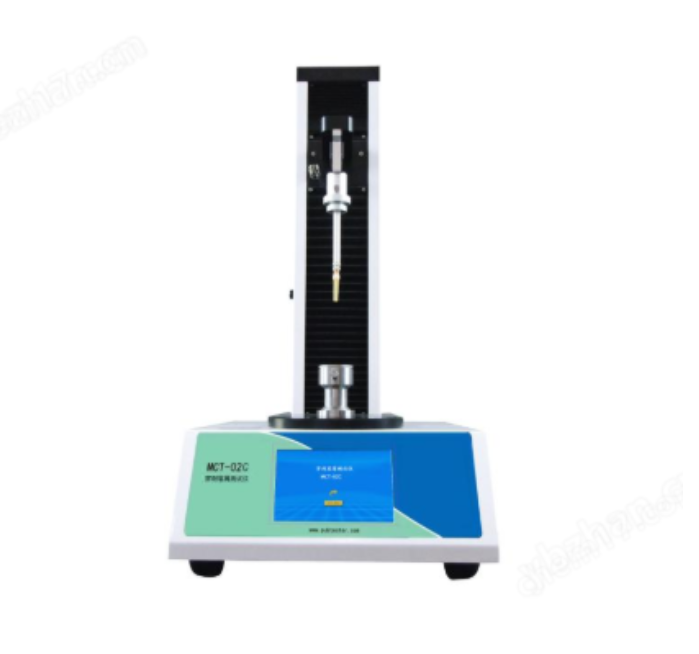
To overcome the limitations of traditional testing methods, modern Pharmaceutical Rubber Stopper Fragment Shedding Testers have been developed. Through automated and standardized design, these instruments achieve precise control and reliable evaluation throughout the testing process.
1. Precise Simulation of Clinical Puncture Procedures
The tester is equipped with a high-precision servo drive system, enabling accurate setting and closed-loop control of puncture speed, stroke, and angle. By using standard medical puncture needles, the equipment can consistently reproduce clinical puncture operations and ensure uniform testing conditions for each puncture cycle, effectively eliminating variations caused by manual operation.
2. Clean and Controlled Testing Environment
The testing equipment is generally equipped with a sealed constant-temperature testing chamber or designed for operation inside a Class 100 clean bench, effectively preventing external dust and contaminants from interfering with the samples.
Some advanced models are also integrated with automatic filtration systems to ensure the complete collection and accurate evaluation of generated fragments.
3. Intelligent Data Acquisition and Analysis
Modern fragment shedding testers have replaced traditional methods that rely solely on visual counting. Some advanced systems integrate high-resolution microscopic imaging technology or optical particle counting systems to automatically identify and quantify shed fragments.
In addition, the instrument is equipped with an intelligent touchscreen control system featuring bilingual Chinese-English interfaces and supports preset test programs according to multiple national and industry standards.
After testing, all parameters, test duration, and sample identification information are automatically stored. The system supports data export and test report printing, fully meeting the traceability requirements of GMP quality management systems.
4. Wide Range of Applications
For different types of pharmaceutical packaging components, including vial rubber stoppers, infusion bottle rubber stoppers, and rubber plungers for prefilled syringes, the tester can achieve rapid sample installation by replacing dedicated positioning fixtures.
This ensures secure sample fixation, accurate puncture positioning, and prevents abnormal fragment generation caused by improper sample placement.
Working Principle and Operating Procedure of Pharmaceutical Rubber Stopper Fragment Shedding Tester
1. Working Principle
The core principle of the Pharmaceutical Rubber Stopper Fragment Shedding Tester is to simulate standardized clinical puncture operations and collect visible particles (≥50 μm) generated from rubber stoppers through solvent washing and filtration. The collected particles are then quantitatively counted through visual inspection or microscopic observation to evaluate the fragment shedding resistance of the rubber stopper material.
Core Operating Mechanism
Standardized Puncture Simulation:
The tester uses a precision servo drive system to control a metal puncture needle, performing puncture and slight agitation on the fixed rubber stopper at a constant speed and vertical angle. The equipment reproduces clinical drug preparation conditions by completing a specified number of puncture cycles, such as 10 or 48 punctures.
Particle Collection and Separation:
After puncture, a specified medium such as Water for Injection (WFI) is added into the container. The container is then sufficiently shaken to suspend detached rubber fragments in the liquid. The liquid is subsequently filtered through a membrane filter with a specified pore size to collect all insoluble particles.
Quantitative Observation and Evaluation:
Under standardized lighting conditions, the particles retained on the filter membrane are directly observed by the naked eye or analyzed with microscope assistance. The number of visible fragments with a diameter ≥50 μm is counted and compared with specified acceptance criteria to determine whether the sample meets the requirements.
2. Operating Procedure
The Pharmaceutical Rubber Stopper Fragment Shedding Tester simulates clinical puncture procedures through standardized mechanical operation. It uses liquid washing and filtration collection methods or advanced negative-pressure adsorption combined with optical imaging technology to count visible fragments (typically ≥50 μm) and evaluate compliance.
Main Testing Process
1. Sample Installation and Pre-treatment
Install the rubber stopper under test onto a standard injection vial containing a specified amount of test liquid. Some test methods require high-temperature sterilization followed by cooling before testing to eliminate interference caused by stopper displacement.
At the same time, a reference rubber stopper with a known fragment shedding level may be tested in parallel for comparison and verification.
2. Standardized Puncture Operation
The equipment drives a stainless-steel puncture needle that complies with pharmacopeia requirements. The needle vertically penetrates the marked puncture point of the rubber stopper at a preset speed and angle.
After penetration, the needle performs slight agitation and withdrawal, and the puncture process is repeated according to the specified number of cycles.
3. Fragment Collection and Transfer
After puncture, the liquid inside the vial is filtered through a 0.45 μm membrane filter or a specified pore-size filter, allowing detached particles to be retained on the filter surface.
Advanced models may utilize a sealed testing chamber combined with negative-pressure adsorption technology to directly collect airborne or suspended particles, improving detection accuracy and reducing environmental interference.
4. Observation, Counting, and Evaluation
Under standardized conditions, the filter membrane is observed at a distance of approximately 25 cm by the naked eye or analyzed using a microscope with 50–200× magnification.
The number of visible fragments is counted and compared with the reference sample results to verify test validity. If the number of fragments exceeds the specified limit, the tested rubber stopper is judged as non-compliant.
Industry Application Value of Pharmaceutical Rubber Stopper Fragment Shedding Tester
The application of the Pharmaceutical Rubber Stopper Fragment Shedding Tester covers the entire lifecycle of pharmaceutical packaging and plays an important role in ensuring drug safety and packaging reliability.
1. For Pharmaceutical Manufacturers: Ensuring Packaging Material Quality from the Source
For pharmaceutical companies, the tester serves as an essential tool for incoming material inspection and batch sampling inspection. It helps manufacturers select high-quality packaging materials at the source, reduce the risk of drug recalls, and minimize potential medical disputes caused by packaging defects.
By analyzing fragment shedding test data, pharmaceutical enterprises can evaluate the compatibility between rubber stoppers and drug packaging systems, ensuring that packaging components meet safety and quality requirements throughout the product lifecycle.
2. For Pharmaceutical Packaging Material Manufacturers: Improving Product Competitiveness
For rubber stopper and pharmaceutical packaging suppliers, standardized testing data provides important support for product development and process optimization.
Manufacturers can use test results to optimize rubber formulations, vulcanization processes, surface coating performance, and production parameters, thereby improving product stability, reducing particle generation, and enhancing market competitiveness.
3. For Regulatory Authorities and Third-Party Testing Laboratories: Supporting Standardized Quality Supervision
For regulatory organizations and independent testing laboratories, standardized fragment shedding testing equipment ensures consistency, reliability, and comparability of inspection results.
Accurate testing data provides scientific evidence for industry supervision, quality evaluation, and regulatory compliance, helping maintain pharmaceutical packaging safety standards.
In summary, the Pharmaceutical Rubber Stopper Fragment Shedding Tester is not only a compliance testing instrument that meets the requirements of the YBB series pharmaceutical packaging standards, but also an important safeguard for patient medication safety.With increasingly strict requirements for pharmaceutical cleanliness and particulate control, adopting automated, high-precision testing technologies has become an inevitable trend in the development of the pharmaceutical packaging industry. By improving detection accuracy and efficiency, this equipment helps pharmaceutical enterprises build a safer and more reliable drug delivery system.
Previous: Are your medical gloves truly waterproof?
N e x t : How does a combined salt spray test chamber work?
