





What is Complete Footwear Breathability and Thermal Insulation Tester?
2026/08/07
Share:

Core Principle: From “Static Materials” to a “Dynamic System”
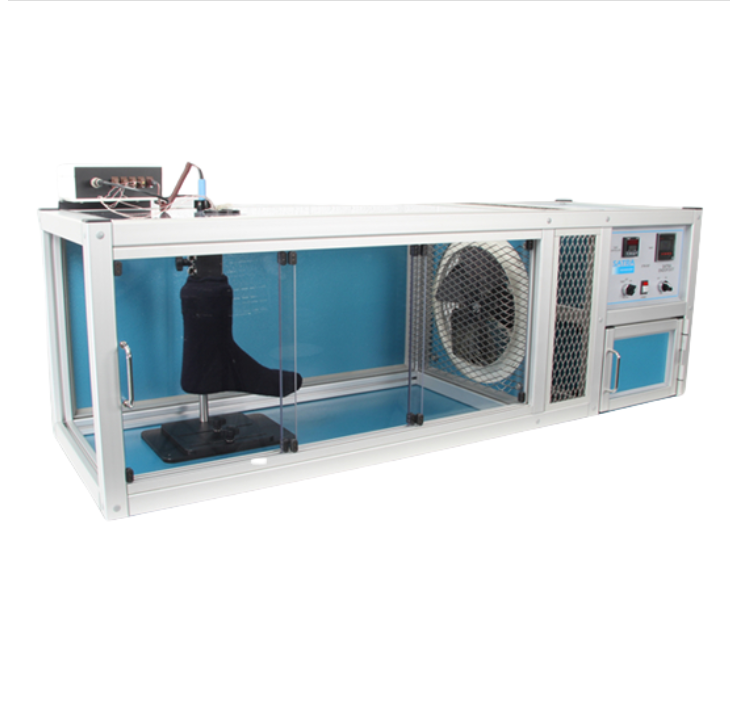
The technological breakthrough of the Whole Shoe Breathability and Thermal Insulation Tester lies in the transformation of the test object—from individual shoe material samples to complete finished footwear. Its core working principle is based on the “thermal foot model”, which creates a dynamic heat and moisture exchange system consisting of a simulated foot, whole shoe, and surrounding environment.
Highly Simulated Thermal Foot Model
The equipment is equipped with a simulated foot made of food-grade silicone, integrating carbon fiber heating elements and a water supply system. The surface is covered with a composite fabric that allows water vapor transmission while preventing liquid water penetration, realistically reproducing the heat generation and sweating characteristics of the human foot.
Intelligent Temperature Control and Sweat Simulation
During breathability testing, the simulated foot is generally maintained at a constant temperature of 38°C and uses a peristaltic pump to simulate human sweat discharge in vapor form. During thermal insulation testing, the system calculates the thermal resistance of the complete shoe by monitoring the electrical power required to maintain the simulated foot at a constant temperature, combined with temperature difference data.
Environmental Simulation Chamber
The tester is equipped with a temperature and humidity-controlled chamber that precisely regulates temperature, relative humidity, and airflow speed. It can simulate different climatic conditions and air convection states during walking, ensuring that test results closely represent real wearing environments.
Main Applications of Whole Shoe Breathability and Thermal Insulation Tester
The Whole Shoe Breathability and Thermal Insulation Tester is mainly used to evaluate the breathability and thermal insulation performance of footwear. By simulating the physiological conditions of human feet under different environmental conditions, the equipment can measure the air permeability and thermal insulation performance of shoes under specified test conditions. This helps footwear manufacturers and designers understand product performance and carry out targeted improvements and optimization.
1. Evaluation of Shoe Breathability
Breathability is one of the important factors affecting footwear comfort. By measuring the air permeability rate of shoes under a specific pressure difference, the tester can evaluate the ventilation performance of footwear.
Accurate breathability testing ensures that shoes maintain sufficient air circulation, helping reduce moisture accumulation, stuffiness, and discomfort caused by poor ventilation during wearing.
2. Evaluation of Thermal Insulation Performance
Thermal insulation performance is essential for maintaining foot warmth in cold environments. By measuring the thermal resistance and moisture resistance of footwear under controlled temperature conditions, the tester can evaluate the insulation capability of shoes.
This ensures that footwear can effectively prevent the penetration of cold air from the external environment and maintain a comfortable temperature around the feet.
3. Quality Control
During footwear manufacturing, the equipment can be used to inspect product quality and verify whether shoes meet design specifications and relevant quality standards.
By comparing the breathability and thermal insulation performance of products from different production batches or manufacturers, potential quality issues can be identified promptly, allowing manufacturers to improve production processes and optimize product consistency.
4. Product Research and Development
During the development of new footwear products, the tester can be used to evaluate the influence of different materials, structures, and designs on breathability and thermal insulation performance.
This enables designers and engineers to optimize footwear structures, select suitable materials, and improve overall wearing comfort and thermal protection performance. The equipment provides accurate data support for product development, quality control, and performance certification.
Functions of Whole Shoe Breathability and Thermal Insulation Tester
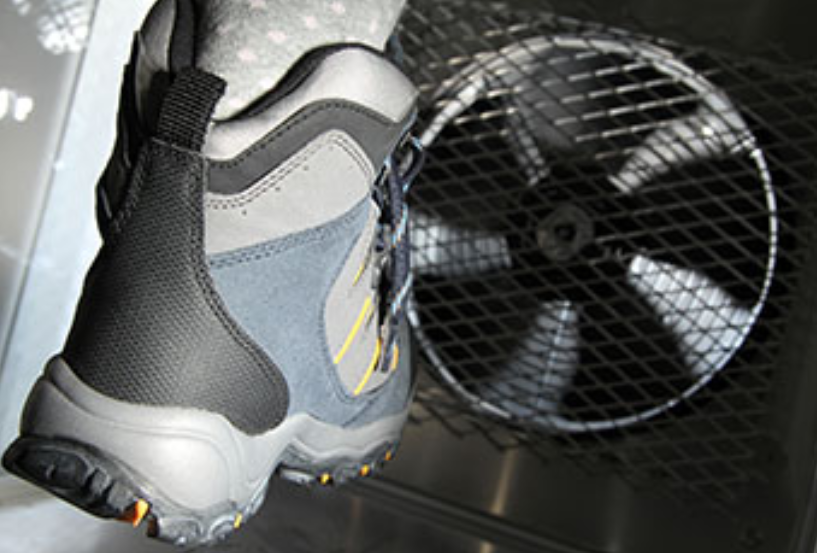
The Whole Shoe Breathability and Thermal Insulation Tester uses highly simulated testing technologies to transform subjective wearing experiences into objective engineering data. It serves as a critical bridge connecting material development, product design, and end-user comfort evaluation.
By taking the complete shoe as the test object and simulating the actual physiological conditions of the human foot inside footwear, the tester mainly provides the following three core functions:
1. Accurate Measurement of Thermal Resistance and Moisture Resistance
By simulating the heat generation and sweating mechanisms of the human foot, the instrument can accurately measure the thermal resistance and moisture resistance of complete footwear.
A higher thermal resistance value indicates a stronger ability of the shoe to prevent heat loss, resulting in better thermal insulation performance. A lower moisture resistance value means less resistance to water vapor transmission through the shoe materials, indicating better breathability and moisture management performance.
2. Establishment of Thermal Protection Ratings and Comfort Evaluation
Based on test data, the tester helps manufacturers establish thermal protection ratings or comfort indexes for footwear products.
For winter footwear, the equipment can objectively evaluate the heat retention capability of shoes under specific low-temperature conditions. For summer footwear and sports shoes, it can assess heat dissipation efficiency under high-temperature and high-humidity environments.
This not only helps consumers make more informed purchasing decisions but also provides reliable data support for product promotion and performance certification by footwear brands.
3. Optimization of Product Development and Material Selection
During footwear research and development, the tester serves as an effective tool for validating new technologies and materials.
R&D engineers can use the equipment to compare the effects of different lining materials (such as wool, aerogel, and advanced thermal insulation fibers), sole thicknesses, and stitching processes on the thermal and moisture performance of complete shoes.
Through rapid testing and iterative optimization, development teams can identify the ideal structural design range, eliminate inefficient manufacturing methods, and create innovative footwear products that combine lightweight construction with outstanding comfort performance.
The Whole Shoe Breathability and Thermal Insulation Tester is not merely a testing instrument but also an important driver for the footwear industry’s transition toward scientific development and standardized production.Through accurate data feedback, it helps manufacturers optimize product design from the source and achieve a transformation from “manufacturing shoes” to “creating comfortable wearing experiences.” In the future, with further integration of sensor technologies and artificial intelligence algorithms, such testing equipment will provide more precise data support for customized footwear development and continue promoting high-quality growth in the footwear industry.
Previous: Which instrument is used to measure the airflow resistance of textiles?
N e x t : How Does Automotive Wire Aging Testing Improve Reliability?
