





What is Incline Impact Tester?
2026/08/10
Share:

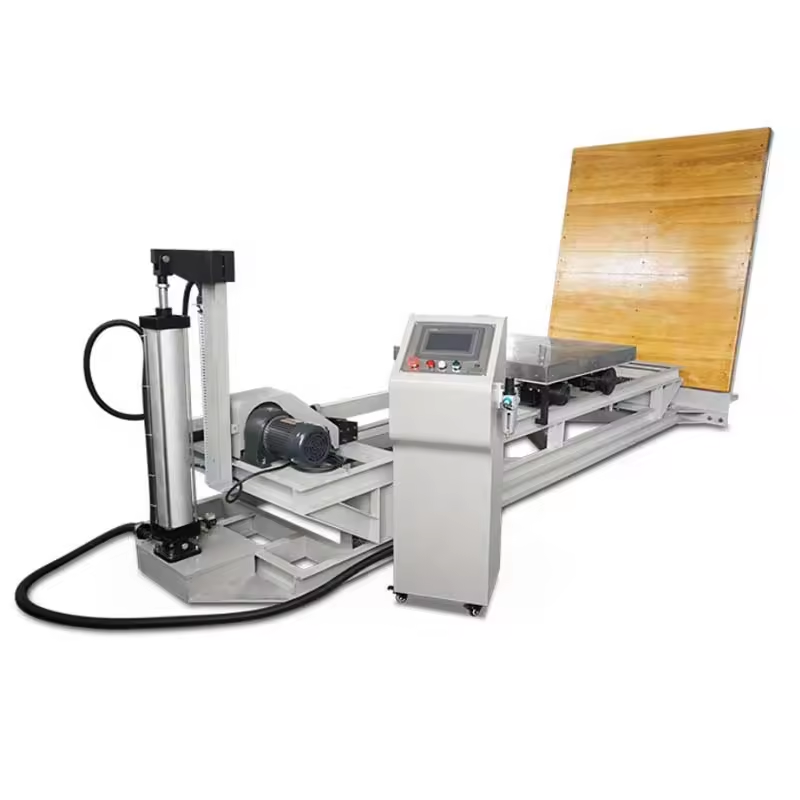
Main Applications of the Inclined Impact Tester
1. Evaluating Material Impact Resistance
By applying impact loads, the Inclined Impact Tester can evaluate material deformation, cracking, fracture, and other failure behaviors under impact conditions. It provides important data for assessing mechanical properties such as impact strength, toughness, and structural durability.
2. Comparing Performance Differences Between Materials
The tester enables comparative evaluation of different materials under the same impact conditions. By analyzing test results, users can select the most suitable materials for specific application requirements.
3. Optimizing Material Design and Manufacturing Processes
Test results obtained from the inclined impact test help material manufacturers and product designers understand key performance characteristics, including:
Strength
Toughness
Wear resistance
Impact durability
This data supports the optimization of material formulations, structural designs, and manufacturing processes, improving overall product quality and performance.
4. Product Quality Control
The Inclined Impact Tester can be used to perform impact resistance tests on materials and products to determine whether they comply with relevant standards and technical requirements.
It plays an important role in:
Ensuring product safety and reliability
Reducing failures and damage during product use
Improving manufacturing quality control
5. Evaluating Packaging Impact Resistance
The inclined impact test simulates the impact damage that product packaging may experience during actual transportation and handling processes. It provides a scientific basis for packaging structure optimization.
The equipment is widely used in:
Research institutes
Universities and technical colleges
Packaging technology testing centers
Packaging material manufacturers
Foreign trade companies
Transportation and logistics departments
6. Applications in Engineering Mechanics, Mining Safety, and Building Structures
In the field of engineering mechanics, the Inclined Impact Tester can be used to study:
Material fracture behavior
Stress corrosion phenomena
Impact failure mechanisms
In mining safety and building structure applications, the equipment is used to evaluate the impact resistance of related materials and structures, helping ensure the safety and reliability of mining facilities and construction systems.
How to Use the Inclined Impact Tester
Preparation Before Testing
1. Equipment Inspection
Before testing, conduct a comprehensive inspection of the key components of the tester, including the impact platform, guide rails, drive mechanism, and locking device, to ensure that there is no damage, looseness, or abnormal condition.
Check the electrical system to ensure that all wiring is intact and free from damage, verify that the equipment grounding is properly connected, and inspect the sensitivity and reliability of the braking system. This helps prevent abnormal issues such as equipment displacement, jamming, or unstable operation during testing.
2. Environmental Inspection
Confirm that the testing environment meets the operating requirements of the equipment:
Ambient temperature: 5°C–35°C
Relative humidity: ≤85%
The test area should remain stable, free from severe vibration and corrosive substances, providing a standardized environment for reliable test operation.
3. Test Product Preparation
Select test products with intact appearance and no visible damage or defects. Assign identification numbers or marks to each specimen for easy recognition, comparison, and recording after testing.
According to the applicable test standards, securely install the product on the equipment platform or dedicated fixture. Ensure firm fixation to prevent loosening or falling off during the impact test.
4. Parameter Setting
According to industry testing standards and the actual service conditions of the product, accurately set the impact speed on the equipment control panel and verify the parameters repeatedly to ensure correctness.
Adjust the impact platform angle through the equipment angle adjustment mechanism and calibrate it with measuring tools to ensure accurate angle positioning.
Finally, set the required number of impact cycles and complete a second verification of all test parameters.
Test Operation
1. No-Load Trial Operation
Before installing the test specimen, start the equipment for a no-load trial run.
During operation, observe the equipment condition carefully and check:
Whether the impact platform moves smoothly
Whether abnormal noise occurs
Whether excessive vibration or jamming exists
Whether the braking system operates properly
If any abnormal condition occurs, stop the equipment immediately and perform troubleshooting. Formal testing should only begin after all issues have been completely resolved.
2. Loaded Impact Testing
After confirming that the no-load operation is normal, check the installation stability of the test product again.
Start the equipment to perform the inclined impact test. During the test, continuously monitor:
Equipment operating status
Product condition changes
Abnormal sounds
Specimen loosening
Product damage or failure
During operation, do not touch any moving parts of the equipment to prevent safety accidents.
Test Completion
After the equipment completes the preset number of impact cycles, it will automatically stop or can be manually stopped if required.
After stopping, allow sufficient time for all moving components to come to a complete standstill before performing the following operations:
Removing the tested product
Recording test data
Cleaning the equipment
Performing routine maintenance checks
Proper shutdown procedures ensure operator safety and maintain the accuracy and service life of the inclined impact tester.
Advantages of the Inclined Impact Tester
The core advantage of the Inclined Impact Tester lies in its ability to accurately reproduce hidden and frequent horizontal and inclined collision conditions that occur during logistics and transportation. It effectively fills the testing gaps between vertical drop tests and vibration tests. By utilizing the physical principle of converting potential energy into kinetic energy, the equipment achieves controlled impact testing with no external power-driven impact source, ensuring high stability and repeatability.
Key Advantages
1. Unique Real-World Impact Simulation
The tester is specifically designed to simulate horizontal inertial impacts commonly occurring during transportation, such as:
Emergency braking impacts
Forklift collisions
Container or vehicle loading and shunting impacts
It overcomes the limitation of traditional drop testers, which cannot effectively reproduce "rear-end collision type" impact scenarios during logistics handling.
2. Natural and Stable Energy Control
The equipment utilizes gravity potential energy converted into kinetic energy to generate impact force. No external hydraulic or pneumatic impact drive system is required.
This ensures:
Smooth impact process
High repeatability
Stable impact energy
It avoids fluctuations caused by artificial power sources and improves test consistency.
3. Safe Adaptation for Heavy Loads
With a low-center-of-gravity trolley design combined with guided rails, the tester can safely accommodate large and heavy products, such as:
Large household appliances
Industrial equipment
Heavy packaged products
The entire package can be tested without disassembly, reducing handling difficulty and improving testing safety.
4. Convenient and Flexible Operation
The equipment features:
Adjustable horizontal test platform for easy specimen installation
Angle adjustment mechanism (pneumatic/hydraulic type) for stepless speed control
Remote operation capability to improve operator safety
Simple installation and maintenance procedures
These features make the tester suitable for various packaging impact evaluation requirements.
5. High Data Reliability
When combined with high-precision speed measurement and acceleration sensors, the tester can accurately capture:
Impact pulse waveform
Peak acceleration values
Impact response characteristics
The obtained data provides reliable failure analysis information for:
Packaging cushioning design optimization
Structural reinforcement improvements
Transportation protection solutions
The Inclined Impact Tester may appear to be a specialized testing instrument, but it plays an essential role in packaging transportation quality assurance. In an environment where product damage rates directly affect business costs and brand reputation, selecting a reliable and professional testing solution provides an additional layer of protection throughout the transportation process. This "silent investment" reflects a company's commitment to product quality, engineering capability, and long-term development.
Previous: How Does Automotive Wire Aging Testing Improve Reliability?
N e x t : the last page
