





How to test a safety helmet?
2026/08/10
Share:

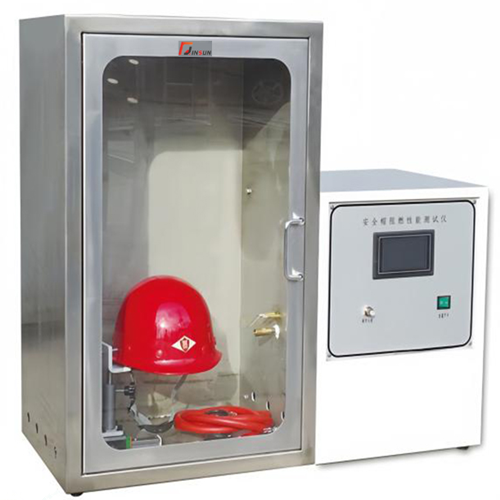
Working Principle of the Safety Helmet Flame Retardant Performance Tester
The Safety Helmet Flame Retardant Performance Tester mainly operates based on the principle of thermal radiation. By simulating high-temperature environments, the tester performs combustion tests on safety helmet materials to evaluate their flame-retardant performance.
The tester generally consists of the following components:
Heating source
Temperature control system
Sample holding device
Gas supply system
Data acquisition and analysis system
During testing, the safety helmet specimen is securely positioned in the sample holding device. The heating source releases a preset level of thermal radiation to simulate the high-temperature conditions encountered in a fire environment.
The temperature control system ensures that the heating process remains stable and accurately controlled. Meanwhile, the data acquisition and analysis system continuously records and analyzes key parameters during the combustion process, including:
Temperature changes
Exposure time
Mass loss
Other combustion-related characteristics
Based on the collected data, the tester provides a comprehensive evaluation of the flame retardant performance of safety helmets, helping determine whether the helmet materials can effectively resist flame spread and maintain protective performance under high-temperature conditions.
Testing Methods for Flame Retardant Performance of Safety Helmets
The testing methods for the flame retardant performance of safety helmets mainly include the following approaches. These methods aim to comprehensively evaluate the behavior of helmet materials under flame exposure from different perspectives, ensuring that the materials can effectively delay or prevent combustion during actual fire conditions.
1. Flame Propagation Rate Test
In this test, a safety helmet material specimen is exposed to a standard flame source under specified conditions. The time or distance required for the flame to spread from one end of the specimen to the other is measured to evaluate the flame retardant performance of the material.
The key purpose of this method is to quantify the flame spread rate. A lower flame propagation rate indicates that the material has a stronger ability to suppress flame expansion, providing a longer escape or rescue window for the wearer during a fire emergency.
2. Burning Dripping Material Test
During the test, the formation of dripping materials during combustion is observed and recorded, including whether the droplets continue burning after separation from the specimen.
This test is critical because even if the material itself burns slowly, continuously burning molten droplets may ignite clothing or other combustible materials underneath, increasing the risk of secondary fires and causing more severe hazards.
3. Heat Release Rate Test
A professional testing system is used to measure the amount of heat released by safety helmet materials during combustion, evaluating their contribution to fire development.
The heat release rate is one of the key parameters for assessing fire hazards. A lower heat release rate means the material releases less energy during combustion, contributes less to temperature rise in the fire environment, and helps limit the overall development of the fire.
4. Mass Loss Test
This method evaluates the thermal stability and combustion characteristics of safety helmet materials by measuring the mass difference before and after combustion.
Through accurate weighing, the mass loss rate during thermal decomposition or combustion can be calculated. This parameter directly reflects:
Thermal degradation resistance
Combustion efficiency
Material stability under heat exposure
It provides fundamental data for evaluating the effectiveness of the material's flame-retardant performance.
Performance Features of the Safety Helmet Flame Retardant Performance Tester
1. Accurate Testing Method
The Safety Helmet Flame Retardant Performance Tester adopts standardized flame-retardant testing methods to comprehensively and accurately evaluate the flame resistance performance of safety helmets by simulating fire environments.
During the test process, the instrument can precisely control key parameters such as flame intensity and exposure duration, ensuring the accuracy, reliability, and repeatability of test results.
2. Advanced Control System
The tester is equipped with an advanced control system that enables automated operation and intelligent control.
After setting the required test parameters, the instrument can automatically complete the entire testing process while recording and analyzing test data in real time.
This intelligent control mode provides:
Improved testing efficiency
Reduced operator influence
More stable test conditions
Higher consistency and repeatability of results
3. High-Quality Materials and Manufacturing Process
The tester is manufactured using high-quality materials and advanced production processes to maintain high precision and stable performance during long-term operation.
Core components, including:
Flame burner head
Timer system
Temperature measurement device
Sample fixture
are carefully selected, inspected, and tested to ensure that their performance meets relevant testing standard requirements.
The robust design and reliable components ensure long-term operational stability and provide accurate evaluation of safety helmet flame-retardant performance.
Importance of Flame Retardant Performance Testing for Safety Helmets
1. Ensuring Personnel Safety
In emergency situations such as fires, excellent flame-retardant performance can effectively reduce heat transfer and protect the wearer's head from burns. This helps improve the chances of survival by providing additional protection during hazardous conditions.
2. Improving Workplace Safety
By regularly testing the flame-retardant performance of safety helmets, companies can identify and replace unqualified products in a timely manner.
This helps:
Reduce the risk of fire-related accidents
Ensure reliable protection for workers
Improve overall workplace safety management
3. Meeting Regulatory Requirements
Countries and regions have strict occupational safety regulations requiring the use of compliant personal protective equipment.
Through flame-retardant performance testing, manufacturers and users can verify that safety helmets meet relevant standards and regulatory requirements, reducing potential legal risks and responsibilities.
4. Promoting Technological Innovation
With continuous advancements in material science, the development and application of flame-retardant materials are becoming increasingly important.
Flame-retardant performance testing of safety helmets provides essential data for:
New material development
Product improvement
Technology optimization
It promotes continuous upgrading and innovation of safety helmet products.
Overall, the Safety Helmet Flame Retardant Performance Tester is a critical instrument for protecting workers' lives, improving enterprise safety management, and promoting technological advancement within the industry.Its importance is undeniable and deserves continuous attention and further research. For any requirements regarding the instrument’s technical specifications, operation procedures, testing standards, or purchasing solutions, professional technical support and customized service solutions can be provided to meet specific application needs.
Previous: What is Incline Impact Tester?
N e x t : the last page
