





What is a guarded heat flow meter?
2026/08/11
Share:

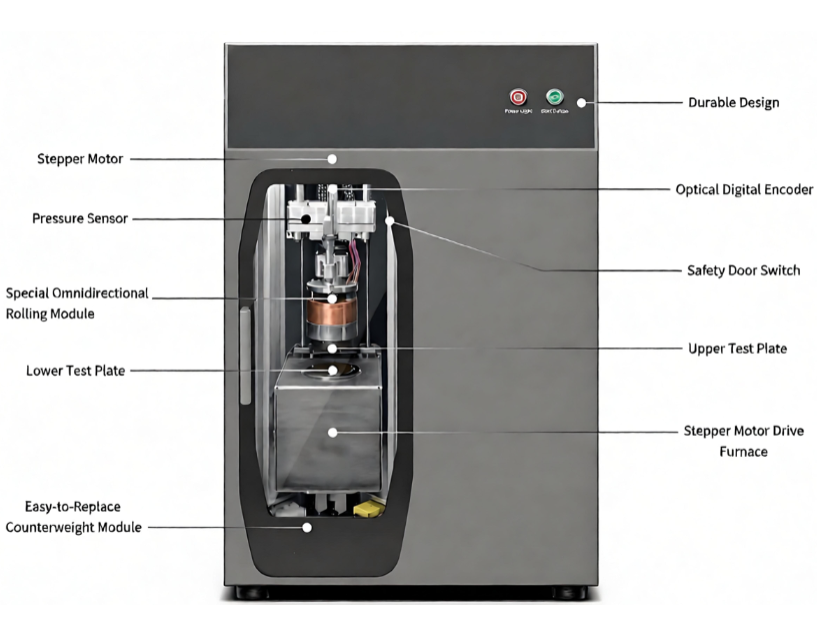
Functions of the Protective Heat Flow Meter
The Protective Heat Flow Meter is primarily designed for measuring the thermal conductivity (thermal conductance coefficient) and thermal resistance of solid materials. It is widely used in the research, development, and quality control of metals, polymers, composite materials, and paste-like materials.
By simulating actual heat transfer conditions, the instrument provides reliable data support for evaluating the thermal performance of materials.
1. Core Measurement Functions
Accurate Measurement of Thermal Conductivity and Thermal Resistance
The core function of the Protective Heat Flow Meter is based on Fourier’s law of heat conduction. A stable temperature gradient is established across both sides of the specimen, and the thermal conductivity is calculated by measuring the heat flux passing through the sample.
The instrument can directly output the material’s thermal resistance value (R-value) and further calculate the corresponding thermal conductivity (λ).
This measurement method is particularly suitable for non-homogeneous materials, as it can accurately reflect the stable heat transfer performance of materials along the thickness direction.
Thermal Performance Characterization Across a Wide Temperature Range
Modern Protective Heat Flow Meters typically support a wide temperature testing range, such as -20°C to 300°C.
This enables the instrument to evaluate not only material performance under normal ambient conditions but also the thermal stability of materials in high-temperature and low-temperature environments.
Through programmable temperature control, users can set different average temperature points and obtain thermal property variation curves of materials across different temperature ranges.
2. Intelligent Operation and Control Functions
Automatic Pressure and Thickness Control
For compressible materials such as foams, thermal insulation cotton, and thermal interface materials (TIMs), the Protective Heat Flow Meter is equipped with an advanced stepper motor control system.
Users can preset parameters such as:
Sample thickness
Applied pressure
Compression force
through the software. The instrument automatically clamps the specimen until the preset conditions are reached, ensuring optimal contact between the sample and testing plates.
This effectively eliminates measurement errors caused by contact thermal resistance.
For rigid materials, the system automatically optimizes the clamping force to ensure close contact and stable testing conditions.
High-Precision Data Acquisition and Analysis
The instrument integrates multiple high-resolution thermocouples and digital optical encoders to monitor:
Temperature variations of the upper and lower testing plates
Small changes in sample thickness
in real time, with thickness measurement accuracy up to 0.0254 mm.
The supporting Windows-based operation software enables fully automated testing procedures, including:
Temperature step setting
Data recording
Calibration verification
Test report generation
The software can also automatically perform instrument constant calibration, ensuring measurement accuracy within ±2%.
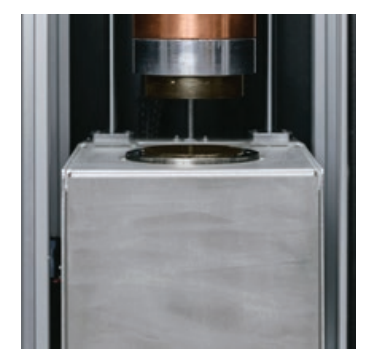
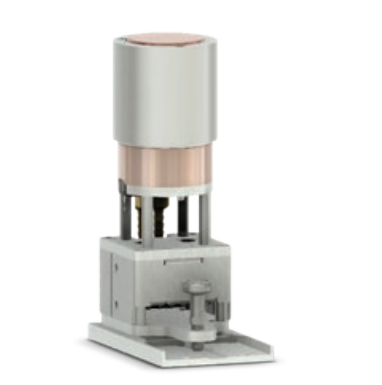
Main Technical Features of the Protective Heat Flow Meter
1. Wide Temperature Range Testing Capability
Typical Protective Heat Flow Meters feature a programmable average temperature range of -20°C to 300°C (some models can reach 310°C), enabling simulation and evaluation of material thermal behavior under various environmental temperature conditions.
This wide temperature capability allows the instrument to meet the testing requirements of a broad range of materials, from low-temperature insulation materials to high-temperature engineering polymers, providing comprehensive thermal performance characterization.
2. High-Precision Automated Control
Modern Protective Heat Flow Meters adopt advanced motor-driven control systems to replace traditional pneumatic mechanisms, achieving automatic and precise control of sample thickness, applied pressure, and compression force.
Thickness Measurement:
The system utilizes a digital optical encoder for accurate thickness measurement, with a measurement accuracy of up to 0.0254 mm.
Pressure Control:
The instrument integrates a feedback-controlled pressure sensor and stepper motor system to ensure close contact between the specimen and testing plates.
This effectively reduces errors caused by contact thermal resistance and is particularly suitable for testing compressible materials such as:
Foams
Thermal insulation materials
Thermal interface materials
Paste-like materials
3. Multi-Sensor Collaborative Monitoring
The instrument is equipped with multiple high-resolution thermocouples with a resolution of 0.01°C, which are strategically positioned near the:
Heating plate
Cooling plate
Specimen surface
These sensors accurately capture temperature distribution and variations during testing, ensuring precise thermal performance evaluation.
In addition, the heat flux module features a tool-free replacement design, significantly improving maintenance efficiency and reducing downtime during instrument operation.The combination of wide temperature capability, automated precision control, and multi-sensor monitoring technology enables the Protective Heat Flow Meter to deliver highly accurate and repeatable measurements of thermal conductivity and thermal resistance for a wide range of solid materials.
Application Scenarios of the Protective Heat Flow Meter
The Protective Heat Flow Meter is primarily used for steady-state thermal property testing of materials with medium and low thermal conductivity. It is widely applied in the research, development, and quality control processes of industries such as building insulation, electronic thermal management, aerospace engineering, and chemical materials.
1. Building and Construction Materials Industry
The instrument is used to evaluate the thermal insulation performance of materials such as:
Rock wool
Foam plastics
Aerogels
It helps optimize building energy-saving designs and verify the effectiveness of insulation layers in structures such as walls and roofs.
By accurately measuring thermal conductivity and thermal resistance, manufacturers and engineers can improve insulation solutions and enhance building energy efficiency.
2. Electronics and New Energy Applications
In the fields of electronics and renewable energy, the Protective Heat Flow Meter is used to evaluate the heat transfer performance of:
Thermal interface materials (TIMs)
Thermal pads
Battery module materials
Heat dissipation components
The test results support the design of thermal management solutions for electronic devices, battery systems, and energy storage equipment, while also assisting in thermal failure analysis and performance optimization.
3. Aerospace and Advanced Materials
The instrument is used to characterize the thermal conductivity properties of advanced materials, including:
Composite materials
Ceramics
Rubber materials
High-temperature protective coatings
These measurements help ensure the reliability and effectiveness of thermal protection systems used in aircraft, spacecraft, and other high-performance applications under extreme environmental conditions.
4. Chemical and Polymer Material Research
The Protective Heat Flow Meter can analyze heat transfer behavior in materials such as:
Plastics
Rubber
Paste-like materials
Other polymer-based materials
The obtained thermal property data provides guidance for manufacturing process optimization and the development of new material formulations.
5. Scientific Research and Metrology Calibration
As a fundamental thermal measurement instrument in laboratories, the Protective Heat Flow Meter is widely used for:
Calibration of heat flow sensors
Verification of theoretical thermal models
Fundamental research on material thermophysical properties
It provides reliable experimental data for academic research institutions, testing laboratories, and material development organizations.
Conclusion
With its advantages of high-precision steady-state measurement, convenient automated control, and broad material compatibility, the Protective Heat Flow Meter has become an essential instrument in the field of thermal property characterization.It not only provides accurate measurements of thermal conductivity and thermal resistance, but also simulates real operating conditions involving different pressure and temperature environments, offering scientific support for new material development, product optimization, and quality control.With continuous advancements in thermal measurement technology, the Protective Heat Flow Meter will play an increasingly important role in the characterization of complex materials and the development of advanced thermal management solutions.
Previous: What is a guidewire tester?
N e x t : the last page
