





How Does a Leather Low-Temperature Flexing Tester Work?
2026/08/13
Share:

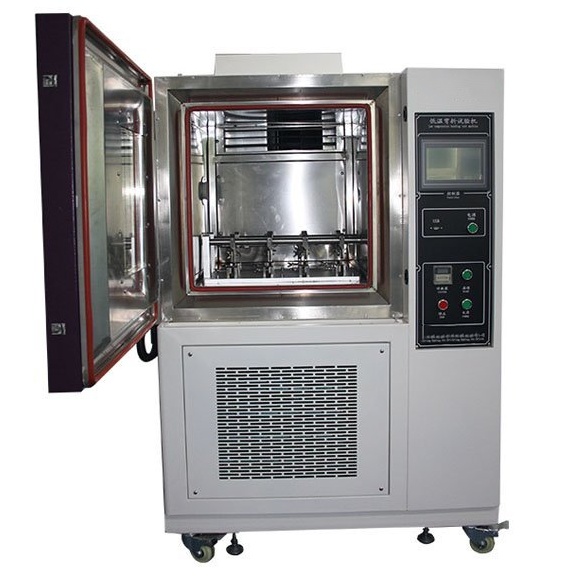
System Components of the Leather Low-Temperature Flexing Tester
The Leather Low-Temperature Flexing Tester mainly consists of five core subsystems: the refrigeration and temperature control system, mechanical transmission and flexing system, specimen clamping system, data acquisition and control system, and safety protection system.
Core System Components
1. Refrigeration and Temperature Control System:
Uses a fully enclosed compressor with air-cooled heat dissipation and rigid foam/glass wool insulation. A PID or BTC temperature control algorithm, combined with a Pt100 temperature sensor, enables precise temperature control from room temperature down to -30°C, typically with an accuracy of ±0.3°C to ±0.5°C.
2. Mechanical Transmission and Flexing System:
Driven by a servo motor or a beltless geared reduction motor. The reduction mechanism drives the movable fixture in reciprocating motion, allowing precise adjustment of the flexing angle and frequency.
3. Specimen Clamping System:
Features a modular stainless-steel design consisting of fixed and movable fixtures. Specialized accessories can be configured for different test requirements, such as leather flex resistance testing and finished footwear flexing tests.
4. Data Acquisition and Control System:
Integrates a PLC or microcomputer controller with a color touchscreen to monitor and record parameters such as flexing cycles and temperature curves in real time. It supports automatic counting, preset test termination, and data export.
5. Safety Protection System:
Equipped with multiple safety mechanisms, including over-temperature protection, overload/leakage circuit protection, phase-loss protection, and automatic shutdown in the event of specimen or fixture jamming, ensuring safe operation of both the equipment and test specimens.
Operating Procedure of the Leather Low-Temperature Flexing Tester
1. Specimen Preparation
Cut the leather specimens to the specified dimensions and condition them according to the test requirements. Ensure that the specimen surface is flat and free from damage. Precondition the specimens strictly in accordance with the applicable ISO, ASTM, or national standards under standard temperature and humidity conditions for sufficient time to minimize the influence of environmental factors on the test results.
2. Specimen Clamping
Fold the specimen in half with the test surface facing inward and align the long edges. Secure the specimen in the upper and lower fixtures, adjusting it to a vertical position with appropriate tension. Ensure that the specimen edges are properly aligned with the fixture edges to prevent skewing or wrinkling. Adjust the fixture spacing so that the specimen remains naturally straight without additional tensile force, ensuring uniform flexing stress distribution.
3. Parameter Setting
Set the required low-temperature value and preset number of flexing cycles on the control panel. Confirm that the flexing angle and frequency are within the specified standard range. Precisely set the test temperature and total number of flexing cycles according to the applicable test standard, and verify that the movement amplitude and reciprocating frequency of the flexing mechanism meet the required specifications.
4. Cooling and Temperature Stabilization
Start the refrigeration system and allow the chamber temperature to reach the preset value and remain stable for the specified period, ensuring that the specimen is sufficiently cooled. Monitor the temperature curve during cooling to ensure uniform and stable chamber temperature. After reaching the preset temperature, the specimen is typically maintained at the target temperature for an additional 15–30 minutes to ensure uniform temperature throughout the specimen before testing.
5. Flexing Test
Start the tester. The movable fixture drives the specimen through repeated flexing while the instrument automatically counts the flexing cycles. The tester stops automatically when the preset number of cycles is reached. During testing, the equipment should operate smoothly without abnormal vibration or noise. The automatic counting system records the number of flexing cycles in real time and automatically stops the test at the preset value while saving relevant temperature and cycle data.
6. Result Evaluation
Remove the specimen and inspect the flexed area under adequate lighting using a magnifying glass. Record whether cracks, grain cracking, coating peeling, or other damage has occurred. Inspection should be performed under a standard light source or sufficient natural light. Carefully examine the flexing line and surrounding areas using the specified magnification, record the type, length, and severity of any defects, and determine the test grade or pass/fail result according to the applicable standard.
Precautions for the Leather Low-Temperature Flexing Tester
Clean the dust from the radiator regularly to maintain proper ventilation and heat dissipation.
Keep the tester clean at all times. Before and after each test, wipe the machine with a cotton cloth. Remove any water droplets inside the chamber to prevent the internal steel plates and fixtures from rusting during long periods of non-use.
Clean the condenser and evaporator of the refrigeration system regularly to ensure efficient cooling and extend the service life of the compressor.
Check the motor and reduction gearbox regularly to ensure that they are operating properly.
Check all switches and controls to ensure that the counter functions correctly and records the flexing cycles accurately.
Turn on the fan before starting the compressor. Otherwise, the compressor may not start properly.
Avoid starting and stopping the compressor too frequently to prolong its service life. If the compressor needs to be restarted, maintain an interval of at least 3 minutes between two consecutive starts.
Prevent paper, dust, or other foreign objects from being sucked into or covering the radiator, as this may restrict airflow and affect heat dissipation.

Importance of the Leather Low-Temperature Flexing Tester
The Leather Low-Temperature Flexing Tester is an important standardized instrument for evaluating the resistance of leather and leather products to low-temperature cracking and flexural fatigue. It provides critical data for assessing product safety, service life, and compliance under cold-weather conditions.
Core Importance and Necessity
1. Identify Low-Temperature Brittleness Risks
At low temperatures, oils and fats in leather may solidify and collagen fibers may contract. Leather that performs well at room temperature may develop cracks after repeated flexing at -20°C to -30°C. By combining low temperature with dynamic flexing, the tester simulates actual failure conditions and helps identify risks that static low-temperature tests may overlook.
2. Ensure Product Safety and Service Life
For products such as snow boots, automotive seats, and outdoor bags, the tester helps prevent safety risks and premature failure caused by leather hardening and cracking, such as split shoe uppers or peeling seat surfaces. It serves as an important quality-control safeguard throughout the supply chain.
3. Support Compliance and Market Access
Testing according to applicable domestic and international standards provides essential performance data for quality inspection, product certification, and export requirements.
4. Support Material and Process Optimization
Test results can quantify the effects of different tanning processes, coating formulations, and plasticizer ratios under extremely cold conditions. This provides reliable data for developing cold-resistant leather materials and reduces unnecessary trial and error during R&D.
With advances in materials science, flexing performance testing is expected to develop toward more extreme temperatures, more complex operating conditions, and higher testing throughput. Digital twin technology may also enable a closed-loop development process combining virtual testing with physical validation, further improving the performance of leather and textile materials.For manufacturers, establishing a comprehensive testing database and integrating it with materials genome engineering could become an important approach to improving product development efficiency and long-term market competitiveness.
Previous: What is a flame test instrument?
N e x t : the last page
