





How to test static strength?
2026/08/13
Share:

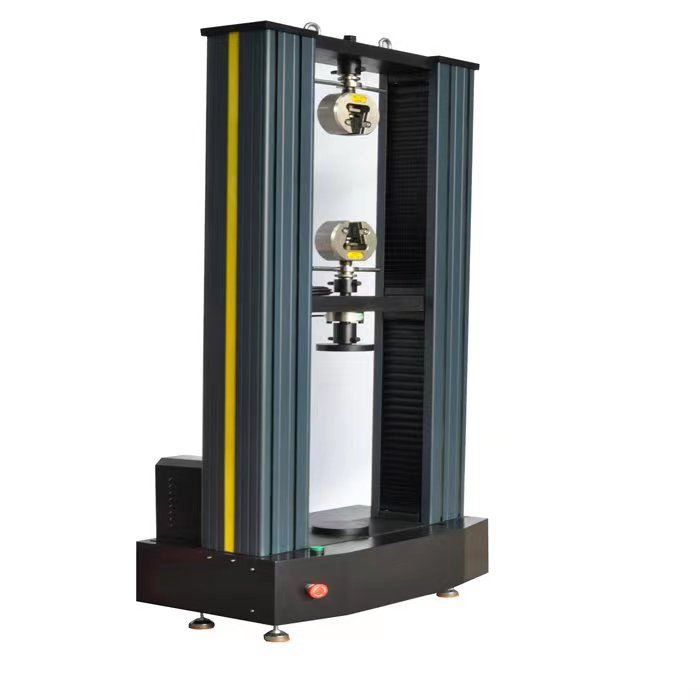
Working Principle of the Automotive Seat Static Load Test Bench
The core working principle of the Automotive Seat Static Load Test Bench is to simulate the pressure exerted on a seat during static occupancy. The system applies a constant or gradually increasing load to the seat through a mechanical loading mechanism to evaluate the strength and permanent deformation of the seat frame, recliner mechanism, and cushioning materials.
The testing process can be generally understood in three steps:
1. Precise Positioning and Fixing
The seat is securely mounted on the test base. A servo motor drives the mechanical arm to move the loading head, which simulates the occupant's buttocks or back, precisely to the designated load-bearing position of the seat. This ensures that the test position and loading angle correspond to the actual seating posture.
2. Closed-Loop Load Control
Once the test begins, high-precision sensors continuously monitor the applied load in real time. The control system uses digital PID technology to automatically adjust the motor output. If the applied force is below the target value, the loading mechanism increases the load; if it exceeds the target value, the mechanism automatically reduces it. This ensures that the applied load remains stable at the preset value or increases smoothly at the specified rate, minimizing impact-related interference.
3. Data Feedback and Safety Protection
During loading, displacement sensors simultaneously record the deformation or compression of the seat. The system generates a real-time load-displacement curve to analyze the relationship between applied force and deformation.
If the system detects structural failure, yielding, excessive deformation, or a load exceeding the preset safety limit, the overload protection system is automatically activated and the test is stopped to protect both the specimen and the equipment.
The entire process can be completed automatically by the computer, including loading, load holding, data acquisition, and analysis, without requiring manual readings. The test bench is mainly used to evaluate whether automotive seats are susceptible to collapse, excessive permanent deformation, or structural failure under prolonged static loading conditions.
Technical Advantages of the Automotive Seat Static Load Test Bench
The key technical advantages of the Automotive Seat Static Load Test Bench are mainly reflected in its flexible loading capability, precise control, intelligent data processing, and modular design. These features enable efficient and reliable evaluation of automotive seat safety, structural strength, and durability.
1. Flexible Loading for Realistic Force Simulation
The test bench provides multi-axis adjustment capabilities, allowing the loading direction and angle to be adjusted according to specific test requirements. Whether applying a vertical downward load or a rearward force to the seat back, the loading position can be precisely adjusted through electric or manual mechanisms.
This flexible design enables test conditions to closely reproduce the complex loading conditions experienced by occupants during actual use, providing a more realistic evaluation of seat structural strength.
2. Precise and Stable Control with Specimen Protection
The system uses advanced servo drive and closed-loop control technology as one of its key features. It can smoothly switch between displacement control and load control modes, ensuring accurate and stable force application.
Multiple safety protection mechanisms, including limit protection and overload protection, are integrated into the system. If abnormal loading or a condition beyond the preset range is detected, the system automatically stops the test, helping prevent equipment damage caused by operating errors or sudden specimen failure.
3. Intelligent Data Processing and Visualization
The accompanying software automates and visualizes the testing process. Test data are automatically stored in a database, eliminating the need for manual recording and reducing the possibility of human error.
The software supports overlay comparison of curves from multiple tests, automatic report generation, and data export in commonly used formats. This allows engineers to perform convenient comparative analysis and detailed evaluation. A graphical interface provides an intuitive display of load and deformation changes, significantly improving R&D and quality-control efficiency.
4. Modular Design for Easy Maintenance and Upgrades
The hardware adopts a modular structural design, with standardized functional units. When a component requires maintenance or replacement, the corresponding module can be replaced without dismantling the entire machine.
This design helps reduce maintenance costs, improve component interchangeability, and extend equipment service life, while providing greater flexibility to meet the rapidly evolving testing requirements of the automotive industry.
Precautions for Using the Automotive Seat Static Load Test Bench
The key principles for operating the Automotive Seat Static Load Test Bench are: secure fixation, accurate positioning, smooth loading and unloading, personnel safety, and regular calibration.
1. Preparation Before Testing
Specimen Fixation:
Firmly clamp and lock the seat mounting brackets to prevent the seat from loosening, shifting, or falling during testing.
Zero-Point Check:
Before operation, confirm that the force and displacement sensors are properly zeroed. Check that the limit switches and emergency-stop button are functioning correctly.
Loading Position Adjustment:
Adjust the loading head manually or electrically to ensure that the loading point is accurately aligned with the center of the seat's intended load-bearing area, such as the center of the seat back or seat cushion, to avoid eccentric loading.
Work Area Inspection:
Remove all unnecessary objects from the test area. Ensure that no unauthorized personnel are within the operating area and that the protective guard or enclosure is properly closed.
2. Key Points During Testing
Apply Load Smoothly:
Apply the load gradually after starting the test. Impact or sudden loading is strictly prohibited. Monitor the test curve in real time and pause the test immediately if abnormal fluctuations are observed.
Do Not Disable Overload Protection:
Always rely on the equipment's automatic limit and overload shutdown functions. Never manually bypass or disable any safety protection system.
Avoid Manual Intervention:
Never hold or touch the seat or loading head while the equipment is operating, as this may cause crushing or other injuries. Maintain a safe distance during testing.
Ensure Proper Loading Angle:
If the loading angle needs to be changed, stop the equipment completely before making any adjustment. Confirm that the mechanism is securely locked before restarting the test.
3. Post-Test Operation and Maintenance
Unload Gradually:
After the test, slowly release the applied load until it returns to zero before removing the seat. This helps prevent sudden rebound forces from damaging the load sensor or other components.
Save Test Data:
Export the test curves and results promptly. Verify the data before archiving them for subsequent analysis and comparison.
Regular Calibration:
Calibrate the force sensors and displacement measuring devices at regular intervals to maintain measurement accuracy and reliability.
Cleaning and Maintenance:
Remove dust from the guide rails and check the lubrication condition of the lead screw. If the equipment will remain unused for an extended period, disconnect the power supply and cover the machine with a dust-proof cover.
Conclusion
As a critical testing instrument for automotive seat evaluation, the stability of the Automotive Seat Static Load Test Bench and the accuracy of its test data are essential for ensuring seat quality and safety. Proper operation, regular calibration, and routine maintenance are therefore important for maintaining reliable testing performance.
Previous: How Does a Leather Low-Temperature Flexing Tester Work?
N e x t : the last page
