





What equipment is needed for a leak test?
2026/08/13
Share:

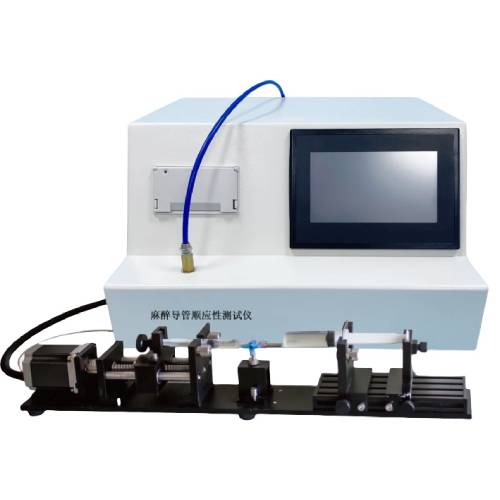
Why Are These Two Parameters Tested
To understand the role of the Catheter Leakage and Compliance Tester, it is first necessary to understand how leakage and compliance can affect patient safety.
1. Leakage Testing
Leakage testing focuses on the sealing performance of the catheter or tubing system. If a breathing circuit or infusion tube has gaps, gas or liquid may gradually escape.
For patients receiving anesthesia, excessive leakage in the breathing circuit can reduce the delivered anesthetic concentration and compromise the intended anesthetic effect. For patients dependent on ventilatory support, leakage can reduce the amount of gas actually delivered to the patient, potentially affecting respiratory support.
In addition, leakage of anesthetic gases can contaminate the operating-room environment and increase occupational exposure risks for medical staff.
2. Compliance Testing
Compliance testing evaluates the elasticity or volume expansion characteristics of the tubing under pressure. In simple terms, it determines whether the tubing expands excessively when subjected to pressure.
If the tubing has excessively high compliance, part of the gas delivered by a ventilator may be absorbed by the expansion of the tubing itself rather than reaching the patient. As a result, the actual volume delivered to the patient's lungs may be lower than the set value.
This difference can be particularly important for infants, neonates, and critically ill patients, whose respiratory systems are more sensitive to variations in delivered ventilation.
Therefore, testing both leakage and compliance helps evaluate the integrity and performance of catheter and tubing systems and provides important quality-control data for medical device manufacturers and healthcare applications.
How Does the Catheter Leakage and Compliance Tester Work
The working principle of the Catheter Leakage and Compliance Tester can be summarized as “simulation and sensing.” Rather than simply checking whether a catheter is damaged, the instrument simulates conditions similar to those encountered during actual clinical use to evaluate catheter performance more accurately.
1. Leakage Test
During the leakage test, both ends of the catheter are sealed, and clean air is introduced into the catheter to establish and maintain a specified pressure.
High-sensitivity pressure sensors continuously monitor changes in pressure. If a small leak is present, the internal pressure will gradually decrease. The instrument automatically supplies additional air to maintain the preset pressure, and the amount of air required to compensate for the pressure loss is used to determine the leakage rate.
This allows the system to detect even very small leaks and provides quantitative data for evaluating the sealing integrity of the catheter.
2. Compliance Test
During the compliance test, the catheter is first confirmed to be free from leakage. Air is then introduced into the catheter until the specified pressure is reached, and the additional volume of air required due to expansion of the catheter is measured.
In simple terms, this evaluates how much the catheter expands under pressure and determines whether its deformation characteristics are within the specified range.
The entire testing process is automatically controlled by the intelligent control system, including pressure regulation, data acquisition, measurement, and result calculation, helping reduce errors caused by manual operation and improving the consistency and repeatability of test results.
Strict Standards and Testing Procedures
To ensure the authority, reliability, and reproducibility of test results, the Catheter Leakage and Compliance Tester is designed to comply with relevant medical industry standards and regulatory requirements. Each test follows a scientific, rigorous, and standardized procedure rather than being performed arbitrarily.
1. Conditioning
First, the catheter specimen is placed in a controlled temperature and humidity environment close to human body conditions and conditioned for a sufficient period.
This step helps eliminate internal stresses caused by temperature fluctuations during storage or transportation, allowing the catheter material to return to a stable physical state. It also ensures that the subsequent test conditions more closely represent actual clinical use, resulting in more representative performance data.
2. Standardized Installation
After conditioning, the catheter is securely installed on the test fixture in a natural, stress-free position.
The specimen must not be subjected to unnecessary twisting, stretching, or compression during installation. Such external forces could introduce additional deformation or stress and interfere with the objective evaluation of the catheter's sealing performance and compliance. Proper installation therefore helps ensure accurate and reliable test results.
3. Sequential Leakage and Compliance Testing
The test follows a leakage-first, compliance-second sequence.
The leakage test is performed first to verify that the catheter has adequate sealing integrity and is free from unacceptable leakage. Only after the leakage requirements are satisfied is the compliance test performed.
This sequence is important because leakage during pressure testing can cause continuous loss of air, making it difficult to establish a stable pressure condition and potentially distorting the measured compliance, including the catheter's pressure-induced volume expansion. Sequential testing therefore helps ensure the validity of the core test data.
4. Automatic Evaluation
After testing is completed, the instrument's integrated analysis system automatically collects and calculates the relevant parameters and compares the results with the preset acceptance limits specified by the applicable standards.
The system can provide a clear “Pass” or “Fail” determination, reducing the risk of subjective interpretation and manual judgment errors.
Test data, curves, and evaluation results can also be recorded and stored electronically, allowing the system to generate a standardized, traceable test report for quality control, product verification, and regulatory review.
The Last Line of Defense for Patient Safety
From the quality-control workshops of medical device manufacturers to the laboratories of third-party testing organizations, the Catheter Leakage and Compliance Tester plays an important role in ensuring catheter safety and performance. It is not only a valuable tool for manufacturers to improve product quality and optimize manufacturing processes, but also an important testing instrument for regulatory and inspection organizations to verify the safety and reliability of medical devices before they enter the market.
Every catheter that successfully passes the required tests represents an additional safeguard for patient safety. Through precise pressure control, sensitive leakage detection, and accurate flow monitoring, the tester helps identify potential risks at an early stage and ensures that gases and medical fluids can be delivered as intended through the catheter system.
As an important part of the medical device quality-control process, the Catheter Leakage and Compliance Tester provides reliable technical support for maintaining the integrity, performance, and safety of the pathways through which critical gases and fluids are delivered to patients.
Previous: How to test static strength?
N e x t : the last page
