





What Equipment Detects Gases from Lithium Battery Thermal Runaway?
2026/08/14
Share:

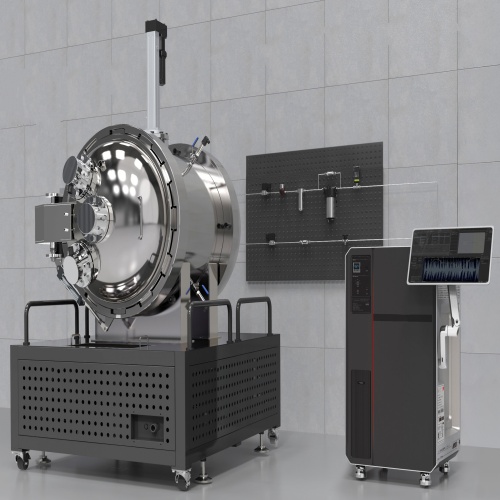
Challenges of Conventional Detection and the Solution
The thermal runaway process of lithium-ion batteries is highly complex, requiring detection technologies to capture the transient dynamics of gas release in real time. However, conventional approaches often rely on offline laboratory analysis, which not only involves delayed data acquisition and complicated procedures but also fails to reproduce the continuous changes in gas concentrations throughout the thermal runaway process. As a result, risk warnings may be delayed or ineffective, while safety and protection system designs lack sufficient data support and may become largely speculative.
Fellman’s solution directly addresses these industry challenges:
From “fragmented data” to “full-cycle monitoring”: Through controlled closed-environment simulation and online monitoring, the system continuously records gas data throughout the entire thermal runaway process, from initiation and propagation to escalation.
From “manual intervention” to an “intelligent closed loop”: The system automatically completes the entire process of gas sampling, pretreatment, and analysis, minimizing human error while significantly improving testing efficiency and result reliability.
Technical Principle: Four Steps for Precise Monitoring
1. Sealed Test Environment Setup
The battery under test is placed inside a highly sealed test chamber to create a controlled environment that closely simulates the battery’s actual operating conditions.
2. Gas Pretreatment and Purification
The circulating sampling gas undergoes efficient filtration and dehumidification to remove impurities and moisture that could interfere with analysis, thereby ensuring measurement accuracy and reliability.
3. Intelligent Triggering and Real-Time Analysis
Thermal runaway is initiated through controlled heating or mechanical triggering. At the same time, an FTIR spectrometer analyzes the composition of the released gases, while the test data is transmitted in real time to the data storage and display modules.
4. In-Depth Data Analysis
After the test, the system automatically generates a multidimensional analysis report, helping researchers analyze the evolution of thermal runaway and optimize battery safety and protection strategies.
Core Product Advantages: Real-Time, Accurate, and Efficient
1. Real-Time Online Monitoring for Early Risk Detection
Conventional offline testing requires manual sample collection and transfer, which can result in delayed data and the loss of critical information during the thermal runaway process. Based on Fourier Transform Infrared (FTIR) spectroscopy, the in-situ gas analysis system can perform real-time analysis of characteristic thermal runaway gases such as CO, CO₂, CH₄, and H₂, dynamically tracking changes in gas concentrations and identifying potential safety risks at an early stage. This provides valuable response time for the implementation of safety and protection measures.
2. Fully Automated Operation for Simplified Testing
The entire process, from gas sampling and pretreatment to analysis and data storage, is automatically controlled without requiring continuous manual intervention. With one-click operation, the system can complete the testing process efficiently, significantly reducing labor and time requirements. It is particularly suitable for batch testing of lithium-ion batteries.
3. Comprehensive Data for Research and Safety Protection
The system continuously records the dynamic gas-release profiles throughout the thermal runaway process. These comprehensive data provide valuable support for studying thermal runaway mechanisms, optimizing battery design, developing safety standards, and improving battery protection strategies.
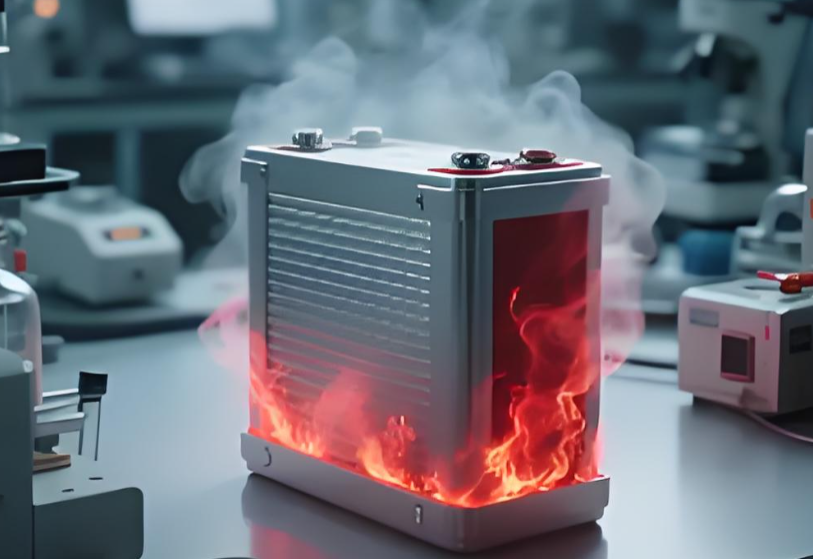
Applications of In-Situ Gas Analysis Systems for Lithium-Ion Battery Thermal Runaway
1. Research on Lithium-Ion Battery Thermal Runaway Mechanisms
In-situ gas analysis systems play a key role in studying the mechanisms of lithium-ion battery thermal runaway. Researchers can use these systems to investigate gas-generation characteristics under different battery materials and operating conditions. Comparing the gases generated during thermal runaway by different cathode materials can provide a scientific basis for selecting suitable battery materials for specific applications.
2. Development of Thermal Runaway Early Warning Models
The in-situ gas analysis system is an important tool for developing thermal runaway early warning models. By continuously monitoring gas composition and concentration changes during thermal runaway, researchers can identify characteristic gases associated with different stages of the process and establish more accurate warning thresholds.
3. Battery Safety in Electric Vehicles and Energy Storage Systems
In electric vehicles and energy storage facilities, abnormal gas signals can be detected at an early stage, allowing timely alarms and corresponding protective measures, such as activating cooling systems or disconnecting the power supply. This can help reduce the risk of thermal runaway incidents and improve the safety of battery systems.
4. Battery Performance Evaluation and Quality Control
During battery manufacturing, in-situ gas analysis systems can be used for battery performance evaluation and quality inspection. Monitoring gas generation under different charge-discharge cycles and environmental conditions can help assess battery health, degradation behavior, and service life.
5. Battery Aging and Safety Screening
Aged batteries may produce a lower total volume of gas during thermal runaway while showing an increased proportion of combustible gases. Monitoring these changes with an in-situ gas analysis system can help identify signs of battery aging and degradation.
Before shipment, manufacturers can also perform simulated thermal runaway tests on battery samples to identify products with potential safety risks. This helps improve overall product reliability and reduce safety incidents caused by quality issues.
6. Safety Monitoring During Battery Transportation and Storage
In-situ gas analysis systems also have important applications in lithium-ion battery transportation and storage. Mechanical abuse, such as impact and compression during transportation, as well as thermal abuse caused by elevated storage temperatures, may trigger battery thermal runaway.
7. Early Warning During Transportation and Storage
Installing gas monitoring systems in transportation vehicles or battery storage facilities can enable real-time monitoring of the surrounding gas environment. When characteristic gases generated during the early stages of thermal runaway, such as electrolyte vapor, are detected, timely measures can be taken, including relocating batteries or activating ventilation systems, thereby reducing safety risks during transportation and storage.
Conclusion
Overall, the In-Situ Gas Analysis System for Lithium-Ion Battery Thermal Runaway offers broad application potential due to its real-time dynamic monitoring, multi-parameter analysis, high-temperature and high-pressure adaptability, and high sensitivity and accuracy. It can support research into thermal runaway mechanisms, safety early warning, battery performance evaluation, quality control, and transportation and storage safety.As the new energy industry continues to develop and battery safety requirements become increasingly stringent, in-situ gas analysis technology is expected to become an important technical tool for improving battery safety and supporting the safe and sustainable development of the lithium-ion battery industry.
Previous: What equipment is needed for a leak test?
N e x t : the last page
