





How do you test a heat seal?
2026/08/14
Share:

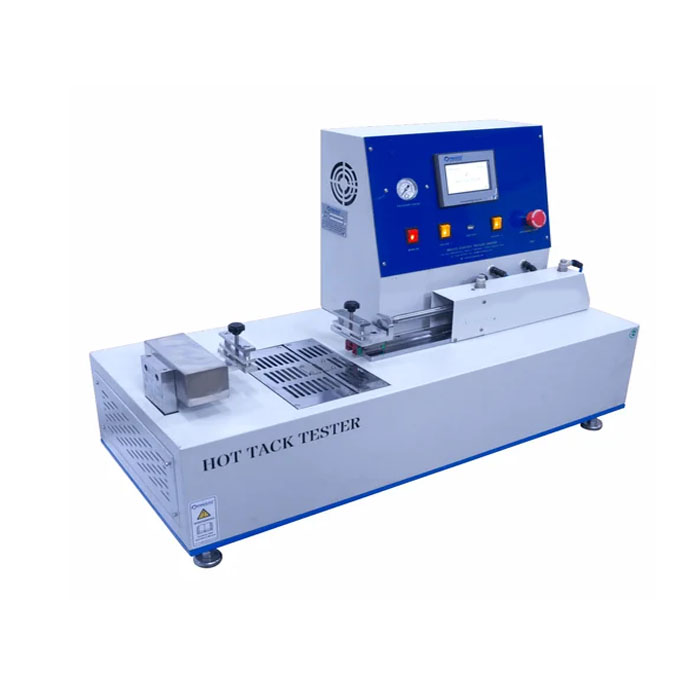
Core Principle of the Heat Seal Strength Tester: Viscoelasticity Theory and Heat-Sealing Dynamics
The core principle of the Heat Seal Strength Tester is based on the theory of viscoelasticity in materials science. During the heat-sealing process, packaging materials such as plastic films and laminated films are heated and softened, causing increased molecular-chain mobility. Intermolecular penetration and diffusion then promote physical or chemical bonding between the material layers, forming a sealed joint.
Because the material has not yet fully cooled and solidified after heat sealing, the strength of the seal can vary significantly with time and temperature. The heat tack test simulates this process by performing a peel test while the seal is still hot and has not completely cooled. It quantitatively measures the immediate bonding strength of the seal during the early stage of heat sealing, providing important data for packaging material selection and heat-sealing process optimization.
Technical Features of the Heat Seal Strength Tester
The Heat Seal Strength Tester is a high-performance testing instrument developed to address challenges such as insufficient testing accuracy and low efficiency in the packaging testing industry. It provides precise measurement of key parameters such as heat-seal strength and peel strength, while offering intelligent operation and broad material compatibility.
1. High-Precision Force Sensor Technology
The tester is equipped with an advanced force sensor capable of accurately detecting and recording subtle changes during testing. With an accuracy of up to ±0.05%, it provides reliable and precise test results. This high-precision technology enables accurate evaluation of the strength performance of packaging materials during heat sealing, supporting packaging design optimization and quality improvement.
2. Intelligent Control System
The intelligent control system allows operators to easily set test parameters, including test speed, heat-sealing temperature, and heat-sealing time, through an intuitive interface. Once the test is started, the instrument can automatically complete the testing process, improving efficiency, reducing manual intervention, and simplifying operation.
3. Wide Applicability
The tester can be equipped with various interchangeable fixtures to accommodate packaging materials with different shapes, dimensions, and structures. It can be used for testing specimens ranging from simple strips to more complex packaging structures, making it suitable for applications in industries such as food, pharmaceuticals, personal care, and electronics.
4. Data Analysis Software
The tester can be equipped with powerful data analysis software for efficient test data management. It can automatically generate detailed test reports containing key information such as force-displacement curves, heat-seal strength, and failure points. These analytical functions provide valuable data for comparing test results, optimizing packaging designs, and improving product quality.
Core Advantages and Industry Impact of the Heat Seal Strength Tester
The Heat Seal Strength Tester is becoming an important testing solution in the packaging industry due to its high performance and wide range of applications. Its key advantages include the following:
1. Improved Testing Accuracy and Efficiency
High-precision force sensing technology and an intelligent control system make the testing process more accurate and efficient. These features help reduce testing costs and improve productivity while ensuring reliable and consistent results.
2. Meeting Diverse Testing Requirements
With broad material compatibility and multifunctional testing fixtures, the tester can accommodate packaging materials with different shapes, dimensions, and material structures. This makes it suitable for various industries and provides more comprehensive packaging performance evaluation.
3. Promoting Innovation in Packaging Testing
The introduction of advanced heat-seal testing technology not only improves testing accuracy and efficiency but also contributes to the development of packaging testing methods. As performance requirements for packaging materials continue to increase, the tester can support technological innovation and quality improvement across the industry.
4. Supporting Packaging Design and Quality Improvement
In practical applications, the Heat Seal Strength Tester provides reliable quantitative data for evaluating packaging materials and optimizing heat-sealing processes. Its test results can help manufacturers improve packaging design, enhance product quality, and maintain consistent production performance.
Conclusion
By quantitatively measuring the initial bonding strength of materials during the heat-sealing process, the Heat Seal Strength Tester provides critical quality data for industries including packaging, medical products, and adhesives. Its testing principle combines viscoelasticity theory with standardized test procedures, while high-precision sensing and automated control technologies help ensure accurate, repeatable, and reliable test results.
Previous: What Equipment Detects Gases from Lithium Battery Thermal Runaway?
N e x t : the last page
