





What is the purpose of the Shoe Bending Angle Tester?
2026/08/14
Share:

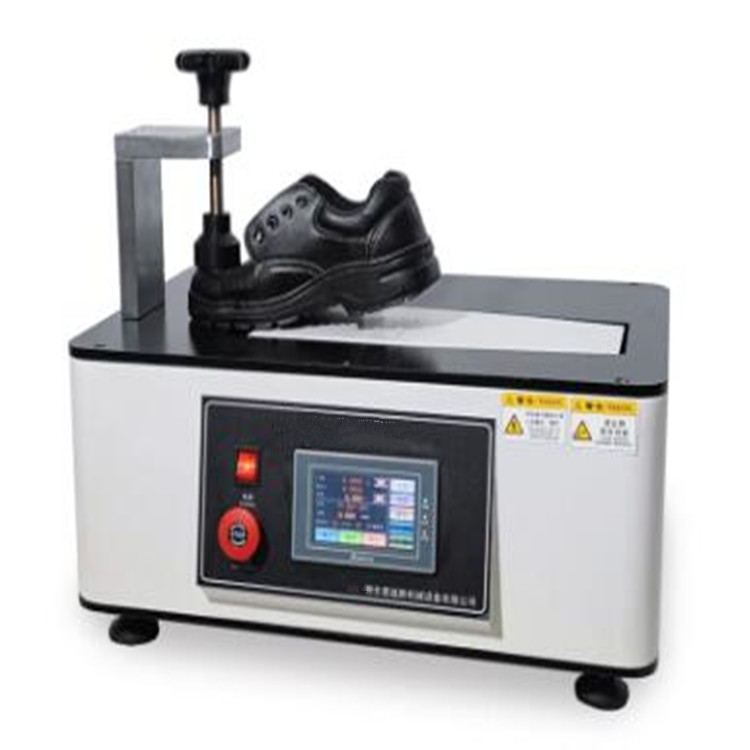
Working Principle and Testing Logic of the Whole Shoe Flexing Tester
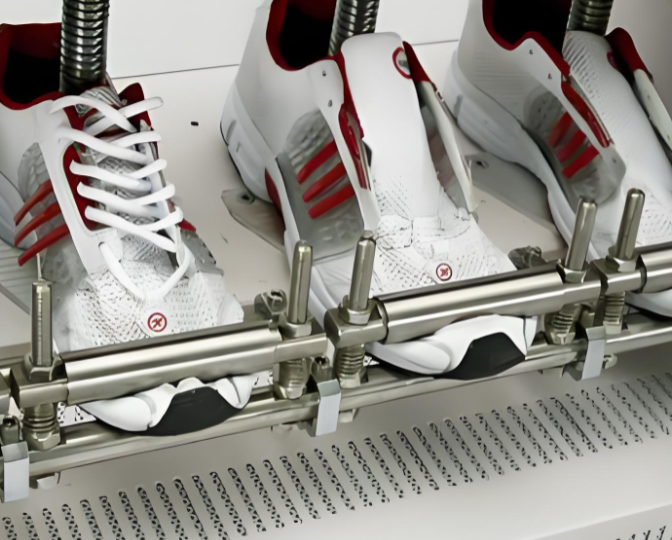
The core principle of the Whole Shoe Flexing Tester is to simulate the repeated bending motion generated at the metatarsophalangeal joint of the forefoot during walking or running. The complete shoe is secured in the test fixture, with approximately the front one-third of the shoe, where the maximum bending point occurs, aligned with the center of the rotating shaft. Once the test begins, the motor drives the shaft to perform reciprocating movements at the preset bending angle and frequency.
The testing process mainly evaluates two aspects:
1. Flexing Durability
The shoe is continuously flexed for thousands or even tens of thousands of cycles at a specified angle and frequency. After or during testing, the upper and sole are examined for defects such as adhesive separation, cracking, delamination, or breakage.
2. Flexural Stiffness and Bending Resistance
Some advanced models are equipped with a force sensor to quantify the bending characteristics of the shoe. For example, the instrument can measure the flexing angle under a specified force, such as 30 N, or measure the required torque at a fixed bending angle, thereby quantitatively evaluating the flexural stiffness and support performance of the sole.
Core Functions of the Whole Shoe Flexing Angle Tester
1. Flex Resistance Testing
Simulates the repeated bending stresses experienced by shoes during everyday wear. It evaluates whether the upper, sole, and adhesive bonding areas develop cracks, delamination, or other damage after repeated flexing, thereby assessing the overall durability of the finished shoe.
2. Accurate Measurement of Angle and Force
High-precision sensors can continuously measure the flexing angle and applied force, providing reliable data for footwear design optimization and performance evaluation.
3. Fatigue Life Evaluation
The tester repeatedly flexes the specimen at preset frequencies and cycle counts to simulate long-term use. This helps identify potential quality issues such as material fatigue, component loosening, and structural failure at an early stage.
4. Quality Standard Verification
Test results can be compared with applicable industry standards to verify whether finished footwear meets specified quality requirements. The tester can also be used for incoming inspection and quality evaluation of footwear materials and components.
Applications of the Whole Shoe Flexing Angle Tester
The Whole Shoe Flexing Angle Tester is mainly used to simulate repeated bending during walking and evaluate the fatigue resistance, crack resistance, and delamination resistance of finished footwear. Its key applications include footwear quality control, product development, compliance testing, and third-party inspection.
1. Factory Quality Inspection
Footwear manufacturers use the tester for batch sampling of finished shoes to determine whether cracks, sole damage, or adhesive separation occur after repeated flexing, ensuring compliance with factory quality requirements.
2. Product Development and Optimization
R&D teams can compare the flexing performance of different materials and structural designs to optimize sole formulations, tread patterns, and manufacturing processes, thereby improving footwear durability.
3. Incoming Material and Supply Chain Quality Control
The tester can be used to evaluate semi-finished footwear components supplied by material vendors, helping manufacturers control the fatigue resistance and bonding strength of materials at the source.
4. Compliance and Certification Testing
It can be used for testing according to applicable national, ISO, SATRA, and other footwear standards, supporting export inspections, certification requirements, and qualification assessments by major customers.
5. Third-Party Testing
Testing laboratories and inspection organizations can use the instrument to provide independent footwear flexing performance reports, supporting trade dispute resolution, product quality verification, and market compliance.
The Value of the Whole Shoe Flexing Angle Tester to the Footwear Industry
For footwear manufacturers, introducing a high-quality Whole Shoe Flexing Angle Tester provides significant practical benefits:
1. Improving Product Quality Control
During product development, the tester can be used to compare sole materials with different formulations and structural designs, helping manufacturers identify better-performing solutions. During mass production, regular sampling tests can monitor manufacturing process stability and reduce quality problems caused by variations in raw materials or production processes, thereby minimizing potential product returns.
2. Shortening the Product Development Cycle
Traditional wear trials can take months before significant damage becomes apparent. A flexing tester can simulate tens of thousands of flexing cycles within hours or days, quickly exposing potential design defects. This enables R&D teams to make timely improvements and accelerate the development and launch of new footwear products.
3. Establishing Objective Quality Standards
The precise test data generated by the instrument allow manufacturers to establish stricter internal inspection standards for raw materials and finished footwear. These standards can serve as a technical basis for supplier evaluation and quality negotiations, while also providing objective evidence for resolving potential customer quality disputes.
4. Supporting Brand Reputation
Consistently delivering durable and reliable footwear is essential for building long-term consumer trust. Through rigorous internal testing, manufacturers can ensure that finished products meet or exceed expected durability requirements, helping establish a strong reputation for product quality in the market.
Conclusion
By scientifically simulating real-world footwear use, the Whole Shoe Flexing Angle Tester provides an objective and quantitative basis for evaluating footwear durability and performance. It is therefore an important part of modern footwear quality control.We provide detailed technical information and customized testing solutions according to different production scales and footwear categories, including children's shoes, outdoor and sports footwear, and formal leather shoes. Installation and commissioning, operator training, and after-sales maintenance services can also be provided to help manufacturers establish a reliable and efficient internal quality testing system.
Previous: How do you test a heat seal?
N e x t : the last page
