





What is Oxidation Induction Phase Analysis Tester?
2026/08/21
Share:

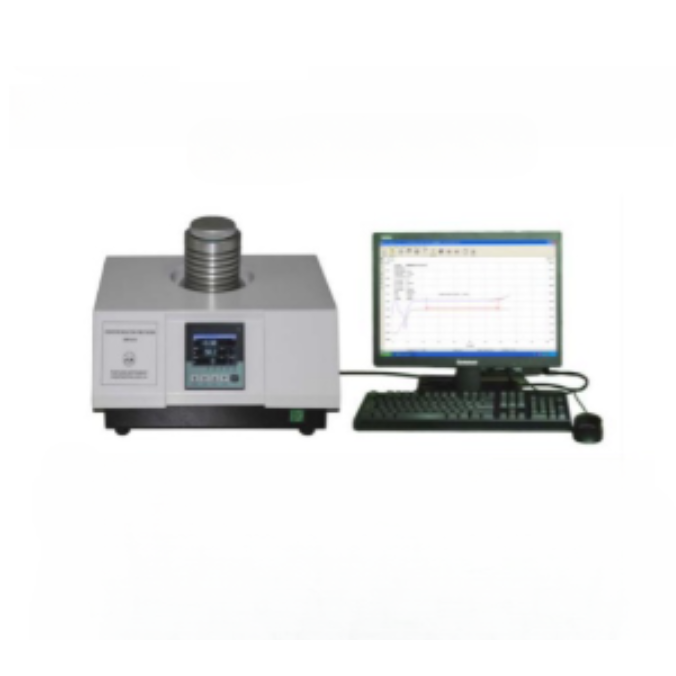
Working Principle of the Oxidation Induction Time (OIT) Analyzer
The core working principle of the Oxidation Induction Time (OIT) analyzer is based on thermal analysis technology, which determines the oxidation induction time by monitoring changes in thermal effects of the material under specific environmental conditions. Currently, there are two mainstream technical approaches:
Principle of Differential Scanning Calorimetry (DSC)
During testing, the sample to be analyzed and an inert reference material (such as alumina) are placed together in the instrument, and both are subjected to the same rate of temperature change under a programmed temperature control environment.
In the initial stage, the instrument introduces an inert gas (typically nitrogen) to heat the sample to a preset high temperature (generally between 160–220 °C, with 200 °C being the commonly used test temperature) and maintains it at a constant temperature.
Once the system state has stabilized, the atmosphere is rapidly switched to oxygen. The sample then begins to undergo oxidation reactions in the high-temperature oxygen environment.
When the sample undergoes oxidation, it releases heat, disrupting the thermal flow balance between the sample and the reference material. This change appears as a distinct exothermic peak on the DSC curve.
The time interval from the introduction of oxygen to the appearance of the exothermic peak is the Oxidation Induction Time (OIT) of the material. The longer this time, the better the antioxidant performance of the material, and the less prone it is to thermal degradation during processing, storage, and use.
Principle of Differential Thermal Analysis (DTA)
Differential Thermal Analysis (DTA) determines the occurrence of oxidation reactions by monitoring the temperature difference between the sample and the reference material. Unlike DSC, DTA does not directly measure heat flow changes; instead, it measures the variation in temperature difference between the two as a function of time or temperature.
During the testing process, the sample and the reference material are first heated to the set temperature in an inert atmosphere, and then the atmosphere is switched to oxygen. When the sample undergoes oxidation and releases heat, its temperature becomes higher than that of the reference material, forming an upward exothermic peak on the DTA curve.
The time interval from the introduction of oxygen to the point when a significant change in temperature difference occurs is the Oxidation Induction Time.
Although the principles of DTA and DSC differ, both methods share the same testing objective—to evaluate the antioxidant performance of materials through thermal analysis techniques. Currently, DSC has gradually become the mainstream technology in the market due to its higher sensitivity and accuracy.
Features of the Oxidation Induction Time (OIT) Analyzer
A high-quality Oxidation Induction Time analyzer achieves temperature control accuracy of up to ±0.1 °C, rigorously maintaining the high-temperature environment required for testing and ensuring the accuracy of measurement results. For example, the Hesheng HS-DSC-101 adopts a metal furnace structure combined with advanced temperature control algorithms to achieve stable isothermal control.
The instrument is capable of capturing minute changes in heat flow. Even with a sample mass as small as a few milligrams, the oxidative exothermic event can be accurately detected. High sensitivity makes the test results more reliable and enables a true reflection of the material's antioxidant performance.
Equipped with a digital mass flow controller for gases, the instrument precisely regulates the flow rates of nitrogen and oxygen, ensuring accurate and stable atmosphere switching. Stable gas flow effectively prevents flow fluctuations from interfering with the test results.
Most instruments are integrated with intelligent operating software that supports user-defined programmable test procedures, simplifying complex testing steps into one-touch operation. Users only need to set parameters such as temperature and gas flow rates, and the instrument automatically completes the entire process, including heating, isothermal holding, atmosphere switching, data acquisition, and analysis.
The software automatically records the temperature–time curve of the oxidation induction process, calculates the Oxidation Induction Time value, and generates standardized experimental reports. Some instruments also automatically draw tangents to precisely determine the onset point of the oxidation reaction, thereby minimizing human error.
Certain high-end instruments support remote operation and maintenance functions, allowing users to perform remote control, data transmission, and fault diagnosis via the Internet. This significantly enhances the convenience of instrument use and the efficiency of maintenance.
The Oxidation Induction Time analyzer is not only applicable to the antioxidant performance testing of polymeric materials such as plastics and rubbers, but is also widely used in lubricating oils, fuels, cable insulation materials, and many other fields. In the plastics industry, it can be used to evaluate the thermal stability of polyolefin materials such as polyethylene (PE) and polypropylene (PP). In the cable industry, it can assess the antioxidant capacity of insulation materials, thereby ensuring the long-term safe service of cables.
Why is it highly favored
Fast, Accurate, and Decisive: Traditional natural aging tests may take several years, whereas OIT testing requires only a few tens of minutes to a few hours, dramatically shortening the cycles of research, development, and quality control.
High Precision: Modern analyzers employ microcomputer-based software with PID temperature control, achieving temperature accuracy of up to ±0.1 °C or even higher. Combined with an automatic atmosphere switching system, this ensures excellent repeatability and accuracy of data.
Intelligent Operation: Today's instruments are mostly equipped with automation features, capable of automatically plotting curves, calculating intersection points, and generating reports. This minimizes human error and frees operators from tedious data processing tasks.
In summary, the Oxidation Induction Time analyzer, with its unique value and critical role in the field of material antioxidant performance evaluation, deserves our close attention and in-depth discussion. Should you wish to learn more about the instrument's detailed technical specifications, application cases, or specific configuration solutions, please feel free to contact us directly. Our professional team will provide you with comprehensive and thorough answers, and assist you in obtaining additional technical documentation and customized information about the product.
Previous: What is a dry heat shrinkage tester?
N e x t : the last page
