





What is an Airbag-Type Contact Pressure Tester?
2026/08/21
Share:

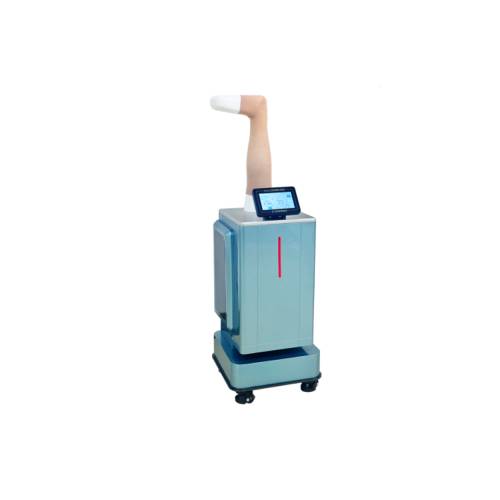
Why an "airbag"
Because it ingeniously resolves the fundamental flaw inherent in traditional measurement methods. Conventional rigid sensors are like a hard stone pressing down on soft cotton—their own stiffness and bulk alter the original contact state between the fabric and the skin, leading to significantly distorted measurement results. The core essence of the airbag-type pressure tester lies in its innovative flexible biomimetic technology. Its sensor is meticulously crafted from an ultra-thin (less than 1 mm in thickness) polymeric non-stretch material, with a soft texture resembling a second layer of human skin, enabling it to conform perfectly to body contours. When placed between the garment and the human body, its extremely low modulus and minimal thickness hardly interfere with the original wearing state and the natural feeling of fit.
The working principle is as follows: when the fabric exerts pressure on the human body, the enclosed air within the airbag undergoes extremely minute changes in volume or pressure. These changes are captured by highly sensitive components and converted into continuous electrical signals. This non-invasive, low-interference measurement approach authentically reproduces the mechanical interaction between the product and the human body under natural wearing conditions, thereby thoroughly resolving the industry's core challenge of "inaccurate measurement" caused by the intervention of the measuring instrument itself.
Core Advantages: Precisely Capturing Dynamic Moments
This instrument is by no means limited to reading a single isolated static number. It possesses three core capabilities that make it excel in dynamic scenarios:
Ultra-High Precision and Stability: Its measurement accuracy reaches an impressive ±0.1 kPa, and the system design makes it minimally affected by fluctuations in ambient temperature, ensuring data reliability. Whether measuring the subtle pressure exerted by a silk-thin undergarment or assessing the load imposed by a heavy backpack shoulder strap, it operates with precision and stability across a wide pressure range of 0 to 35 kPa.
Multi-Point Simultaneous Dynamic Monitoring: Taking sports bra testing as an example, the instrument can deploy multiple sensors simultaneously to monitor in real time the pressure variations at several critical load-bearing areas, including the shoulder straps, underwire, side panels, and back. What is even more remarkable is that its data acquisition system can sample continuously at an extremely fast interval of 100 milliseconds. This means that when the test model performs a series of complex movements—such as raising arms, bending over, jumping, or running—the instrument can completely and smoothly record the dynamic pressure curves that change with every motion detail, capturing the entire process from pressure generation and transmission to dissipation, rather than merely providing a static pressure snapshot.
Visualized Pressure Mapping: Through the accompanying intelligent analysis software, the collected numerical data are processed in real time and converted into intuitive, colored "pressure distribution heat maps." Designers and engineers can see at a glance which areas of the garment are "pressure-free zones" with gentle stress, and which are "high-pressure zones" or "pressure concentration points" that may cause friction, indentations, or discomfort. This visual analysis tool greatly assists R&D teams in optimizing force distribution in structural design, thereby striking the perfect balance—where science meets art—between providing necessary support and avoiding compression of internal organs or restriction of freedom of movement.
From the Laboratory to Daily Life: What Has It Changed
The application value of the airbag-type contact pressure tester has long transcended the simple role of factory quality inspection; it is now profoundly transforming the entire chain from R&D to consumption.
For designers, it serves as a "scientific touchstone" for optimizing tailoring and pattern making. By comparing pressure data differences arising from various fabric elasticities, different stitching techniques, and diverse structural mechanical designs, R&D teams can move beyond empirical guesswork and scientifically and quantitatively adjust pattern curves, wearing allowances, and seam placements, thereby truly achieving a win-win outcome between shaping effectiveness and wearing comfort.
For the medical and rehabilitation field, it acts as a critical guardian of product safety and efficacy. In the development of medical-grade compression stockings for preventing deep vein thrombosis, or orthopedic braces for postural correction, ensuring that the pressure applied to the limbs is both uniform and effective enough to promote blood circulation or provide support, yet never so excessive as to cause skin damage, tissue ischemia, or even necrosis, relies entirely on the objective and precise data provided by this instrument as the core support for R&D and validation.
For end consumers, it offers reliable assurance of a high-quality wearing experience. Brands can leverage these standardized and reproducible test data to provide strong and objective substantiation for product attributes such as "comfort," "fit," and "pressure-free experience." This not only enhances the product's market persuasiveness but also significantly reduces customer complaints and return risks arising from wearing discomfort, thereby boosting brand credibility.
Conclusion
The advent of the airbag-type contact pressure tester marks the transition of the apparel and wearable device industry from "empiricism" to "data-driven science." It makes us understand that true comfort is not a metaphysical mystery, but rather a science that can be precisely calculated. In the future, behind every garment that fits the body and mind perfectly, there may well be such a silent and precise "data translator" working diligently in the background.
Previous: What is Oxidation Induction Phase Analysis Tester?
N e x t : the last page
